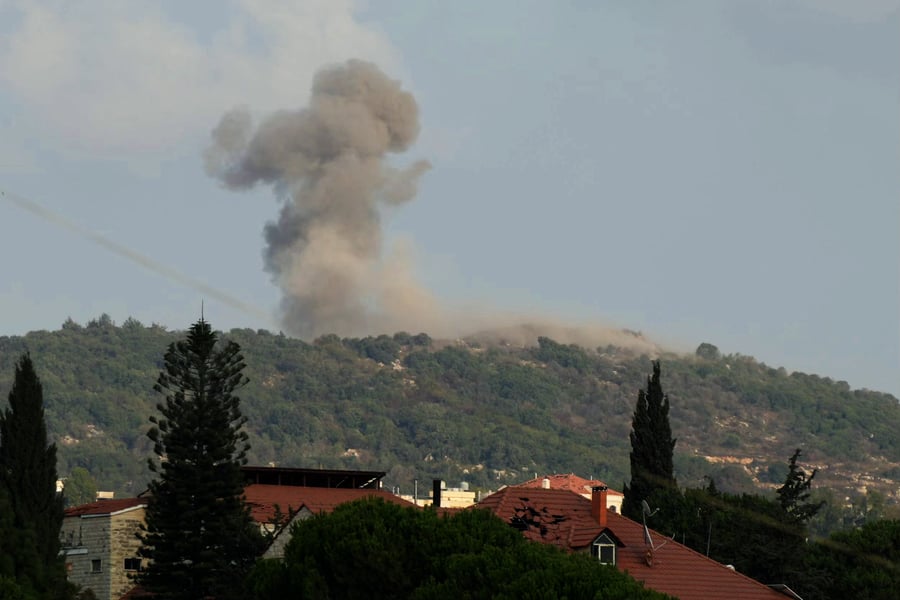

BEIRUT — Three children were among the seven people killed when an Israeli airstrike destroyed a family home in the village of Ansar, in southern Lebanon’s Nabatieh region, on Friday, the single deadliest strike of a day that left at least 11 dead and 19 wounded across multiple towns and localities south of the Litani River, intensifying a months-long pattern of attacks that a June ceasefire framework was supposed to bring to an end.
The Ansar strike, which also wounded two people, reduced a residential structure to rubble in a village that had suffered repeated rounds of displacement since Israeli military operations in Lebanon expanded in 2024. Families who had returned to the area in the weeks after the June framework was concluded did so partly on the belief that the agreement offered meaningful protection; by Friday afternoon, with the rubble of a family home in front of them, residents were again reassessing that return. The Al Jazeera correspondent Ali Hashem documented the site after the strike: walls collapsed inward, household belongings scattered across the ground, no portion of the structure still standing.
A second strike hit the town of Deir ez-Zahrani, killing four and wounding 17 more, Al Jazeera reported. Israeli forces also struck a teachers’ training centre, a Husseini community club in Nabatieh al-Fawqa, the valley road between Ansar and Zarariyeh, several homes in the city of Bint Jbeil, and the al-Mashaa neighbourhood of al-Mansouri. The geographic spread, across multiple localities in Nabatieh governorate within a single day, reflects what Lebanese municipal and health authorities have reported consistently: attacks reaching civilian infrastructure and residential structures alongside any claimed military objectives.
Lebanese Prime Minister Nawaf Salam was direct in his condemnation. “The escalation is extremely dangerous,” Salam said in a statement issued Friday. He rejected the implicit justification behind continued Israeli operations: “Its presence does not give Israel the right to violate Lebanese territory or put civilians at risk.” The statement renewed his government’s call for international pressure and for a concrete timetable governing Israeli military withdrawal from the territory its forces currently occupy in the south.
Parliament Speaker Nabih Berri characterised Friday’s strikes as a “massacre.” Hezbollah warned that the attacks would be met with an “appropriate response,” without specifying form or timing. None of the parties had offered a public account of what they expected to happen next by late Friday.
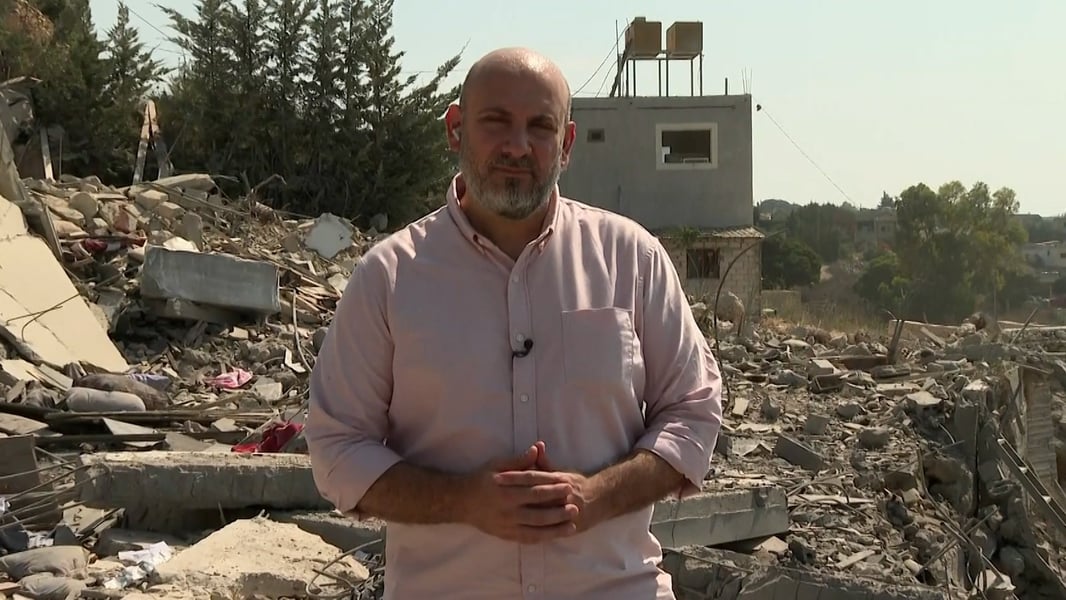
The Anadolu Agency, citing Lebanese health ministry figures, reported the confirmed death toll at nine by late afternoon. Al Jazeera placed it at 11, with both news organisations confirming children were among the dead in Ansar. The divergence in figures is common in the hours immediately after strikes of this scale, when the identification of casualties is still underway and figures shift as rescue teams reach additional sites.
Friday’s strikes came one day after EH reported that Israel had formally declared a permanent military presence on Ali al-Taher Ridge in southern Lebanon, drawing a warning from Iran and explicit condemnation from Lebanon’s political leadership. Taken together, the Ali al-Taher declaration and Friday’s strikes fit a pattern that Israeli military and civilian officials have not moved to conceal: Israel intends to maintain a long-term security presence in Lebanese territory, with strikes as part of that presence.
Southern Lebanon is not unfamiliar with what that kind of presence means in practice. Villages in the Nabatieh region and along the Litani corridor have experienced successive cycles of displacement: in 2006, in 2024, and now again in 2026. The population that remained, or that returned after the June framework, did so with an understanding that any protection on offer was incomplete. Ansar is not a militarised outpost. It is a village in which, on a Friday morning in August, a family’s home was struck and three children did not survive it.
What Lebanese authorities do not yet know, and what PM Salam has said plainly, is whether the United States, as a party that co-signed the June framework, intends to use that position to apply pressure on Israel to curtail the strikes. Salam’s government has the language of international law and the specifics of a recent agreement behind it. What it does not have is a mechanism to enforce either against a military that has openly stated its intentions and continued acting on them.