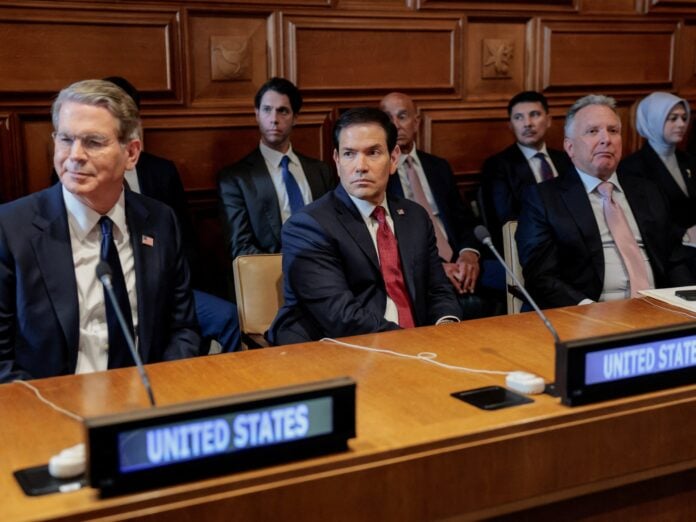
BEIRUT — Something notable is missing from Iran’s written ceasefire roadmap. In sixty pages of diplomatic language, delivered to American envoys at the UN General Assembly on September 23, Tehran laid out a phased framework for ending the war, reopening the Strait of Hormuz, and beginning a structured security dialogue. The document names the IAEA, the Security Council, Qatar, Pakistan, and Egypt. It does not name Hezbollah.
That omission is not accidental. It is, in its way, the most important thing about the document. Iran’s ceasefire roadmap is structured around the US-Iran bilateral relationship — a framework designed to satisfy Washington’s demand for a legible negotiating partner. Hezbollah is not a legible negotiating partner. It is not a state. It does not sign documents. Iran’s written peace conditions, delivered through Araghchi to Steve Witkoff, cannot carry provisions for an armed non-state actor that Tehran has always officially declined to control. And so Hezbollah was not included.
For Lebanon, this creates a question that the roadmap has no mechanism to answer. Hezbollah’s armed wing has fought alongside Iranian forces throughout the conflict, conducted its own strikes on northern Israel, and received a sustained supply of weapons through corridors that any ceasefire framework will eventually seek to close. The agreement being negotiated in New York will not, by its own terms, determine what happens to those weapons, those fighters, or those supply routes.
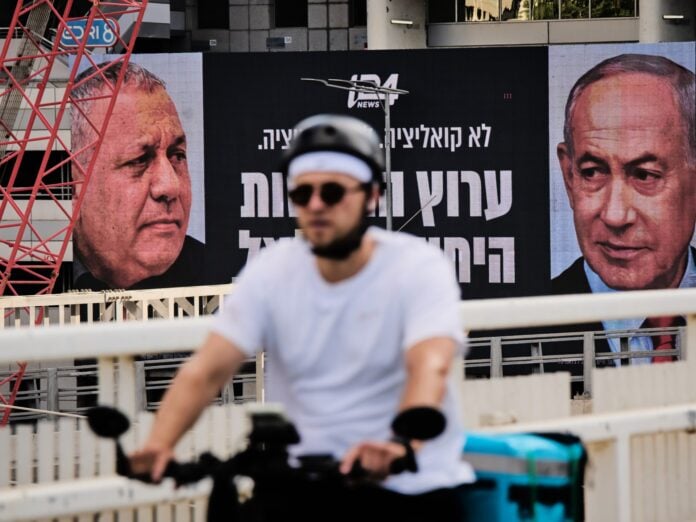
Benjamin Netanyahu has made Israel’s position clear. His objection to the roadmap includes an explicit demand for binding commitments on Hezbollah’s disarmament — a condition the written document does not address and that Tehran has consistently refused to make negotiable. Washington received the folder knowing the condition wasn’t in it. The American calculation is that the primary ceasefire comes first; what follows is a separate negotiation.
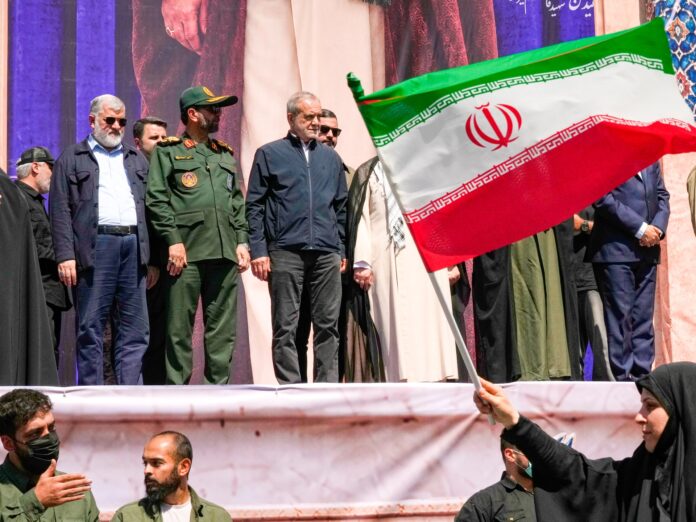
The asymmetry of this moment is what makes it structurally dangerous. Iran is negotiating. Hezbollah is not. Masoud Pezeshkian’s General Assembly speech on Monday framed the conflict as a war between Iran and the United States — the framing Tehran has preferred throughout. Hezbollah’s position within that framing is instrumentalized: evidence of Iran’s regional reach in one paragraph, absent from the ceasefire terms in the next.
This creates a specific problem for Lebanon. The country has absorbed years of intensified cross-border conflict. Its northern communities have experienced displacement and economic collapse at a rate that the Lebanese state — structurally incapable of managing the crisis without Hezbollah’s parallel governance apparatus — has not been able to compensate. A ceasefire that ends Iran’s war does not automatically end Hezbollah’s operational posture inside Lebanon. Nothing in the roadmap commits to it, and nothing in Beirut’s political structure could enforce it if it did.
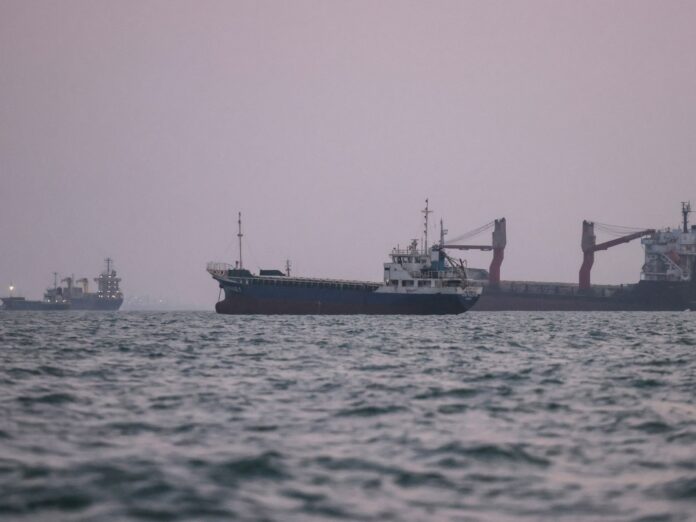
The broader proxy network faces the same structural limbo. The Houthis in Yemen have operated throughout the conflict with autonomy that has often exceeded what Tehran formally authorized — striking shipping lanes, developing their own political interests, and signaling through back-channel contacts that they are not simply waiting for Iranian instructions. A deal between Tehran and Washington does not automatically bind Sanaa. The same logic applies, more acutely, to Hezbollah, which has deeper institutional roots, a more complex relationship with a functioning state, and four decades of practice at surviving ceasefire agreements without disarming.
At the Security Council this week, the vote produced a sharp alignment: Russia and China backed Iran’s framework; France and the United Kingdom backed a counter-resolution that failed. What neither document addressed was Hezbollah. This was not an oversight. No party that wants a deal wants to introduce a demand that makes a deal impossible. The calculation in Washington, Riyadh, and Doha is that Hezbollah can be managed — through a separate process, through Lebanon’s internal political negotiations — once the primary ceasefire holds.
Whether that calculation survives contact with Hezbollah’s own interests is the open question. The organization has developed, over four decades, a sophisticated sense of when it is being asked to subordinate its strategic position to Tehran’s diplomatic requirements. It has done so before — in 2006 and after successive ceasefire negotiations — and emerged each time with its weapons intact and its political position stronger. There is no public signal from Beirut this week that Hezbollah’s current leadership has been briefed, consulted, or brought into the shape of what Tehran is offering in New York.
The roadmap on the table is a reasonable approximation of what a ceasefire looks like when it is designed to succeed at the level of great-power diplomacy. What it does not contain is an answer to the harder question that follows: what Lebanon does with an armed movement that a ceasefire did not disarm, a war that did not resolve its political status, and a country that still cannot govern its own territory without it. That question will not be on the agenda in New York. It will be waiting in Beirut when the diplomats leave.