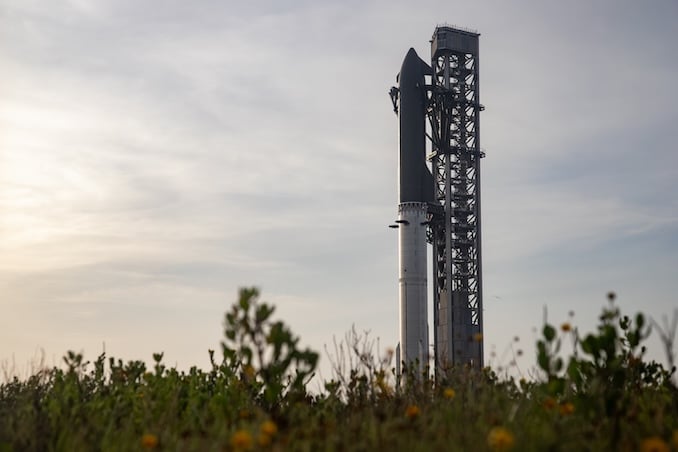

BOCA CHICA, Texas – Three weeks and one failed ignition sequence after SpaceX’s second attempt to fly Starship ended before it began, the rocket that its builder has called the most complex vehicle ever built lifted off Pad 2 at Starbase on Thursday afternoon with twenty satellites and an overdue success story aboard.
Starship Flight 13 launched at 5:45 p.m. Central time on July 24, clearing the two-day weather delay forced by Tropical Storm Bertha and the engine abort that had preceded it on July 16. That July 16 attempt ended in the ignition sequence when four Raptor engines on Booster 20 failed to fire, triggering an automatic abort and sending SpaceX back into the maintenance bay to pull and replace multiple engines. The company also pushed through software updates to engine alarm systems and addressed a separate early-shutdown issue identified in the previous mission. None of those fixes can be confirmed as complete until the hardware flies, and on Thursday, they flew.
The payload on Flight 13 marked a milestone SpaceX had been working toward since the first V3 Starship configuration launched in May. Twenty Starlink V3 satellites rode in the upper stage, becoming the first production-grade Starlink units ever deployed from Starship rather than a Falcon 9 rocket. The third-generation satellites extend solar arrays and antennas after deployment and attempt to link into the existing constellation before their deliberate demise. Each was designed to deorbit approximately twenty minutes after separation, burning up in the atmosphere rather than contributing to orbital debris. CNBC reported the flight as the first Starship test since SpaceX’s $86 billion IPO in June, framing the mission against investor and public scrutiny that did not exist for any previous test.
Booster 20’s return profile called for a boostback burn followed by a controlled descent into the Gulf of Mexico. What it produced was the gentlest Super Heavy impact on water SpaceX has recorded, a result the company described as the softest Starship booster splashdown ever achieved. The significance of that claim sits against a recent history in which the May 22 mission ended with the booster failing to complete its return burn and impacting the Gulf uncontrolled. The abort on July 16 had raised fresh questions about Raptor engine reliability after the May booster loss, making Thursday’s clean booster descent the most important outcome of the mission after satellite deployment.
The timing matters for reasons that extend beyond engineering. SpaceX completed its initial public offering on June 12, raising roughly $86 billion at a valuation that ranked among the largest in U.S. stock market history. The May booster loss became the company’s first significant public setback after going public, and the Flight 13 abort in July added to a run of unresolved questions about hardware reliability that public investors, unlike the private backers who funded the company for two decades, had never had to hold through before. The FAA clearance that unlocked Thursday’s attempt came on July 13, three weeks before the successful launch, following the agency’s review of the May failure’s root causes.
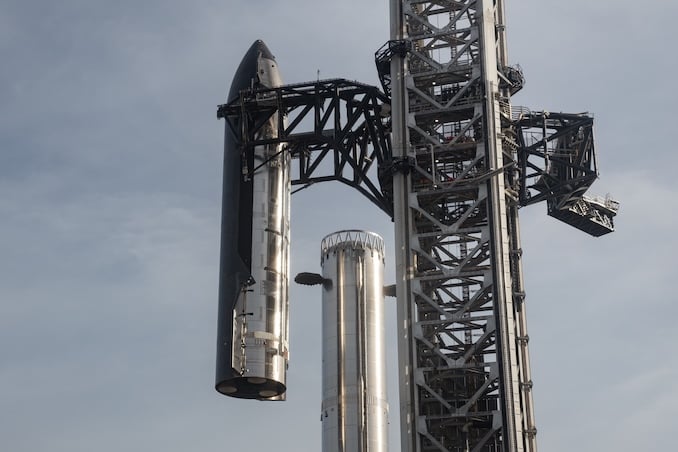
The mission profile for Flight 13 included a roughly eleven-minute satellite deployment sequence and a planned Raptor engine relight demonstration intended to validate the ignition fix SpaceX implemented after the July 16 abort. Whether the relight test succeeded and under what conditions will emerge in SpaceX’s post-flight reporting. Ship 40, the upper stage, carried the Starlink payload and the relight experiment simultaneously, making the flight a combined engineering validation and commercial satellite delivery in a single attempt.
Success changes the immediate narrative without resolving the longer questions. The May booster failure had raised doubts about whether SpaceX’s thermal management approach and engine alarm calibration were mature enough for the stresses of the V3 architecture. Thursday’s clean descent suggests the fixes worked on this flight, with this hardware, on this day. Whether the same outcome repeats when the next Starship vehicle flies is a question for the next mission. SpaceX does not publish anomaly data at the rate or depth that independent observers would need to evaluate whether these problems are solved or simply quiet for now.
The stakes of sustained Starship reliability extend beyond the satellite business. NASA has contracted with SpaceX to develop a Starship-derived human landing system for the Artemis program, and the agency’s schedule for a crewed lunar mission depends on the vehicle reaching a maturity level it has not yet demonstrated across consecutive missions. Thursday’s success advances that case in narrow terms. The larger case requires flights that do not produce the kind of novel failure modes that the May crash and the July abort each represented, and SpaceX has not yet shown that back-to-back clean results are something it can reliably produce rather than occasionally achieve.
The twenty Starlink V3 satellites are in orbit. The booster touched down on water with what SpaceX described as historic gentleness. The engine system that failed on the pad in July flew on Thursday without incident. What Flight 13 does not tell anyone is whether the company has solved the systematic problems that produced three consecutive anomalies across two missions, or whether it has repaired the specific manifestations of those problems while the underlying susceptibilities remain in the hardware that will fly the next test. That question will not be answered until the next flight, which SpaceX has not yet announced.