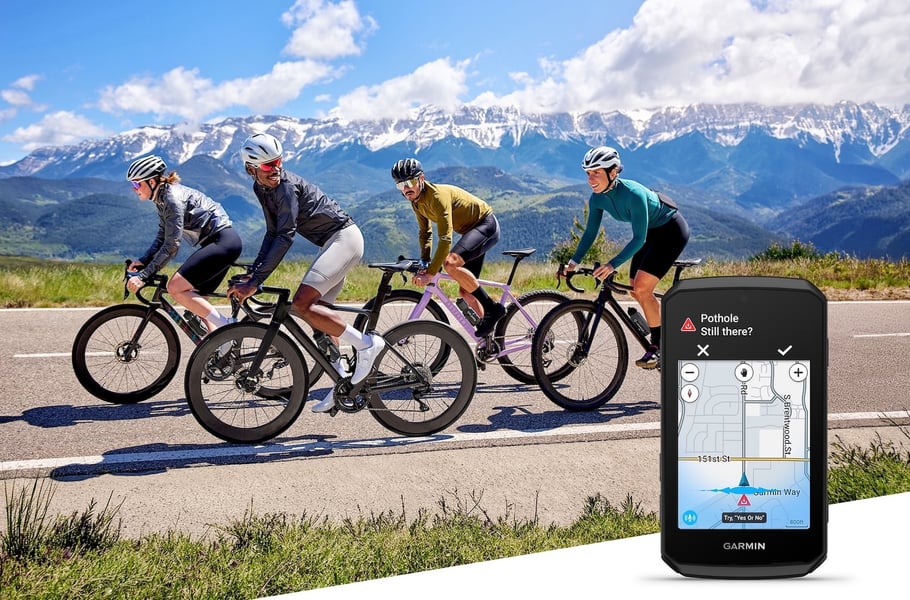

Garmin’s new Edge 1060 lets cyclists ask for ride statistics and send voice messages without reaching for the screen. The price is $799.99, about $100 above its predecessor’s launch price, but the flagship cycling computer does not promise longer battery life.
The company announced the device on October 20 and said it was available immediately. In its launch announcement, Garmin lists up to 20 hours in demanding use and up to 60 hours in battery-saver mode. Those are manufacturer claims, not endurance results from an independent test for this article.
A new microphone works with the existing speaker to enable commands such as requesting heart-rate data, reporting a pothole or finding a coffee shop. Garmin says performance varies with riding conditions and that voice control is available in selected languages. Voice messaging requires a connected smartphone and Garmin Messenger; it is not built-in satellite messaging.
Reviewer Ray Maker’s October 20 hands-on assessment reports that the wake phrase responded reliably during his road and gravel rides, including at about 50 kilometres an hour. Understanding the command was less consistent when he used unexpected phrasing. That early experience should not be read as a guarantee for every rider or weather condition.
Maker also found limits to hands-free messages. Recordings can run for 30 seconds, navigation or radar audio can interrupt them, and recipients need Garmin Messenger rather than their phone’s ordinary messaging app. He had not yet completed the longer rides planned for his full review.
The physical changes are more straightforward. Maker reports a reduction from 161 grams to 142 grams, seven buttons instead of three, and the same 3.5-inch, 480-by-800-pixel LCD. Four extra buttons give riders another way to operate the computer when gloves or rain make touch input less convenient.
New navigation tools include route previews, upcoming points of interest and Free Flow Routing, which seeks routes with fewer stops and slowdowns. The launch follows earlier Garmin Edge software updates that added gear tracking and other cycling features to supported devices.
The USB-C connection now supports reverse charging for a phone, light or another device. Garmin specifies a compatible cable and explicitly says the feature is not intended for charging while riding. Moving the port should not be confused with permission to use that power-sharing function on the move.
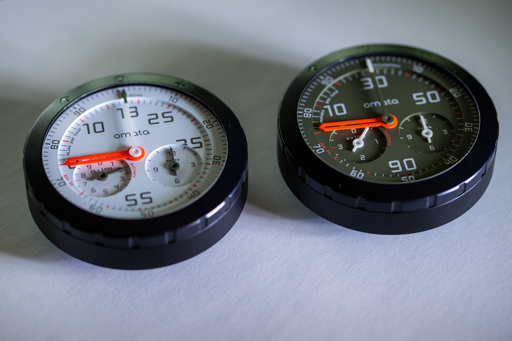
At nearly $800, the Edge 1060 occupies the same price bracket as Silca’s revived Omata, though the products take very different approaches to displaying ride data. Garmin’s pitch is more ways to control a familiar touchscreen computer, not a breakthrough in battery endurance. For buyers following cycling technology, that distinction is the upgrade decision.