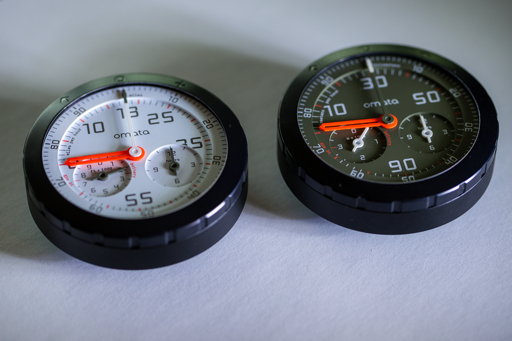

Cyclists who want ride data without a digital dashboard have an unusual option again: the Omata analog-display GPS computer. Silca has acquired the brand and revived the device at $800, but the mechanism that makes it distinctive also limits how many can be built.
The relaunch was reported on October 15 by Bikerumor, which says the price includes a Silca Chisela 3D-printed titanium mount of the buyer’s choice. The Omata’s appeal is not a longer list of things to watch while riding. It turns GPS information into the movement of physical hands on a dial.
Silca’s product specifications describe a 72-channel GPS engine paired with a custom Seiko movement. Four stepper motors move the hands to display speed, distance, ascent and time. There is modern positioning technology inside, even though the face looks more like an instrument panel than a conventional screen.
That distinction matters. Analog describes how the rider sees the information, not how the computer determines a position. The dial is the interface; GPS and electronics still do the underlying work. Buying the Omata therefore does not mean abandoning electronic ride tracking. It means choosing a different way to see a smaller set of measurements.
Silca lists an aluminum housing, a rotating bezel for switching modes, USB-C charging, improved weather resistance and ANT+ connectivity among the revived model’s features. Its stated weight is 83 grams, and the specifications advertise up to 17 hours of battery life. Those are manufacturer figures, not results from an independent test conducted for this article.
The practical changes are less conspicuous than the face. A USB-C port brings charging into line with a common cable standard. The mounting arrangement also makes it easier to put the device on a bike already equipped for another computer: Silca says its square cleats work with standard Garmin or Wahoo mounts. That is a mounting claim, not a claim that the Omata duplicates those computers’ software or displays.
The app requirement needs particular attention before purchase. Silca labels the product compatible exclusively with iOS and ANT+ devices, and says training logs can be uploaded through the Omata Utility app. Android users should not assume that a GPS-equipped cycling computer automatically includes an Android companion app. The company’s listing does not support that assumption.
Supply is the larger constraint on the revival. Silca’s metric product listing says each unit is hand assembled in Indianapolis around discontinued Seiko Japan internals. The relaunch consequently depends on components that are no longer in production, rather than simply on how quickly Silca can assemble more cases or circuit boards.
The sources reviewed do not establish an independently verified total of remaining mechanisms, a guaranteed production quantity or a timetable for replenishment. A limited run should not be read as a promise that another batch will follow, nor does the announcement establish that every configuration remains available at the time a buyer places an order.
At $800, this is a deliberate purchase rather than an inexpensive way to add basic ride measurements. The included titanium mount is part of that price, but the main decision remains the dial itself: whether a glance at physical hands is preferable to an electronic screen. The answer will be different for someone who wants fewer on-bike distractions and someone who wants more information visible during a ride.
Silca presents the design as a way to simplify cycling. That is a product proposition, not evidence that it improves concentration, safety or training. This article has not tested glanceability in traffic, GPS accuracy, battery endurance or weather resistance. Those questions remain separate from the confirmed acquisition and the published specifications.
The Omata returns with updated electronics and more familiar charging and mounting, but not an unlimited manufacturing future. Its discontinued Seiko mechanism is both the reason this computer feels different and the reason the revival cannot be treated like a conventional high-volume product launch.