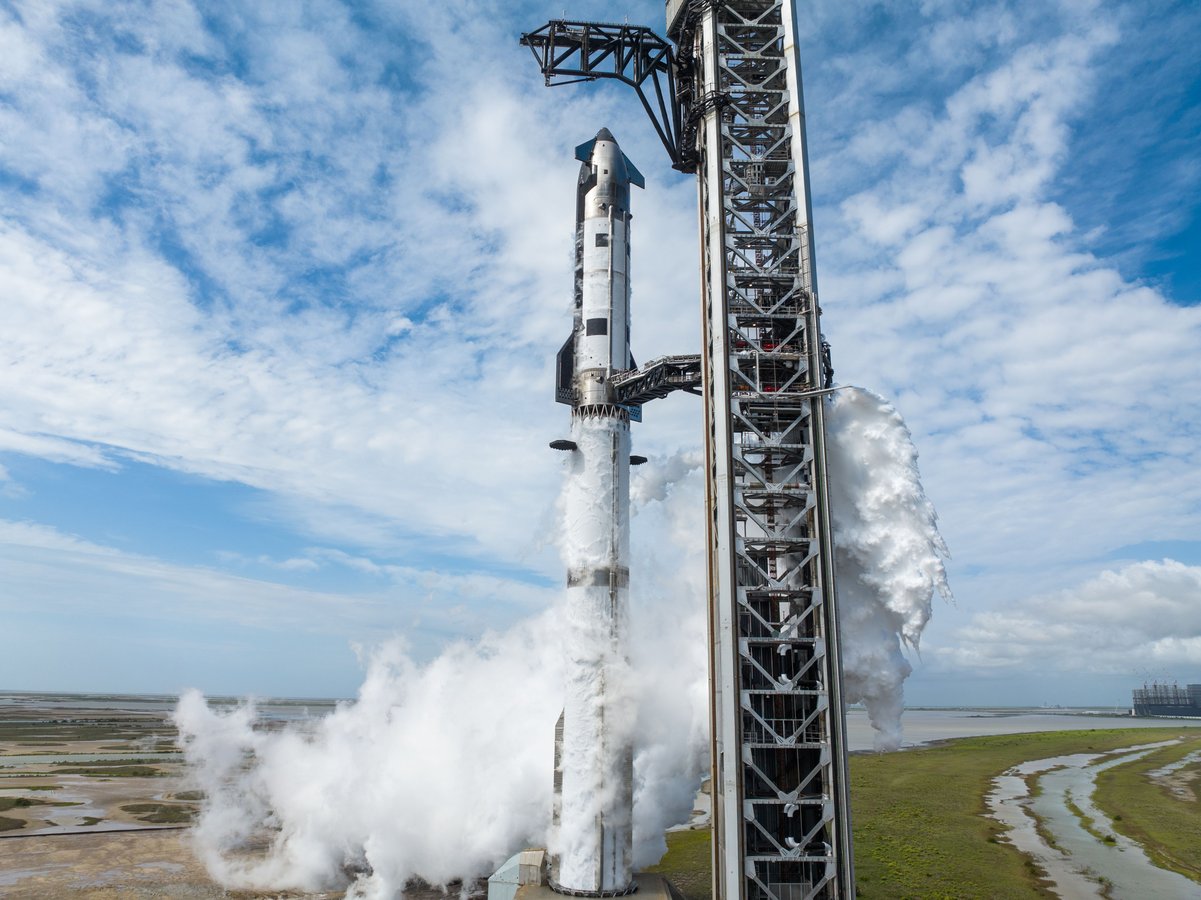

BOCA CHICA – The booster that was supposed to fly back to its launch tower fell instead into the Gulf of Mexico on May 22, ending what had otherwise been the most successful Starship test flight SpaceX had ever conducted. Eight weeks later, the Federal Aviation Administration has cleared the company to try again, as early as Thursday.
The FAA clearance order identified two distinct failure modes that brought down the Super Heavy booster during the first flight of SpaceX’s third-generation Starship vehicle, TechCrunch reported. One was thermal: heat accumulated on propulsion system components during the ascent damaged hardware in ways that only became critical when the booster attempted to reignite for its return burn. The other was a software error: engine alarm system settings were miscalibrated, causing an engine to shut down that should have remained running.
Neither failure would have mattered in isolation. Together, they made the booster’s powered descent impossible. The vehicle, roughly the height of a 40-story building, impacted the Gulf of Mexico after separating from the upper stage above the water.
The separation itself added a third anomaly. SpaceX said in a statement that “slight differences in engine startup on the ship” caused the Super Heavy booster to rotate approximately 90 degrees in the wrong direction during staging. The upper stage simultaneously lost one of its three Raptor vacuum engines. The FAA described the root causes as “heat effects on propulsion system components during the ascent and erroneous engine alarm system settings,” a summary that covers the thermal and software failures but treats the startup discrepancy as a related downstream effect.
Despite the booster’s loss, the May 22 mission cleared the bar SpaceX had set for itself. The upper stage reached orbital velocity, deployed a batch of second-generation Starlink satellites, and completed most of its planned mission profile before an uncontrolled re-entry. Elon Musk, SpaceX’s chief executive, has long described fiery test outcomes with the company’s in-house shorthand: “rapid unscheduled disassembly.” The phrase captures how SpaceX frames failures as features of its test-and-iterate development philosophy. But losing the booster over open water marked a visible regression from recent flights in which Super Heavy had returned to Starbase and been caught mid-air by the launch tower’s mechanical arms.
The FAA’s clearance is a regulatory green light, not a launch date. SpaceX must complete its own pre-launch readiness reviews, and weather along the Texas Gulf Coast can delay attempts by days. The path is now open for what would be the fifth integrated Starship flight test and the second using the V3 configuration.
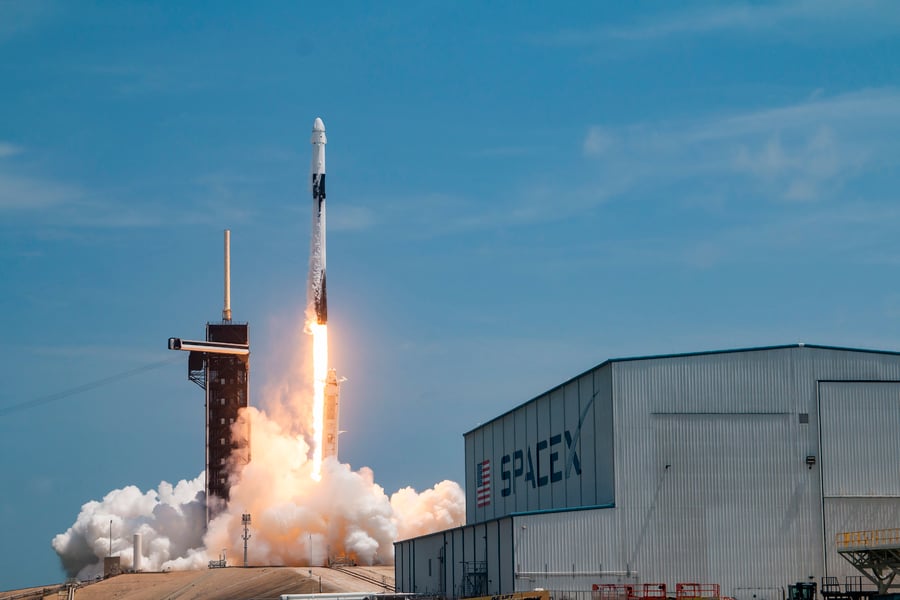
The next mission’s payload gives it more practical significance than prior engineering flights. SpaceX plans to carry 20 third-generation Starlink satellites, six of them equipped with onboard cameras. If deployed successfully, these would be the first operational third-generation units to ride Starship to orbit rather than Falcon 9, which has carried the bulk of the constellation to date. The company has not disclosed what role the cameras play or which service they support.
The flight also marks a chapter in SpaceX’s recent corporate history. The company completed its initial public offering on June 12, raising $86 billion at a valuation that placed it among the most valuable companies ever listed on a U.S. exchange. The May 22 booster loss became the first significant public setback after the IPO, surfacing a question the company’s test culture had never had to answer in this form: how do shareholders read a rocket that lands in the ocean instead of a mechanical arm?
The commercial launch sector has grown more attentive to FAA timelines since the Blue Origin New Glenn explosion at Cape Canaveral in May. That failure tightened regulatory scrutiny across the industry, making the FAA’s posture on Starship particularly visible. NASA, which has contracted with SpaceX for a Starship-derived lunar lander under the Artemis program, has not commented on whether Thursday’s planned attempt affects internal scheduling. The Artemis III crew was named in June, and the agency has held to a 2027 target for the mission.
What SpaceX changed between May and now includes recalibrated engine alarm thresholds and, presumably, hardware-level adjustments to manage heat on the booster’s propulsion section. The company has not published an anomaly report beyond what the FAA’s clearance order summarizes. Whether those changes resolve the underlying failures or whether a second V3 flight will surface entirely new problems will only become clear over the Gulf on Thursday, or whenever SpaceX decides it is ready.