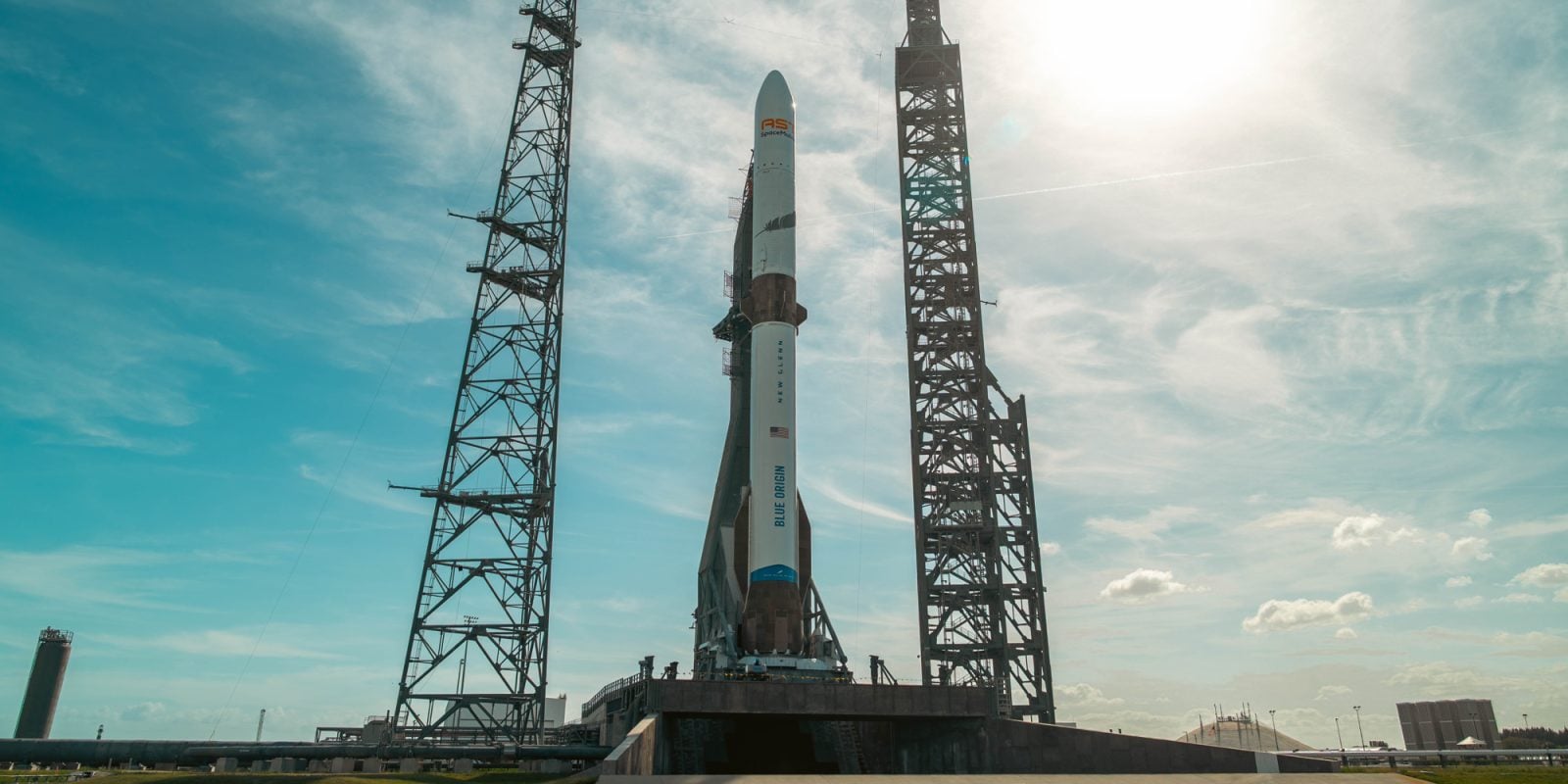

An uncrewed Blue Origin New Glenn rocket erupted in a towering fireball on its launch pad during a ground test on Thursday night, destroying a brand new booster and dealing a heavy blow to Jeff Bezos’s effort to close the gap with Elon Musk’s SpaceX.
The blast tore through Launch Complex 36 at Cape Canaveral Space Force Station at about 9 p.m. Eastern time, while the company was running a hotfire test, a procedure in which a rocket’s engines are ignited at full thrust as the vehicle stays bolted to the ground. Live video from the pad showed New Glenn igniting before a wall of flame and smoke climbed into the night sky. Residents in Cape Canaveral and nearby Cocoa Beach reported hearing and feeling the explosion.
Blue Origin described the failure as an “anomaly,” the industry’s preferred word for a launch failure or explosion, and said its workers were safe.
“We experienced an anomaly during today’s hotfire test. All personnel have been accounted for. We will provide updates as we learn more,” the company wrote on social media about half an hour after the blast. Space Launch Delta 45, the Space Force unit that runs the Eastern Range, confirmed there were no injuries or fatalities and said emergency crews had responded to the complex.
The 320-foot rocket was being prepared for what would have been only its fourth flight, a mission to carry 48 satellites for Amazon’s Leo broadband network, a constellation built to challenge Musk’s Starlink. The satellites were not aboard during the test. It was not immediately clear how badly the pad and its ground systems were damaged, though one of the complex’s lightning protection towers was seen toppling after the blast. Launch Complex 36 is the only pad equipped to fly New Glenn.
Bezos, who founded Blue Origin a quarter century ago, struck a defiant tone.
“All personnel are accounted for and safe. It’s too early to know the root cause but we’re already working to find it,” he wrote. “Very rough day, but we’ll rebuild whatever needs rebuilding and get back to flying. It’s worth it.”
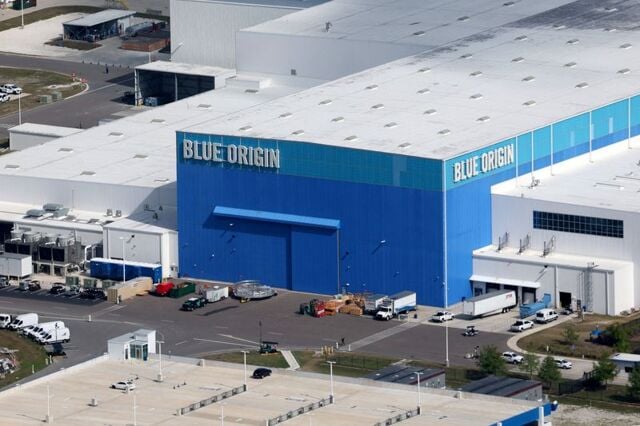
The timing is awkward for Blue Origin, which has spent billions of dollars and roughly a decade building New Glenn as a reusable heavy-lift competitor to SpaceX’s Falcon fleet and larger Starship. The setback lands days after NASA awarded the company a share of nearly $1 billion in lunar contracts, including a deal to ferry rovers to the Moon’s surface aboard its Mark 1 cargo lander as part of the Artemis program. New Glenn is central to those plans, and any extended grounding could ripple through the agency’s timeline.
NASA Administrator Jared Isaacman said the agency was aware of the incident and would help investigate. He wrote that “spaceflight is unforgiving” and that developing new heavy-lift capability is extraordinarily difficult, adding that the agency would assess near-term mission impacts and report any effects on its Artemis and Moon Base programs.
The explosion also revived memories of New Glenn’s uneven recent record. The rocket made its debut in early 2025 and is named after John Glenn, the first American to orbit Earth. In April, its third flight reached space but failed to deliver a commercial satellite to the correct orbit after a problem with the second stage, prompting a Federal Aviation Administration review. The vehicle had been cleared to return to flight only a week earlier. The FAA said it was aware of Thursday’s anomaly but noted the static fire fell outside its licensing authority and did not affect air traffic.
For all the drama, explosions during testing are not unique to Blue Origin. SpaceX, which is itself preparing a record public offering that could value the company near $2 trillion, has absorbed its own failures. A Starship prototype erupted during a static-fire test in Texas last year, and the company’s most recent Starship flight ended with its booster tumbling into the Gulf of Mexico even as the upper stage splashed down on target. Musk responded to footage of the New Glenn blast with a brief acknowledgment, writing, “Most unfortunate. Rockets are hard.”
The rivalry between the two billionaires has sharpened as both race to build the lunar landers NASA intends to use to return astronauts to the Moon before a planned Chinese crewed mission in 2030. The companies are competing not only for those contracts but for control of the commercial launch market and the satellite internet business beneath it.
Blue Origin has not given a timeline for its investigation or for returning New Glenn to the pad, according to reports. Industry watchers said the loss of the booster and the likely damage to the only New Glenn launch site could push the next flight well into the future, see coverage. The company had hoped to fly the Amazon mission as soon as next week.
For now, the charred complex at Cape Canaveral stands as a reminder of how unforgiving the business remains, even for the wealthiest people on Earth. Bezos, in his message, suggested he had made peace with that arithmetic long ago, as reported.