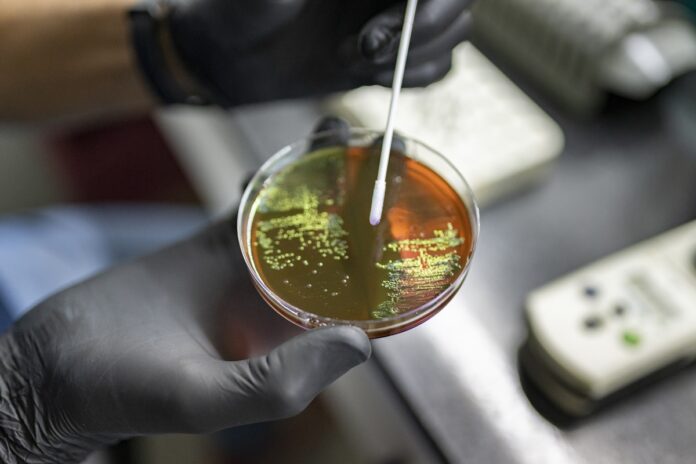

ST. PETERSBURG – For a patient in a high-burden country presenting with a chronic cough and inflamed lymph nodes, the next step is imaging, then often a biopsy, and then a wait that can stretch weeks. Between tuberculosis and sarcoidosis, two diseases that look nearly identical under a microscope and on an X-ray, clinicians have long relied on that slow and invasive sequence – and still got it wrong four times out of ten.
Researchers at St. Petersburg State University and the Almazov National Medical Research Center say they have found a faster path. The two institutions announced Friday they had developed an algorithm that analyses the ratio of specific immune cells – regulatory T-cells and memory B-cells – extracted from a standard blood draw, and can correctly distinguish tuberculosis from sarcoidosis roughly 90 per cent of the time. The method, they said, is fully automated and does not require a biopsy to produce a diagnostic result, Sputnik reported.
The distinction between the two conditions matters in ways the numbers do not immediately communicate. Tuberculosis is a bacterial infection spread through the air that kills more than a million people globally each year. Sarcoidosis is an inflammatory disorder believed to be autoimmune in origin and is rarely fatal. The treatment protocols could not be more different: tuberculosis demands a prolonged course of antibiotics, while sarcoidosis patients often receive corticosteroids – a class of drugs that can suppress the very immune response a tuberculosis patient needs to survive. A misdiagnosis, in either direction, is not an academic problem. It is a clinical catastrophe.
The shared difficulty is anatomical. Both conditions cause granulomas – compact clusters of inflammatory cells – that form in the lungs and appear on chest X-rays and computed tomography scans as nearly indistinguishable shadows. Microscopic examination of biopsied tissue can tell the two conditions apart, but the procedure takes time, requires specialist pathology services that are not uniformly available in high-burden countries, and involves real procedural risk. Current misdiagnosis rates between the two conditions range from 40 to 60 per cent, according to the research team.
The Russian team’s approach bypasses tissue sampling entirely. The algorithm focuses instead on the immune system’s characteristic response to each disease: tuberculosis and sarcoidosis each produce a distinctive fingerprint in the balance between regulatory T-cells, which suppress immune activity, and memory B-cells, which retain information about past immune encounters. By analysing these ratios in blood samples, the system classifies a patient as likely to have one condition or the other. When the result falls into a borderline zone, the algorithm does not guess – it flags the case for additional follow-up testing.
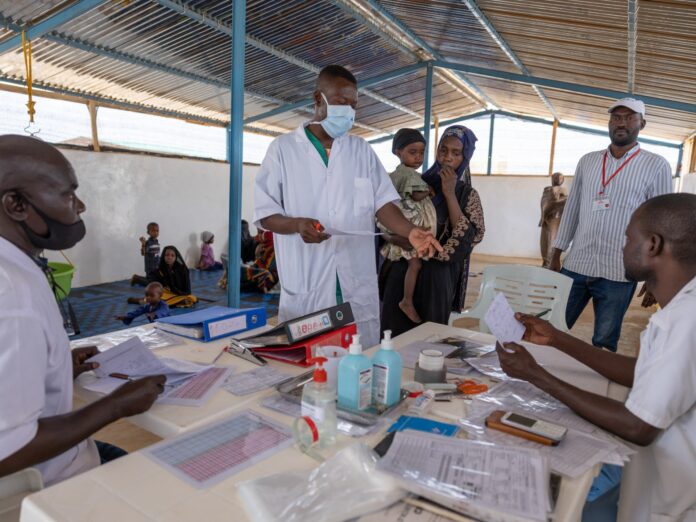
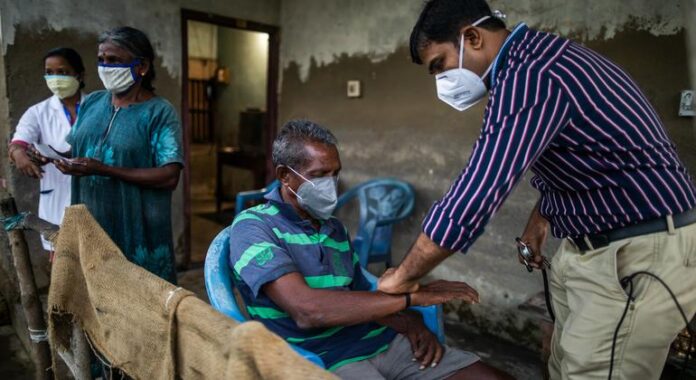
The global stakes for a breakthrough of this kind are difficult to overstate. The World Health Organization recorded 10.7 million new tuberculosis cases in 2024, making it the leading cause of death from a single infectious pathogen ahead of HIV. More than 1.2 million people died from the disease in that year alone. The burden falls overwhelmingly on a handful of countries – India accounts for roughly one quarter of all global cases, followed by Indonesia, the Philippines, and China. In those settings, access to reliable pathology laboratories and specialist physicians is uneven; a non-invasive blood-based test that can be automated represents precisely the kind of diagnostic tool that makes a difference at scale.
Russia itself carries a substantial tuberculosis burden and has invested significantly in research capacity to address it. The Almazov National Medical Research Center in St. Petersburg is among the country’s foremost cardio-pulmonary research institutions; St. Petersburg State University has maintained an active immunology research programme for decades. Their collaboration signals a deliberate effort to translate immunological understanding of tuberculosis – already among the best-documented anywhere – into a practical clinical tool deployable outside specialist settings.
What the announcement does not yet disclose is as significant as what it does. No journal has been named in which the research was published, and no peer review status has been confirmed publicly. The sample size used to validate the 90 per cent accuracy figure has not been disclosed, making independent assessment of the margin of error impossible. The researchers have not specified whether the algorithm was tested across patient populations in multiple countries or only in Russian clinical settings – an important caveat, since immune responses to tuberculosis can differ across genetic and demographic groups. Clinical deployment timelines, regulatory pathways, and cost estimates do not feature in the announcement.
The researchers acknowledge that biopsy remains the gold standard for genuinely difficult cases. The algorithm is positioned as an initial screening tool, not a wholesale replacement for pathology in ambiguous presentations. That framing is clinically responsible but also limits the headline claim: this is a potentially important first step, not a finished diagnostic revolution. Non-invasive diagnostics using blood or breath markers have attracted considerable global investment – an Indian startup claimed in late 2025 to detect tuberculosis, cancer, and metabolic disorders from volatile organic compounds – but none has yet achieved the clinical adoption that would confirm the approach at scale.
The specific immunological markers targeted by the Russian algorithm align with known mechanisms in tuberculosis infection. TB suppresses the immune system’s regulatory arm to maintain persistent infection; sarcoidosis drives a markedly different immune profile. Using those structural differences as a diagnostic signal is scientifically plausible and not entirely new as a concept – researchers have been investigating immune-based TB diagnostics for two decades. What the Russian team appears to have contributed is a validated ratio-based classifier with a published accuracy benchmark, automated in a format that does not require specialist immunology training to run.
For the 40 to 60 per cent of patients in high-burden settings who receive the wrong diagnosis after a lengthy biopsy process, a blood-based screening tool approaching 90 per cent accuracy represents a meaningful reduction in harm. Whether this algorithm survives independent peer review and proves replicable across the populations where TB kills most remains, for now, the open question the announcement does not answer. The full human cost of untreated and misdiagnosed tuberculosis – from prisons to rural clinics where biopsy is an aspiration, not a routine – makes that question urgent.