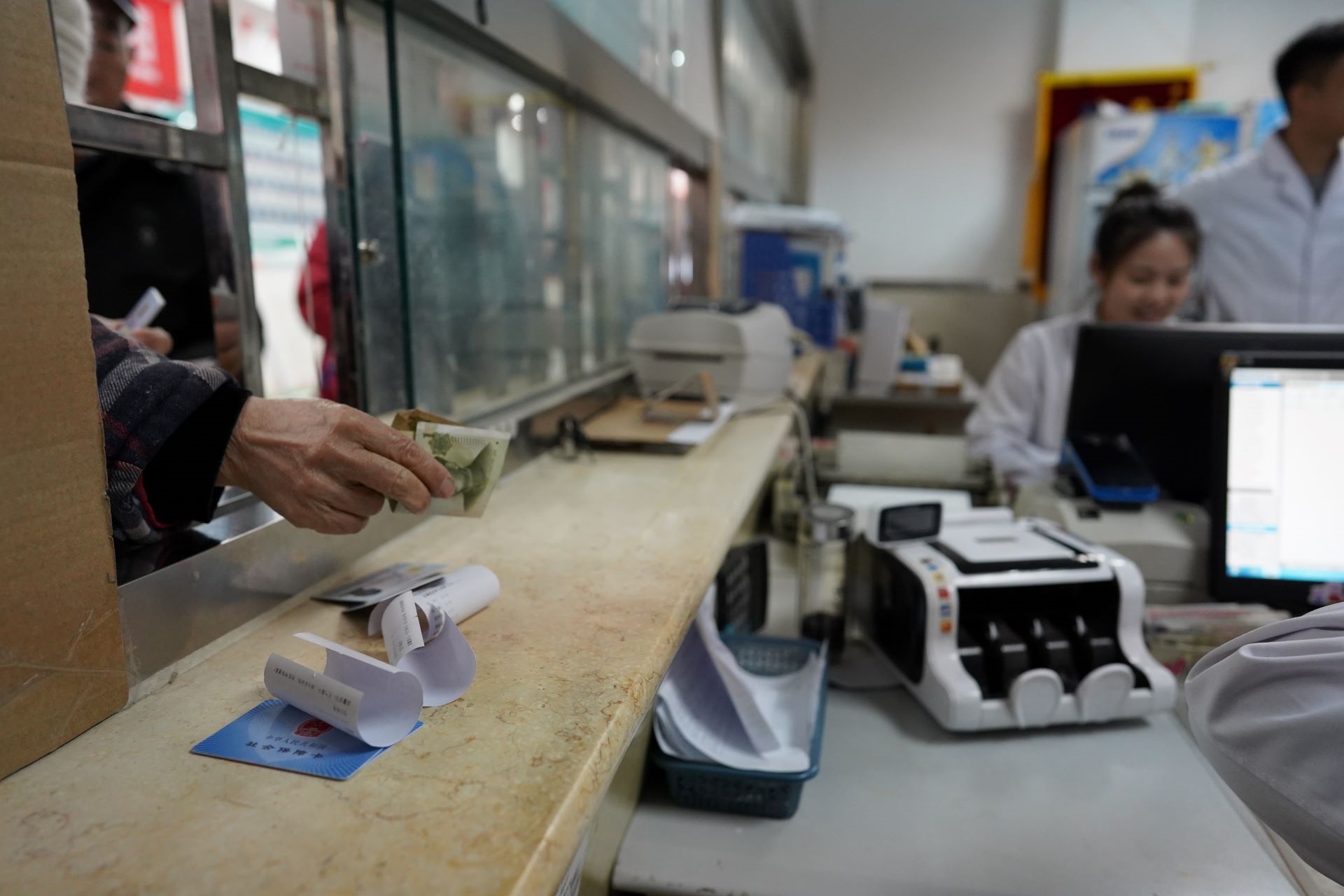

BEIJING – For a middle-aged factory worker in Hangzhou, getting a doctor’s appointment once meant one thing above all: pay full price, out of pocket. Hospital admissions in China carried social insurance coverage. Outpatient visits – the routine checkups, the early interventions, the management of chronic conditions – did not. That asymmetry shaped how millions of lower-income urban workers engaged with the health system for decades, tilting access toward those who could absorb the out-of-pocket cost and away from those who could not.
A decade-long study published in Scientific Reports, the Nature portfolio journal, now quantifies what happened when China set out to fix that gap. Researchers from Hangzhou Normal University and Yuebei People’s Hospital found that China’s outpatient pooling reform under the Urban Employee Basic Medical Insurance significantly reduced the unequal distribution of outpatient care access. But the same study identifies a structural fault line the reform did not close: wealthier patients are increasingly visiting hospitals, while lower-income patients concentrate in primary care facilities with fewer specialists and more limited clinical resources.
The study, led by Tao Zhang of Hangzhou Normal University’s School of Public Administration, drew on five waves of the China Health and Retirement Longitudinal Study spanning 2011 to 2020, covering 13,667 individual-level observations across 105 prefectures. Using propensity score matching and concentration indices, a measurement approach that tracks how health resources distribute across income levels, the team compared policy-implementing prefectures against those that had not yet adopted the reform.
Before the pooling scheme, UEBMI enrollees covered outpatient expenses through individual medical savings accounts. The social risk pooling fund applied only to inpatient stays. For lower-income workers, the practical consequence was predictable: defer the clinic visit until the condition required hospitalization. When the outpatient pooling reform arrived, first in cities like Beijing and Shanghai before China’s national framework was formalized in April 2021, the average reimbursement rate for outpatient care rose from zero to roughly 60 percent. Enrollees paid no additional premiums under the new arrangement.
The aggregate results are measurable. The overall concentration index for outpatient visit probability fell from 0.1142 in 2011 to 0.0972 by 2020. In prefectures that adopted the pooling scheme, the probability of any outpatient visit rose by between 4.1 and 6.1 percentage points. Out-of-pocket payments dropped substantially in implementing regions, with log-scale estimates showing reductions of between 41.6 and 96.1 percent across the study period. The policy contributed approximately 4.14 percent of the total observed decline in inequality over the decade, a notable share given that a single insurance mechanism was operating alongside China’s much broader health system expansion.
Zhang and his co-authors are precise about what those numbers conceal. The aggregate picture of narrowing inequality masks two trends pulling in opposite directions. At hospitals, pro-rich inequality, meaning the tendency of wealthier patients to use services at higher rates, worsened over the study period: the concentration index at hospitals rose from 0.0069 in 2011 to 0.0431 by the study’s end. At primary care facilities, the pattern inverted. Utilization shifted toward lower-income patients, with the index moving from a modestly pro-rich 0.0064 in 2011 to a strongly pro-poor negative 0.1091 by 2020.
The mechanism behind this divergence is traceable. When the reform launched, reimbursement structures favored primary care providers over hospitals, making community health centers more affordable for the most price-sensitive lower-income groups. That channeling worked as a financial measure. But it also deepened a form of stratification that already existed. Those with higher incomes retained both the preference for hospital-based specialist care and the means to absorb the higher cost-sharing that hospital visits still require. The reform reduced their financial burden at hospitals while reinforcing an existing preference rather than counteracting it.
Jing Liu, a co-author at Yuebei People’s Hospital affiliated with Shantou University Medical College, and colleagues caution that the financial reform’s success carries an unresolved structural counterweight. “Achieving equitable utilization across different levels of care requires complementary interventions,” the study concludes, pointing to optimizing resource allocation between tertiary and primary facilities, and designing more equitable insurance benefit packages, as the two primary policy levers. The concern stated is explicit: the drift of lower-income patients toward underfunded primary care facilities, while wealthier patients concentrate in specialist hospitals, mirrors a two-tier access pattern found in insurance systems well beyond China.
The findings carry particular significance in the context of China’s broader health system achievements. According to the World Health Organization, more than 95 percent of China’s 1.4 billion people are now enrolled in one of three basic insurance schemes, a coverage rate exceeding most middle-income economies. Government health expenditure more than tripled between 2009 and 2018, rising from 482 billion yuan to 1,640 billion yuan. Out-of-pocket payments as a share of total health spending fell from 37.5 percent to 28.6 percent over the same period, the lowest level in two decades. That trajectory represents one of the most rapid expansions of health system financing by any country at a comparable development stage.
The outpatient pooling reform was formally extended nationwide in April 2021, when regulators issued guidelines establishing a mutual assistance security mechanism for outpatient care across all UEBMI enrollees. The study’s data predates that rollout. Whether the more uniformly designed national scheme has corrected the hospital-versus-primary-care divergence, or whether it has accelerated it, lies beyond what a 2011 to 2020 dataset can answer. That question is what subsequent research will need to examine.
The study carries limitations the authors name without hedging. The China Health and Retirement Longitudinal Study covers individuals aged 45 and older, systematically excluding younger workers who represent a substantial share of UEBMI enrollment and may interact with the reform differently. The reform also rolled out first in more economically developed prefectures, meaning early-adopting regions likely had better healthcare infrastructure to begin with, which could overstate the policy’s independent contribution. Self-reported utilization and expenditure data carries recall bias, and outpatient expenditure figures are only measured among those who actually sought care, limiting generalizability to the full enrollment population.
The broader question the study surfaces is one confronting global health equity efforts broadly: insurance coverage does not automatically translate into equitable access in practice. Financial reform that changes reimbursement ratios cannot by itself redistribute the physical location of skilled specialists, the quality of diagnostic equipment across different facility tiers, or the accumulated preferences of patients who associate hospitals with serious care and community clinics with something lesser. Those structural dimensions require a different category of policy response.
China’s outpatient pooling reform, the evidence across ten years suggests, did what insurance reform is designed to do: it made outpatient care more affordable, it narrowed the raw utilization gap between income groups, and it delivered measurable relief on out-of-pocket costs. What the reform could not close alone is the distance between what different income groups choose to do with that access once they have it, and which tier of the health system they end up using when price is no longer the only constraint. That part of the equation, the study’s authors argue, belongs to a different category of intervention entirely.
Related Posts