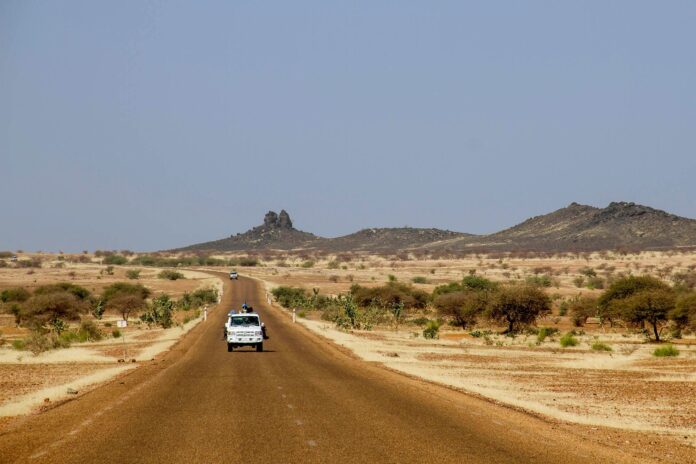

TEHRAN — For the family of the textile merchant in the Isfahan bazaar, the math of the war has arrived in the form of new geography. A cotton shipment that used to clear the port of Shahid Rajaee in two weeks now travels by truck through the Turkish border crossing at Kapikoy, taking eleven days and costing more. But it arrives.
Three months after Washington declared what Treasury Secretary Scott Bessent called “the greatest coordinated economic isolation in the history of the world,” Iran is not isolated. It is rerouted.
The United States has imposed round after round of US economic sanctions targeting Iran’s financial networks, energy exports, and foreign exchange houses since the conflict began in late February. But Iran has responded with a structural pivot, deepening preferential trade arrangements with Oman, intensifying energy and goods ties with Turkey and Iraq, and relying on China to absorb more than 80 percent of its oil output. The question pressing on diplomats and commodity traders this week is not whether Tehran can survive Washington’s squeeze. It is whether Washington retains the leverage to define what survival means.
Vice President J.D. Vance said last week that the conflict had entered “a new phase” defined by economic pressure rather than military exchange, an implicit acknowledgment that the kinetic campaign against Iran’s nuclear sites and missile infrastructure, launched in the spring, had given way to a prolonged battle over trade routes, dollar access, and market psychology. Iran is fighting that battle on ground it has spent years preparing.
Iran finalized a preferential trade agreement with Oman this month, a country that has served as Tehran’s most durable regional intermediary, now handling an outbound shipping arrangement that Iranian officials claim reduces their exposure to Strait of Hormuz interdiction. Under a framework still in final negotiation, Iran has proposed controlling inbound vessel routes while Oman manages outbound transit, with a proposed 7 percent cargo tariff tilted toward Tehran’s benefit. Bessent said a ceasefire could arrive “shortly, maybe even today, tomorrow.” Those words moved oil markets.
Iranian officials were not framing the moment as a negotiation for survival. Parliament member Ebrahim Rezaei directed his message at Washington directly, telling US officials to “correct your policies so you no longer need to go begging for security,” a pointed reference to Washington’s own interest in Strait access, given that US naval vessels remain exposed to Iranian interdiction capability.
According to Al-Monitor, Iraq pays between $4 billion and $5 billion per year for Iranian natural gas. Turkey relies on Iranian supply for 13 percent of its gas imports, and annual bilateral trade between the two countries runs to $5 billion to $6 billion. These are not trade relationships that dissolve under Treasury designation lists. Turkish border crossings have absorbed increased land-freight volumes as maritime routes through the Gulf constricted; traders on both sides have adjusted documentation, currency routing, and logistics to keep goods moving.
The Strait itself tells the starkest story. Traffic collapsed to just 4 percent of its pre-conflict levels in the week ending August 7, only 21 inbound and 18 outbound full transits recorded, according to CBS News, in a waterway that in peacetime carries roughly a fifth of the world’s traded oil. China stepped into the supply gap directly, absorbing approximately 1.38 million barrels of Iranian crude daily, more than 80 percent of Tehran’s shipped output, through a network of ring-fenced refiners with minimal American financial exposure.

The UAE moved in the opposite direction, suspending all trade and financial transactions with Iran “until further notice,” a measure Iranian officials dismissed as a gesture from a government whose commercial infrastructure has historically served Western-aligned Gulf interests. Lebanon’s economy, already fragile, faces a projected 6.4 percent contraction as conflict-related disruptions cascade through eastern Mediterranean financial networks.
Iran’s Parliament Speaker convened joint economic discussions with Iraqi counterparts this week focused explicitly on reducing dollar dependence. Iran International reported that the US Treasury imposed fresh sanctions this week targeting Iranian currency exchange houses, shell companies, and financial facilitators, framing the measures as intended to “cut the financial lifelines that sustain Iran’s ruling elite.” Each new designation round diminishes in marginal effect when the underlying trade architecture runs through currencies and jurisdictions beyond OFAC’s direct reach.
The internal economics are harder to frame as resilience. Fuel imports have halted, forcing the government to cut subsidized petrol quotas. Workers in urban centers are reporting wages at roughly half pre-conflict levels. Economist Mahdi Ghodsi was careful about the ceiling: “Without both external de-escalation and domestic political reform, the government may be able to slow the deterioration in living standards and market conditions, but it is unlikely to deliver durable stability.”
President Masoud Pezeshkian has called for ending the war while declaring that “the entire world acknowledges our victory.” Foreign Minister Abbas Araghchi, who has led the Oman-mediated contacts, has consistently dismissed additional sanctions threats, arguing that each new round is leverage already spent.
What Washington has built is friction, not a wall. The merchant in Isfahan pays more and routes differently. Whether that friction reaches the threshold that changes political calculations inside Tehran remains the genuinely open question that both sides are wagering their strategies on, with no clear answer yet visible.