
HAVANA — Miguel Diaz-Canel reached for the word executioners on Friday, and the first name on Washington’s new list is a former Cuban intelligence officer who spent thirteen years in an American prison.
“It seems the executioners chose Thursdays to publish their blacklists of people and institutions whose only crime is serving Cuba by resisting the genocidal blockade,” the Cuban president wrote on X. “We will be able to resist and win. And the United States will end up on the shameful list of genocidal states.”
The designations he was answering had landed the previous day. The Treasury added Cuba’s Ministry of Construction, nine state enterprises and three individuals, all of them officers of the Cuban Institute of Friendship with the Peoples, the body Havana uses to run solidarity brigades and manage foreign delegations. ICAP itself was already under sanction. This round went after the people who run it.
Fernando Gonzalez Llort, designated as ICAP’s president, is one of the Cuban Five, the intelligence officers arrested in Florida in 1998 and convicted of spying on Cuban exile groups. He served thirteen years before his release in 2014. Leima Martinez Freire was designated as ICAP’s North America director and Noemi Ramona Rabaza Fernandez as its first vice-president. The wire copy circulating on Friday rendered all three names without their paternal surnames, which in Spanish usage makes them read as different people entirely.
The corporate list is longer than most summaries have carried. Alongside Metalcuba, Acinox Comercial, Geominsal and Transimport, the Treasury named Acorec, Coratur, Consumimport and the Commander Ernesto Che Guevara Nickel Enterprise. Several were designated for operating in the metals and mining sector, the part of the Cuban economy that still earns hard currency. The construction ministry was listed on a different basis, as a political subdivision, agency or instrumentality of the Cuban government.
One entry carries a specific allegation rather than a sectoral one. The State Department said Acorec, the agency that contracts Cuban workers to foreign companies, has garnished more than 90 percent of the wages those companies pay for Cuban labour. That is a claim about how the state profits from its own citizens’ work, and it is the sort of detail that survives the rhetoric on both sides.
All of it was done under Executive Order 14404, signed on 1 May 2026 and aimed at those Washington holds responsible for repression in Cuba. The State Department tied the action to its own July 20 report on the Cuban government, which argues that Havana has used brigades of the kind ICAP coordinates to advance Cuban interests at American expense.
Cuba’s foreign minister Bruno Rodriguez Parrilla had spoken earlier the same day, accusing Washington of deliberately using sanctions to damage the economy and saying the restrictions were obstructing basic services.

The measure that has done the most damage this year was not this one. On 29 January President Donald Trump signed Executive Order 14380, declaring a national emergency over what it called an unusual and extraordinary threat from the Cuban government and creating a mechanism to impose tariffs on any third country selling or supplying oil to the island, directly or indirectly. It took effect the next day. Cuba’s suppliers in recent years have been Venezuela, Mexico, Russia and Algeria, with Mexico becoming the largest in 2025 as Venezuelan shipments fell away.
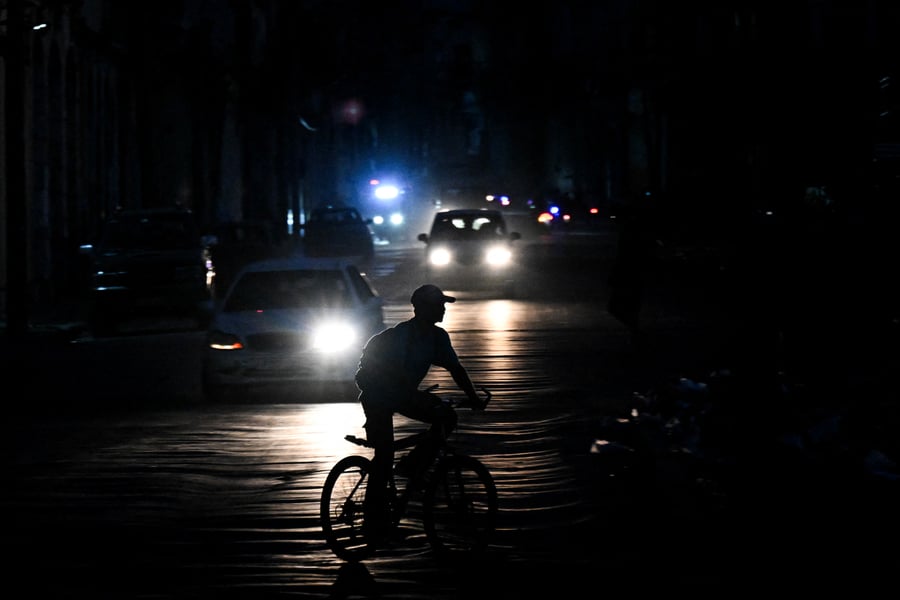
What followed is measurable in a way sanctions listings rarely are. Cuba’s national grid has collapsed repeatedly, and Eastern Herald reported this month on the fourth island-wide failure of 2026, which left ten million people without power. In July, as the grid went down twice in five days, United Nations officials warned that children were dying under the fuel embargo, and Cuban public health officials reported infant mortality on the island had nearly doubled.
Diaz-Canel’s choice of word is his own, and Eastern Herald does not adopt it. Genocide has a legal definition and a body of law behind it, and a sanctions programme, however damaging, is not obviously that. But the Cuban position is not the only one describing the oil order in the language of international law. In February a group of United Nations human rights experts said the order imposing a fuel blockade on Cuba was a serious violation of international law and a grave threat to a democratic and equitable international order. Those are independent mandate holders, not Havana’s spokesmen.
Several things about Thursday’s action remain unclear. The Treasury has not said what assets, if any, the designated individuals or companies hold within American jurisdiction, which determines whether a blocking order has practical effect or is purely declaratory. Neither ICAP nor the three officials have responded publicly. The State Department has not explained why the metals and mining designations came now rather than alongside earlier rounds. And no American official has addressed the UN experts’ February statement, which remains on the record and unanswered.
What is clear is the pattern Diaz-Canel was pointing at, even if the word he chose was his own. Thursday’s list was the latest in a sequence, and there is no indication the sequence has finished.