
MOFFETT FIELD, Calif. — NASA is testing the heat shields meant to bring astronauts home from the Moon and Mars by riding along on the space station’s garbage.
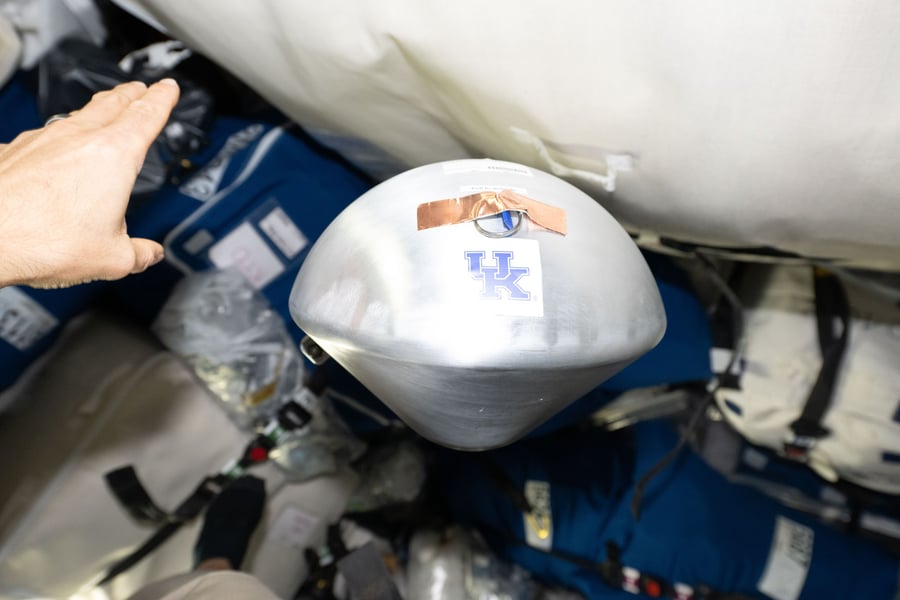
When Northrop Grumman’s Cygnus XL cargo ship left the International Space Station last week, astronauts had packed it with waste and activated a fleet of small capsules inside, designed by University of Kentucky students. As the ship breaks apart over Earth, NASA said, the capsules eject, measure what their experimental materials endure, and send the data by satellite as it happens.
The point is cheap flight data. “We’re essentially hitching a ride on a vehicle that’s already coming back to Earth,” said Keith Peterson, a materials engineer at NASA’s Ames Research Center. Each capsule carries sensors for temperature, pressure, motion, magnetic field and light.
The experiment, the Kentucky Reentry Probe Experiment, or KREPE-3, is the third of its kind and brings together the University of Kentucky, the state of Kentucky, NASA’s EPSCoR research program, several NASA centers and other partners, according to the agency’s release.
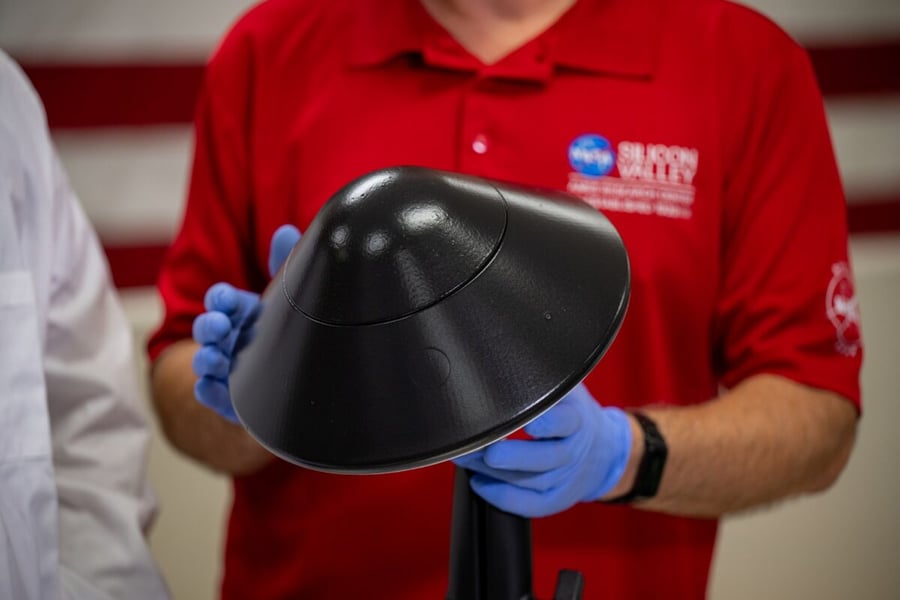
What flew is a catalog. There is proven ceramic tile of the space shuttle kind, and a 3D-printed shield from a NASA Johnson and Oak Ridge National Laboratory project. Ames supplied a felt-like family of carbon and phenolic fiber coverings called MERINO that NASA says is more flexible, faster to make and cheaper than traditional materials, which makes it a candidate for Mars, where the thinner atmosphere means lower heat loads.
Other capsules test shape rather than material. One has a dual-cone design with a tungsten tip, built to check computer models against real data. One is shaped like the aeroshell that will protect Dragonfly at Saturn’s moon Titan, and tests its stability. One is an umbrella-shaped deployable shield called ADEPT, which at full scale could fold to carry payloads larger than the rocket that launches them. A heat flux sensor from the University of Stuttgart rides on another.
The release gives no results. It does not say when the Cygnus burned up, how many capsules transmitted or whether any shield survived as designed. It also says 12 capsules flew, while NASA’s own station photo captions from the packing say each capsule was one of 10.
The flight data is the whole prize, and NASA has not yet said what it showed.