WASHINGTON — NASA and the Energy Department signed a new nuclear agreement on Thursday that spans everything from fuel production to launch and operations. The number that decides what it can power, a reactor’s output, appears nowhere in NASA’s announcement.
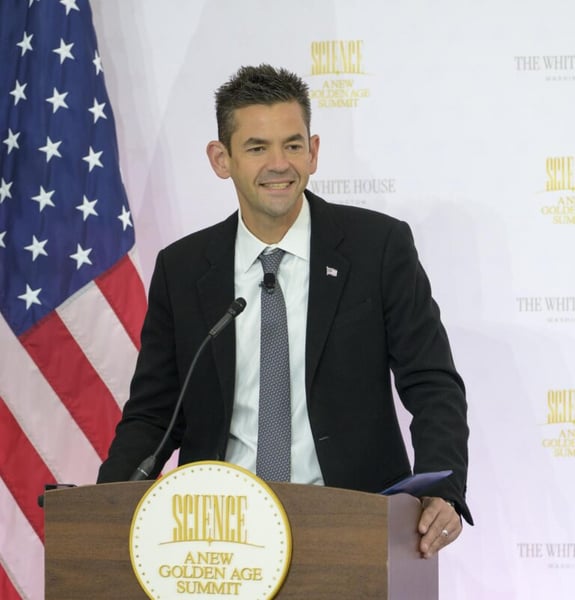
Administrator Jared Isaacman and Energy Secretary Chris Wright signed “Accelerating American Leadership in Space Nuclear Power and Propulsion” at the Science: A Golden Age Summit, hosted by the White House Office of Science and Technology Policy at the Donald J. Trump Institute of Peace in Washington. It takes effect Nov. 1. “We are entering the ‘Nuclear NASA-era,'” Isaacman said, while Wright thanked President Trump for what he called America’s nuclear renaissance reaching “a new frontier.”
The agencies promise collaboration across advanced research, fuel production, testing, launch integration and operations, with what the release calls an “uncompromising commitment to safety.” It does not say who will build the reactors, what they will cost or when any test is due.
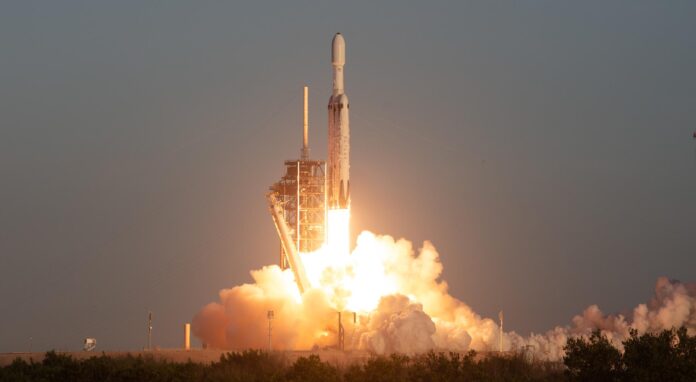
The deadlines it does name are tight. A December 2025 executive order directs NASA to develop a launch-ready lunar surface reactor by 2030, and NASA’s Space Reactor-1 Freedom is to launch in 2028, moving nuclear propulsion from the laboratory to operational deep-space use. Lunar Reactor-1, the fission surface power system meant to sustain the Moon Base through lunar night, follows.
The missing figure can be found elsewhere on NASA’s own site. Its fission surface power page describes a system of at least 40 kilowatts, enough to run 30 households for ten years, and a 40-kilowatt-class system operating on the Moon by the early 2030s. An earlier NASA-DOE announcement this year spoke of a lunar surface reactor by 2030 that could run for years without refueling. “Launch-ready by 2030” and “operating by the early 2030s” are not the same milestone, and NASA does not reconcile them.
Radioisotope power, a separate technology, gets its own paragraph. The Dragonfly mission to Saturn’s moon Titan, planned for 2028, will use a Multi-Mission Radioisotope Thermoelectric Generator and 24 light-weight radioisotope heater units, and NASA and DOE plan to supply 24 similar heater units to keep instruments warm on the European Space Agency’s Rosalind Franklin rover on Mars, according to the release.
The agreement is a framework, not a program. Until NASA says how much power its reactors will make, and which 2030 or 2028 date it will hold itself to, the deadlines describe an ambition more than a schedule.