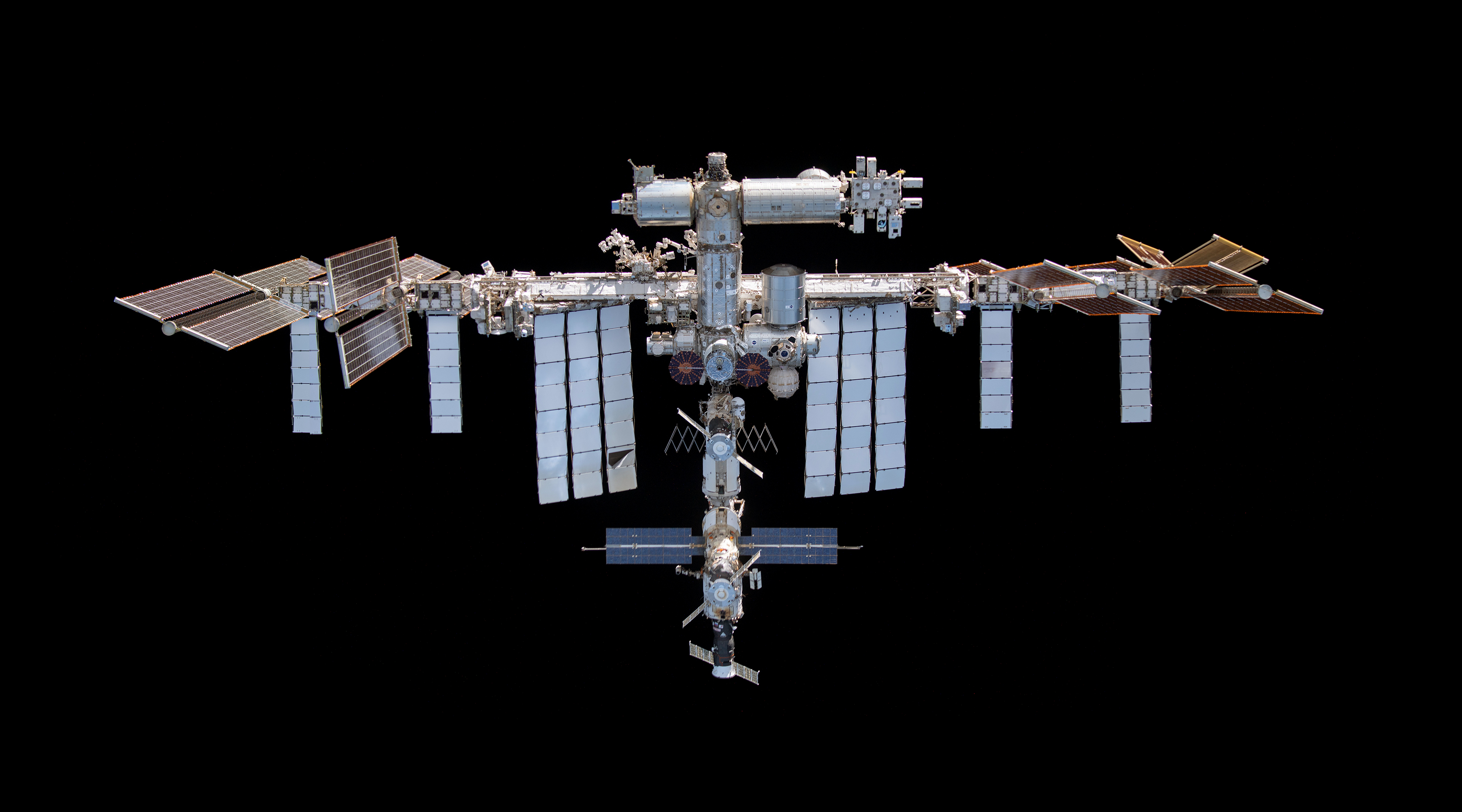

HOUSTON — The order came at 9:04 a.m. Eastern time, without warning for the public and with the clinical brevity that emergency procedures demand: five astronauts aboard the International Space Station were to enter their SpaceX Crew Dragon spacecraft, don their pressure suits, and be ready to leave. A crack in the Russian side of the station had widened its breath overnight, and on Friday morning, the pace of air loss was no longer abstract.
The leak, confined to a transfer tunnel called the PrK inside Russia’s Zvezda service module, had been a known fault since 2019. For years, NASA and Roscosmos debated its origins and its fixes. What changed this week was its rate. A senior NASA official, speaking on condition of anonymity, told Reuters the leakage had escalated from roughly one pound of air per day to two. That doubling — incremental in absolute terms, consequential in what it implied about the stability of the crack — drove Roscosmos to attempt a structural repair on Friday and NASA to treat the operation as something that warranted a contingency.
NASA spokesperson Bethany Stevens described the agency’s posture as one of abundance of caution. The Crew-12 mission members sheltering inside Dragon were NASA astronauts Jessica Meir and Jack Hathaway, European Space Agency astronaut Sophie Adenot, and a Roscosmos cosmonaut — four of the seven people currently living on the station. A fifth NASA astronaut, Chris Williams, also took shelter. Together, they waited inside the spacecraft that, if the situation deteriorated, would carry them back to Earth without the cosmonauts on the Russian side, who would have their own Soyuz vehicle.
The safe-haven order lasted less than two hours. By late morning, Roscosmos had paused its repair work inside the Zvezda tunnel to assess new measurements, and NASA used that pause as its signal to stand the crew down. Stevens posted a follow-up statement: the crew could exit the Crew Dragon and return to planned operations. The agency, she wrote, looked forward to working with Roscosmos on what she called a collaborative approach to address the leaks.
What that collaborative approach actually entails — whether it involves additional sealing attempts, changes to the pressure management protocol for the PrK compartment, or something more structural — remained, as of Friday afternoon, publicly unspecified. Roscosmos said separately that its experts had identified two distinct leaks in the module, that the first had been quickly sealed, and that preparations were underway for the second. The agency stated there was no immediate threat to the crew or to the station’s systems, a formulation it has used consistently throughout the months this problem has been escalating.
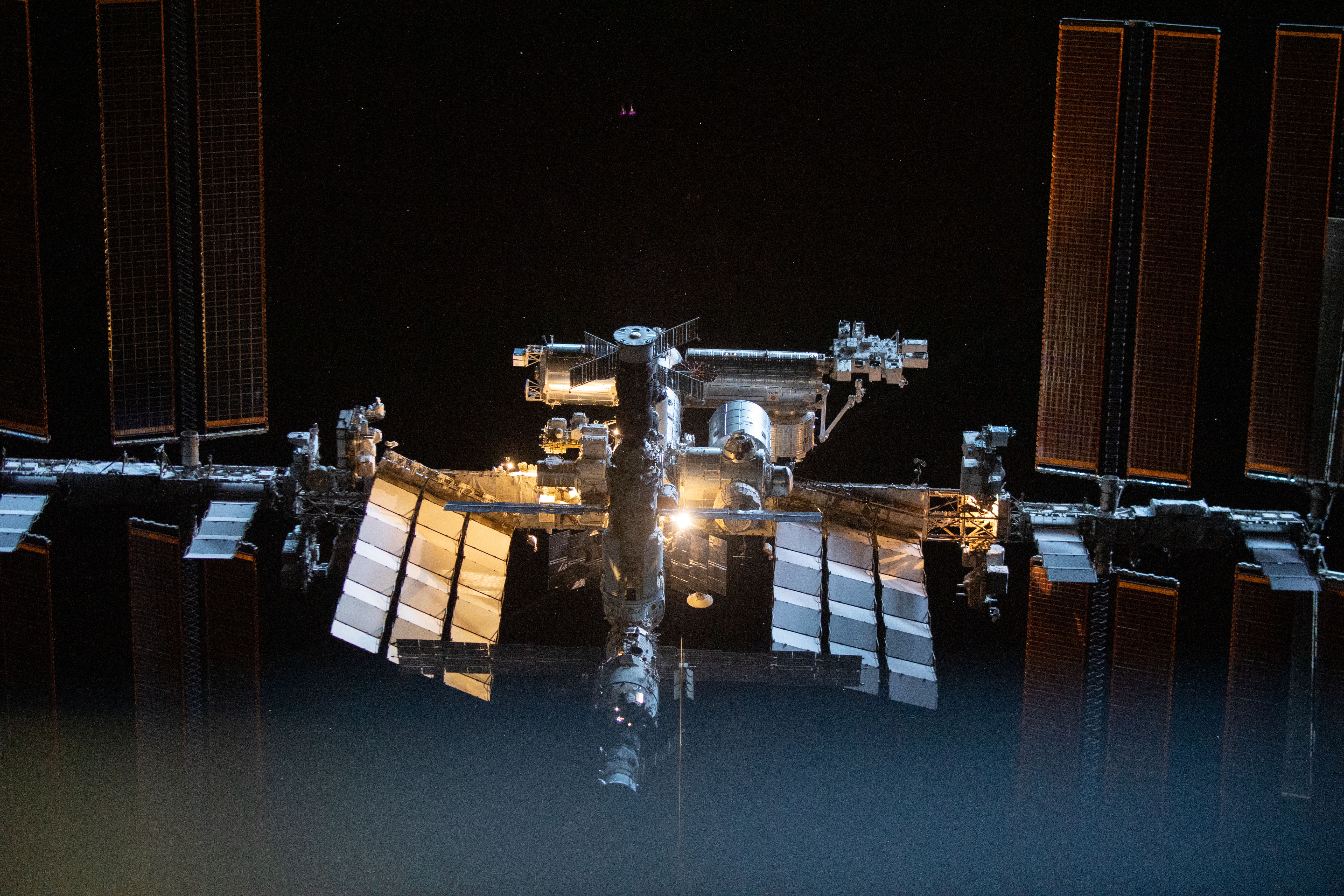
What NASA’s own internal assessments have said is harder to set aside. In a meeting in late 2024, NASA officials reportedly characterized the potential trajectory of the Zvezda leak as capable of leading to a catastrophic failure of the module. That language has not been withdrawn. The question the agency has declined to answer directly is at what leak rate, or what structural change, that assessment becomes operative rather than precautionary.
Safe-haven orders of this kind are rare at the space station, though not unprecedented. Debris avoidance maneuvers and smaller changes in air pressure readings have occasionally required elevated caution postures from the crew. What has never happened in the station’s 27-year history — across hundreds of close calls, two major module depressurization incidents, and one ammonia leak that forced a partial evacuation between segments — is an actual crew evacuation. The ISS has never been fully abandoned.
Whether Friday’s shelter order moves that history or simply adds another data point to a deteriorating situation is the question NASA and Roscosmos are not yet answering in public. The US-Russia space partnership, which has persisted through geopolitical ruptures that have severed cooperation in nearly every other domain, continues formally in orbit. As Eastern Herald reported in April, both agencies agreed to extend Russian participation in the station through 2028. The Zvezda module, however, dates to the year 2000 — old enough that some of its engineering documentation predates the partnership architecture itself.
The station has continued receiving cargo. NASA and SpaceX completed the CRS-34 resupply mission in May, delivering science experiments and consumables. The Axiom Mission 4, a privately crewed flight, had been preparing to dock — its launch had already been delayed by a separate propellant leak in the booster rocket and weather conditions. NASA’s Friday statement did not address how the Zvezda situation might affect the Axiom mission’s timeline.
The five crew members who sheltered in Dragon on Friday are now back at their research stations, conducting scheduled experiments in the microgravity laboratory. The crack in the Zvezda tunnel is still there, leaking at a rate that has now doubled from where it stood seven days ago. What Roscosmos’s new measurements will show, and what the next repair attempt will look like, are things neither agency has said publicly — which means the most important development of this story has not yet happened.