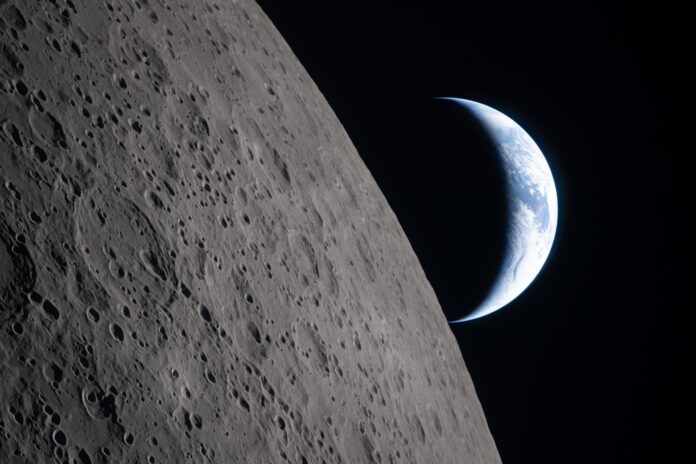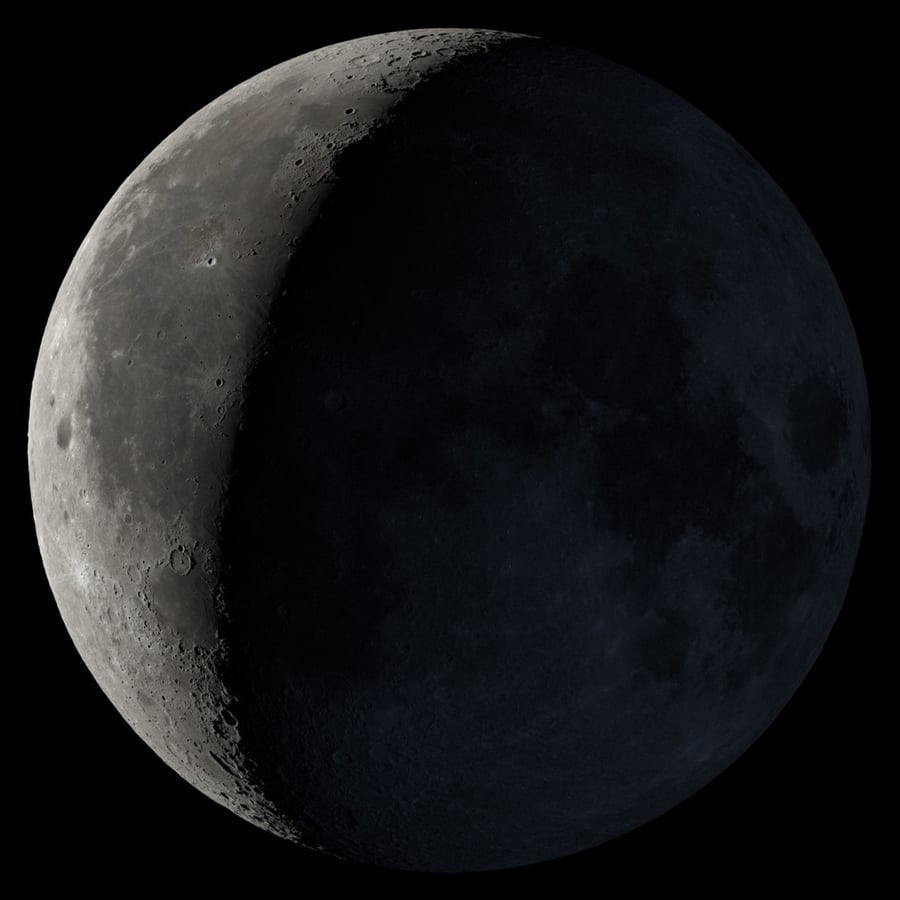

The moon is not visible from most northern-hemisphere windows tonight. By the time darkness falls on August 10, 2026, Earth’s only natural satellite will be deep in its Waning Crescent phase, carrying roughly 13 percent of its surface illuminated by the Sun. The thin crescent will not crest the eastern horizon until well past 2 in the morning local time across mid-latitude locations, and by then, for early risers willing to look, it will hang low against the pre-dawn sky as a pale sliver with its horn-tips pointing upward.
This is day 27 of the current lunar cycle, which began with a New Moon on approximately July 14. The lunar month is running toward its close. The New Moon, when the Moon passes between Earth and the Sun and becomes invisible from the surface, is expected around August 12 or 13. Between now and then, the crescent will thin further each night until it disappears entirely.
At 13 percent illumination, tonight’s Moon provides negligible natural light. For astronomers, that is precisely the point. Waning Crescent nights are among the best of the month for deep-sky observation: without a bright Moon washing out fainter objects, the Milky Way’s core becomes visible under dark skies, and dim targets like the Andromeda Galaxy reach their best visibility. Amateur stargazers across the Northern Hemisphere should check local clear-sky forecasts before planning a session, since cloud cover remains the variable no lunar calendar can account for. NASA’s Scientific Visualization Studio publishes the complete 2026 lunar phase and libration calendar for observers seeking precise data by date and time.
The geometry of tonight’s phase is straightforward. During the Waning Crescent, the Moon trails behind the Sun in its orbit, rising after midnight and setting in the early afternoon. The bright arc faces toward the Sun to the west. For observers in the Southern Hemisphere, the crescent’s orientation reverses, with the illuminated limb on the opposite side. Moon rise and set times shift by geography: at 40 degrees north latitude, a reference point covering much of the continental United States, central Europe, and parts of East Asia, the Moon rises on the night of August 10 at roughly 2:30 AM and sets near 3 PM the following afternoon. The best pre-dawn viewing window is roughly 5 to 6:30 AM local time, after the Moon has cleared the horizon and before the Sun washes it out.
Tides during Waning Crescent phases are neap tides. When the Moon sits at roughly 90 degrees relative to the Sun from Earth’s perspective, the gravitational pulls partially offset each other, producing less extreme variations between high and low water. Coastal communities experience their most moderate tidal range during the days bracketing the new and quarter moons, and August 10 falls squarely in that window. According to NASA’s Moon exploration resource, the gravitational interaction between Earth, Moon, and Sun governs tidal behaviour globally, with the new and full moon phases producing the strongest tidal ranges, called spring tides.
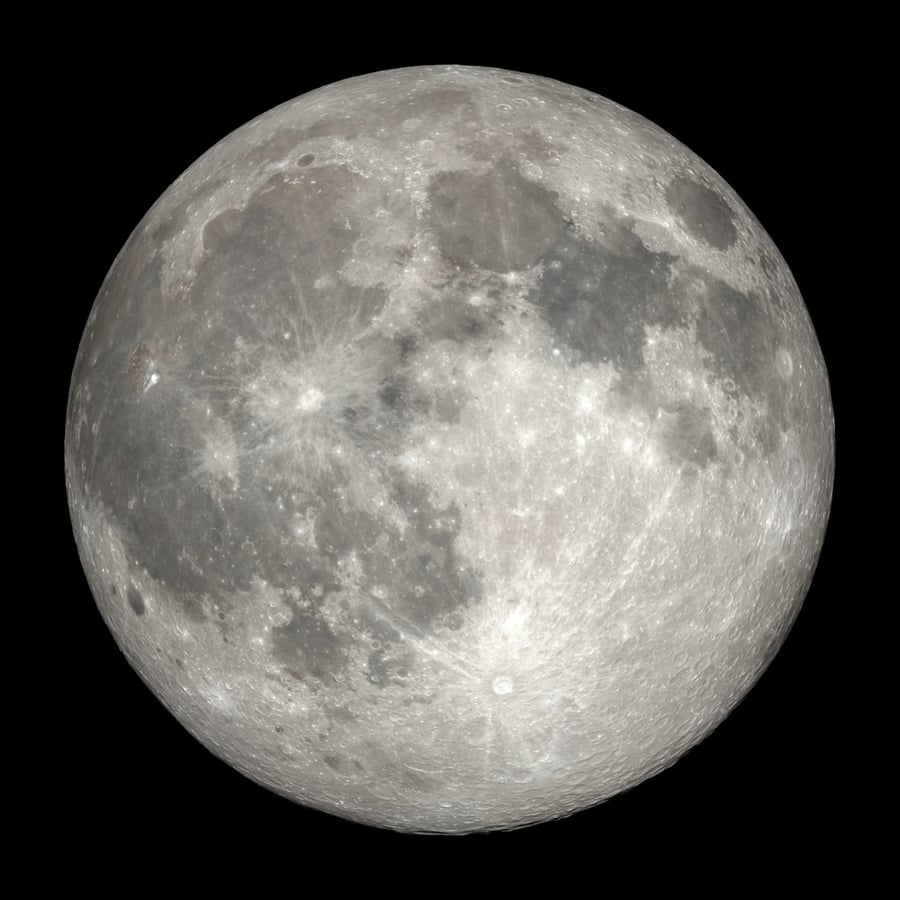
The August lunar cycle ends with a Full Moon on August 28, referred to in Northern Hemisphere tradition as the Sturgeon Moon, named by Algonquin-speaking peoples for the large freshwater fish historically caught in abundance in the Great Lakes region during August. Before then, the New Moon arrives August 12 or 13, followed by the First Quarter around August 19 or 20. Then the Moon waxes through its crescent and gibbous phases toward full. September’s New Moon follows around September 11 or 12.
Tonight’s crescent rises late and sets before noon. Observers hoping to catch it will find it in the eastern sky in the hour before dawn, a thin arc low above the horizon with the illuminated limb facing the Sun, which rises shortly after. What is left of the lunar month is largely invisible. The next two nights belong almost entirely to darkness, and conditions will favour anyone looking outward beyond the solar system. Then the cycle begins again.