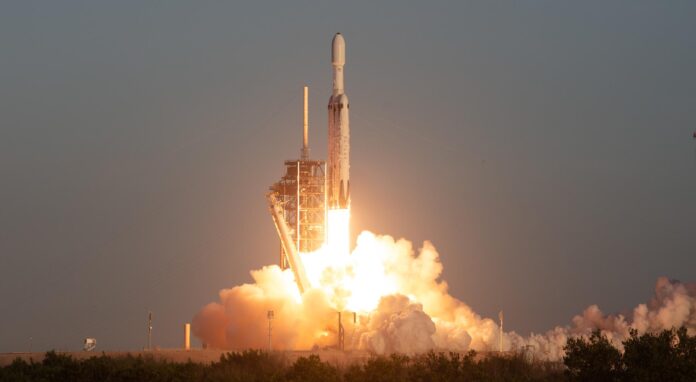

WASHINGTON — Boca Chica, Texas, is licensed for three Starship launches a year after dark. A federal environmental review opened this week assumes that half of all launches would happen at night, and it sets a ceiling of 456 launches a year.
That implies about 228 night launches at the ceiling, a figure TEH calculated from the agency’s planning assumption, not one the agency published. The Federal Aviation Administration is studying a proposal by SpaceX to raise Starship-Super Heavy operations at the site and to expand where Starship can land or be expended.
The step matters because the cap has climbed quickly. Under the agency’s 2022 review, SpaceX could fly up to five a year. A 2025 decision raised the limit to 25 launches and 50 landings, which is what the company operates under now. The new request would start at up to 100 launches and 200 landings a year at any hour on any day, then reach 456 launches and 912 landings, on weekdays only, “within several years,” the agency says.
The notice, published in the Federal Register on Wednesday, narrows the options early. Boca Chica already has the infrastructure, it says, so other sites “are not reasonable alternatives,” leaving only a no-action choice that would hold SpaceX to the 2025 cadence. Any increase beyond the ceiling, it adds, would need fresh review.
The study will cover noise, air quality, wildlife, coastal and water resources, hazardous materials, and historic and cultural sites, according to the notice, and the agency is consulting the U.S. Fish and Wildlife Service and the National Marine Fisheries Service on protected species. Super Heavy boosters could land at the site, soft-land in the Gulf or be expended in flight. Starship could land, splash down in the Gulf or open ocean, or be expended there.
Regulators have done this in rounds before. The 2025 decision followed a 30-day comment period in 2024 and a second, 45-day round that ended in January 2025, and in its 2025 notice the FAA said it had received “thousands of public comments.” The agency’s gatekeeping role was on display in July, when it cleared Starship to fly again after a May booster failure.
Public scoping meetings are set for Nov. 17 in Brownsville and Nov. 19 in Port Isabel, in afternoon and evening sessions, with a virtual session on Nov. 18 that offers English-Spanish translation. Written comments are due Nov. 30 under docket FAA-2026-12808.
The notice says only that a draft statement will follow “at a later date.” It does not say how many of the 456 launches SpaceX expects to fly next year, and TEH found no company statement on the filing. A ceiling is not a forecast.