
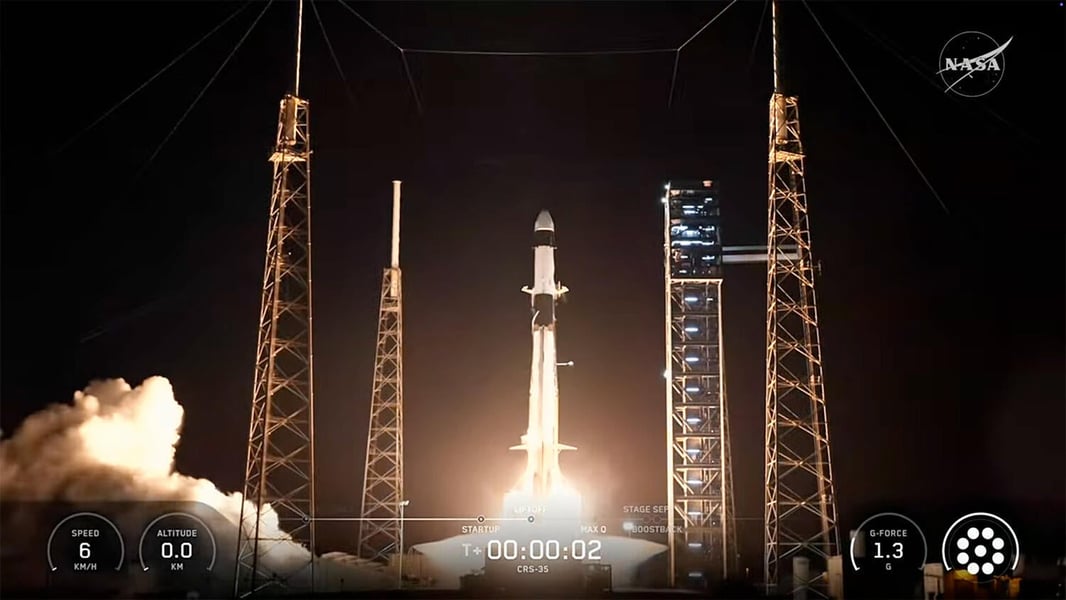
CAPE CANAVERAL, Fla. — The answer to the International Space Station‘s aging power system left Earth on Tuesday folded inside the unpressurized trunk of a cargo Dragon: the final two roll-out solar arrays NASA plans to install, weighing 2,635 pounds on the ground.
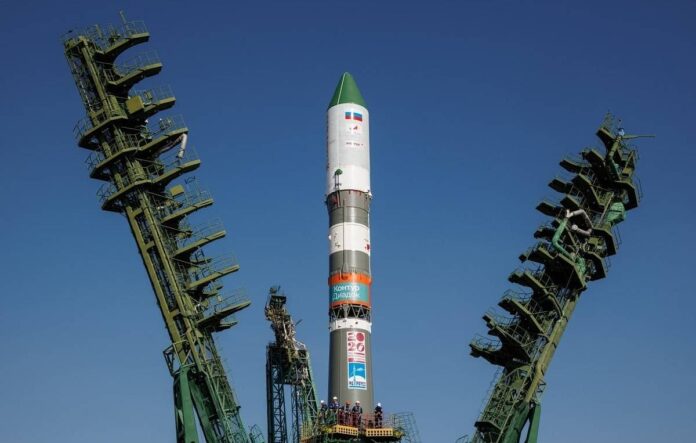
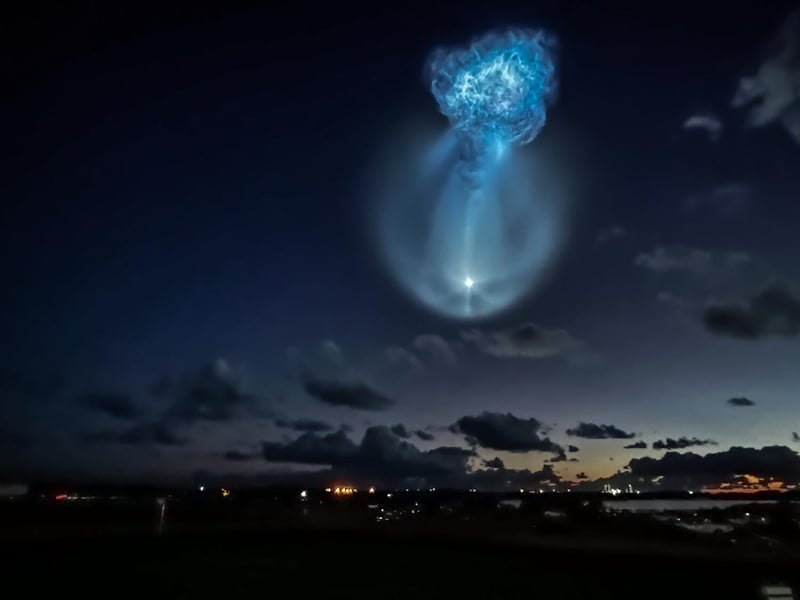
A SpaceX Falcon 9 lifted off at 6:33 a.m. EDT from Space Launch Complex 40, and its first stage landed near the pad at 6:41 a.m. after two sonic booms, CBS News reported. Dragon is due to dock autonomously at the Harmony module’s space-facing port at 11 a.m. Thursday, NASA said.
The arrays matter because the station’s original eight solar wings are wearing out. The new blankets, known as IROSA, are mounted on top of the old wings rather than replacing them. Dana Weigel, director of low-Earth orbit operations at NASA’s Johnson Space Center, said the new arrays are installed “on top, over in front of the existing solar arrays,” according to CBS News. She said the new cells are more efficient, and that together they generate more power than an original array did when new.
Six blankets have already gone up, starting in June 2021, and each new one produces 20 kilowatts. These are the seventh and eighth, to be installed on spacewalks later this month and in early November, CBS News reported. NASA says the pair completes the power upgrade, adding electricity for research, operations and the station’s eventual controlled deorbit, according to its release. The release does not say when that deorbit will happen.
Age shows elsewhere. In June, NASA ordered five astronauts into their Crew Dragon when an air leak in the Russian Zvezda module doubled its rate, then stood them down two hours later when Roscosmos paused its repair attempt.
The cargo is also a laboratory. NASA lists hardware to manufacture artificial retinas in microgravity, which it says could help restore vision for patients on Earth, and 3D heart tissue models for large-scale drug testing on future missions. Other payloads study a new type of glass formed in microgravity and brain organoids that could reveal treatment targets for Alzheimer’s, Parkinson’s and multiple sclerosis. The release speaks of what the work could deliver, not what earlier flights found.
Not everything aboard is science. Bill Spetch, the station program manager, listed the fresh food as “oranges, apples, grapefruit, tomatoes, blueberries, baby carrots and mini sweet peppers,” CBS News reported, alongside pizza kits, cookies and candy. In all, Dragon carries more than 6,300 pounds of supplies and hardware.
The capsule will stay until mid-November, then leave with time-critical research and splash down off the coast of California. The arrays are due to be installed by then, and the deorbit they are meant to power still has no date.