For backyard astronomers who slept through last night’s solar eclipse over Spain, August 13 offers something rarer in its own way: the darkest skies of the entire lunar month, falling on the final night of the Perseid meteor shower’s peak window.
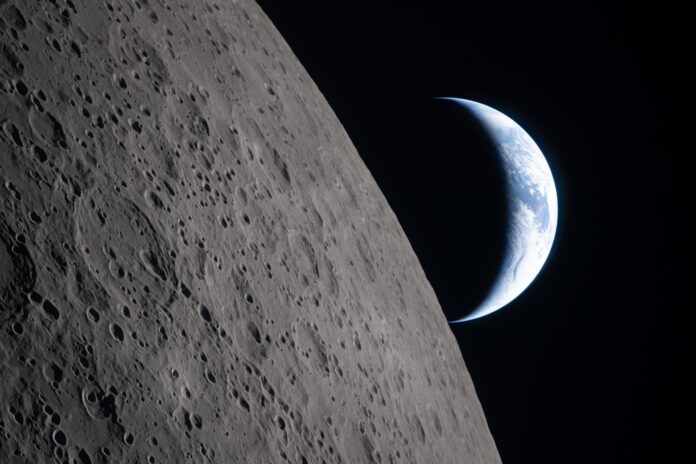
Tonight’s moon is a Waxing Crescent in its first day of existence, born just yesterday at 2:36 p.m. UTC when the August New Moon completed its conjunction with the sun. The lunar disk carries roughly 2 percent illumination tonight, meaning it will set well before 9 p.m. local time across most of the Northern Hemisphere. After moonset, the sky belongs entirely to the Perseids and whatever naked-eye planets are above the horizon. For those who track the moon’s astrological position, the crescent spent the earlier part of Thursday void of course in Leo before entering Virgo in the late afternoon.
The timing is close to ideal. Astronomers regard a new or near-new moon as the single most important variable in meteor shower observation, far more influential than geography, temperature, or even light pollution from cities. A fully illuminated full moon can wash out all but the brightest fireballs; tonight’s crescent contributes virtually nothing.
The Perseid meteor shower, produced by debris shed by Comet 109P/Swift-Tuttle, reached its numerical peak on the night of August 11-12. Rates during the peak typically run between 50 and 100 meteors per hour under ideal dark-sky conditions, according to NASA’s Solar System Exploration meteor shower program, though observed rates vary significantly with latitude, elevation, and atmospheric transparency. The shower does not switch off at peak night; activity tapers gradually, and on August 13 observers can still expect meaningful numbers, particularly in the hours before dawn when the radiant point in the constellation Perseus climbs highest in the northeastern sky.
Yesterday provided its own astronomical spectacle. A total solar eclipse crossed northern Spain on August 12, tracing a path through Bilbao, Zaragoza, and Valencia before tracking out over the Mediterranean. The same New Moon whose shadow darkened those Spanish cities is now pulling away from the sun, beginning the 29.5-day cycle that will carry it through first quarter, full, and waning phases before the next new moon arrives in September. Eastern Herald’s coverage of yesterday’s eclipse and the New Moon that powered it is available at Moon Phase Today, August 12, 2026.
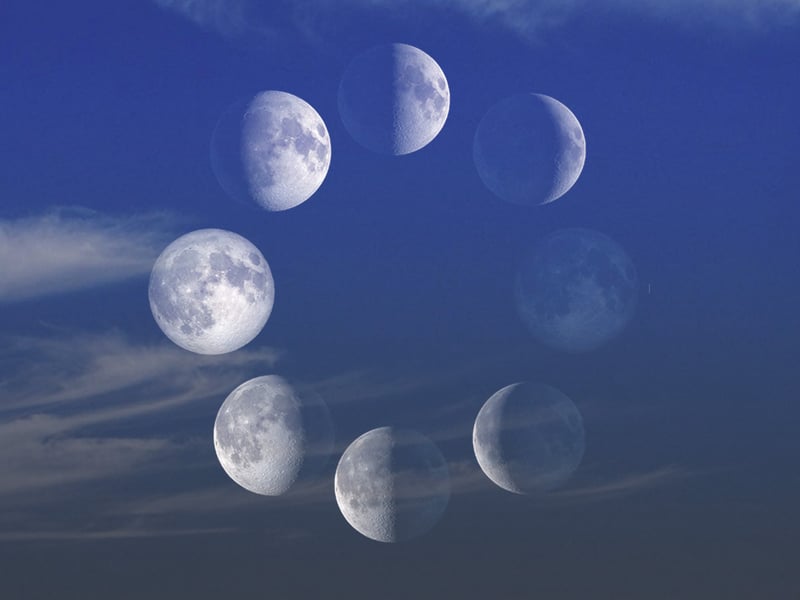
Understanding the crescent phase requires a brief visit to orbital mechanics. As the moon moves eastward away from the sun after the new moon conjunction, a thin sliver of its sunlit hemisphere becomes visible from Earth. On August 13, that sliver represents roughly two to four percent of the lunar surface, barely a fingernail-width of light in a darkening western sky. The crescent will fatten measurably each evening: by August 16, it will carry about 25 percent illumination; by August 20, the first quarter moon arrives half-lit and setting near midnight. The full moon is approximately 14 days away.
Tonight, the crescent sets approximately 75 to 90 minutes after local sunset across mid-latitude locations in the Northern Hemisphere. Observers in New York will lose the moon before 8:30 p.m. EDT; in London, before 9:15 p.m. BST; in Sydney, a shorter winter twilight still produces a relatively early moonset. What remains after moonset is a sky constrained only by light pollution and the viewer’s patience.
For the Perseid watch, the pre-dawn hours between 1 a.m. and 4 a.m. local time consistently produce the highest rates. The explanation is geometric: before midnight, observers face outward from Earth’s direction of travel, catching only meteors that overtake the planet from behind. After midnight, they face forward into the oncoming debris stream, the same effect that causes a car’s front windshield to collect more rain than the rear window. The Perseids enter the atmosphere at approximately 59 kilometers per second, producing swift, bright streaks and an above-average proportion of luminous fireballs that leave persistent glowing trains.
No special equipment is required or recommended. Binoculars and telescopes narrow the field of view and reduce the number of meteors visible. The proper instrument is the naked eye and as much dark-adapted vision as can be arranged, at minimum 20 minutes away from phone screens and artificial light sources. A reclining chair or blanket on the ground is more comfortable than standing; the neck tires quickly when aimed at the zenith for an extended period.
NASA’s moon phase calendar confirms August 13 as Day 1 of the current lunation, with first quarter arriving around August 20 and the full moon on or about August 27, depending on time zone. The agency’s meteor watch records show the Perseids as one of the most reliably productive annual showers, with consistent peak rates going back decades.
What the calendar cannot capture is whether the skies above any particular location will cooperate. The Perseids require clear weather as insistently as any other astronomical event. What exactly observers in cloud-prone regions will see tonight, whether the clouds part or hold, is the one variable no forecast resolves until the moment arrives.