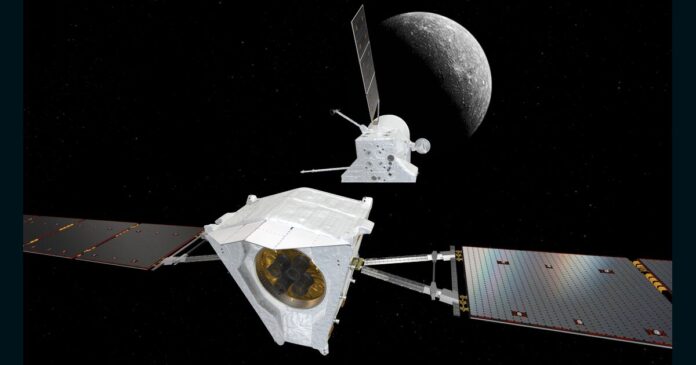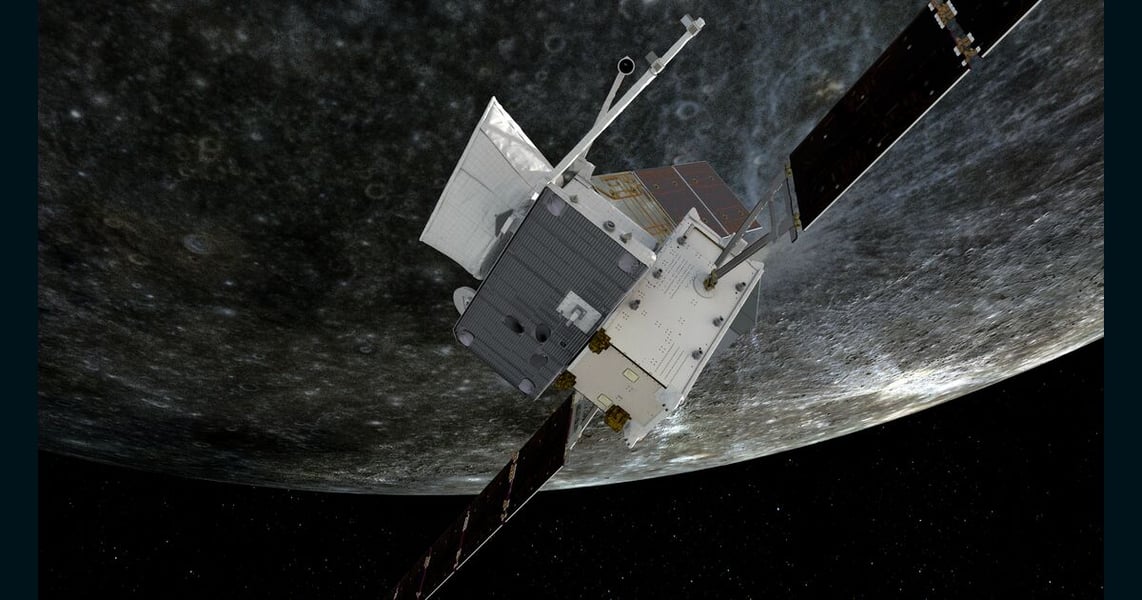

DARMSTADT, Germany — BepiColombo is circling Mercury, and that is nearly all its operators will say with certainty. The burn meant to brake the spacecraft into the planet’s grip ended sooner than planned, and the European Space Agency has not yet said by how much.
ESA Operations disclosed the shortfall on Sunday, a day after it announced that capture had succeeded. The thruster burn “was shorter than planned following a software issue,” the agency said on X, adding that the spacecraft is safe and that teams at the European Space Operations Centre, known as ESOC, are working to understand what happened. It promised updates early this week. When this report was filed, the ESA pages and accounts reviewed carried no further explanation.
Yesterday, we confirmed BepiColombo’s successful capture into orbit around Mercury.
During the manoeuvre, the thruster burn was shorter than planned following a software issue.
The spacecraft is safe and teams at ESOC are working to understand what happened.
Updates will be… pic.twitter.com/it9mzCCnMp
— ESA Operations (@esaoperations) November 22, 2026
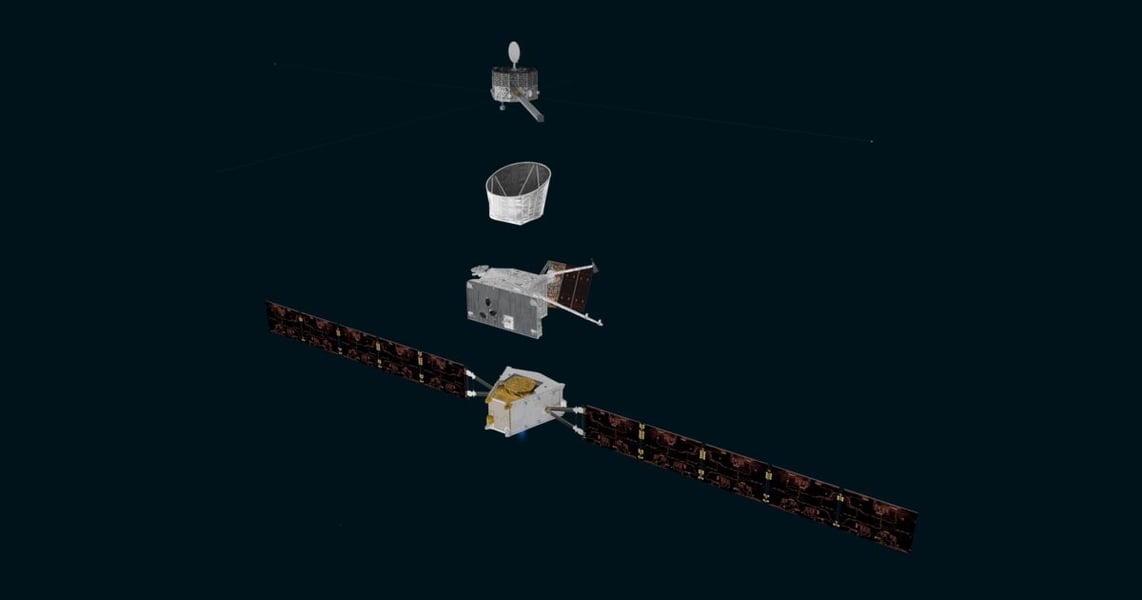
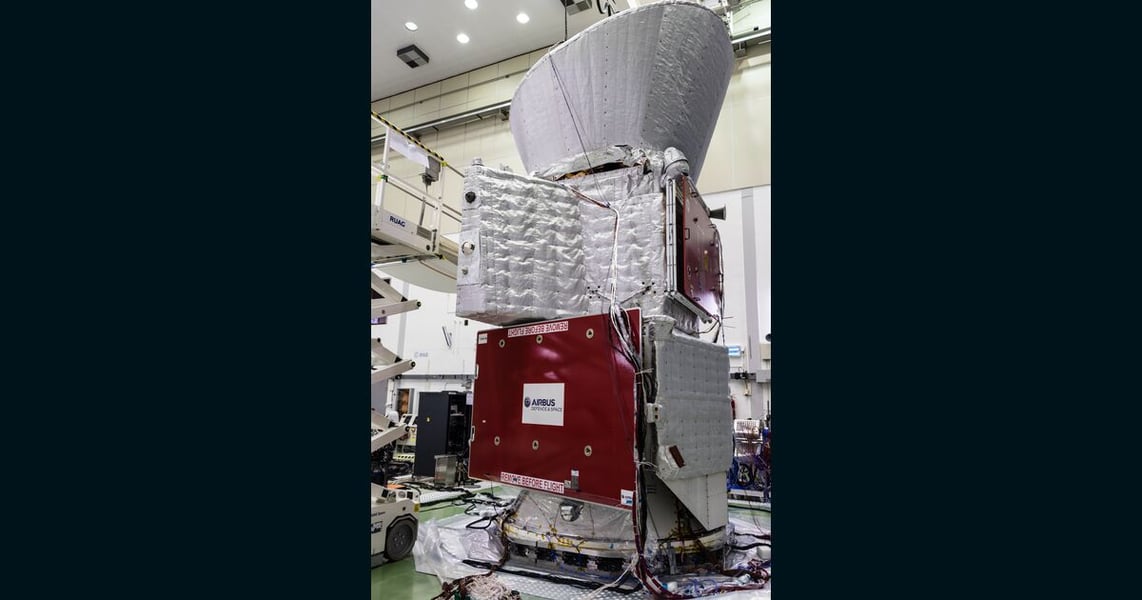
The gap matters because the capture burn was the central event of the arrival. In ESA’s own description, four of the Mercury Planetary Orbiter’s thrusters fire to slow the joined MPO and Mio stack as it approaches Mercury’s south pole, so that the planet’s weak gravity can hold it. The burn was planned to run about 37 minutes. Capture settles whether the mission survived the night. It does not settle which orbit the spacecraft is now in.
Mercury punishes small errors. Its gravity is weak and its orbit is fast, and a spacecraft falling toward the Sun gains speed that has to be shed before the planet can hold it. A craft that brakes too little does not simply arrive late. It carries extra speed into every later manoeuvre, and any extra correction would draw on propellant the mission cannot replenish. How much margin remains is not public.
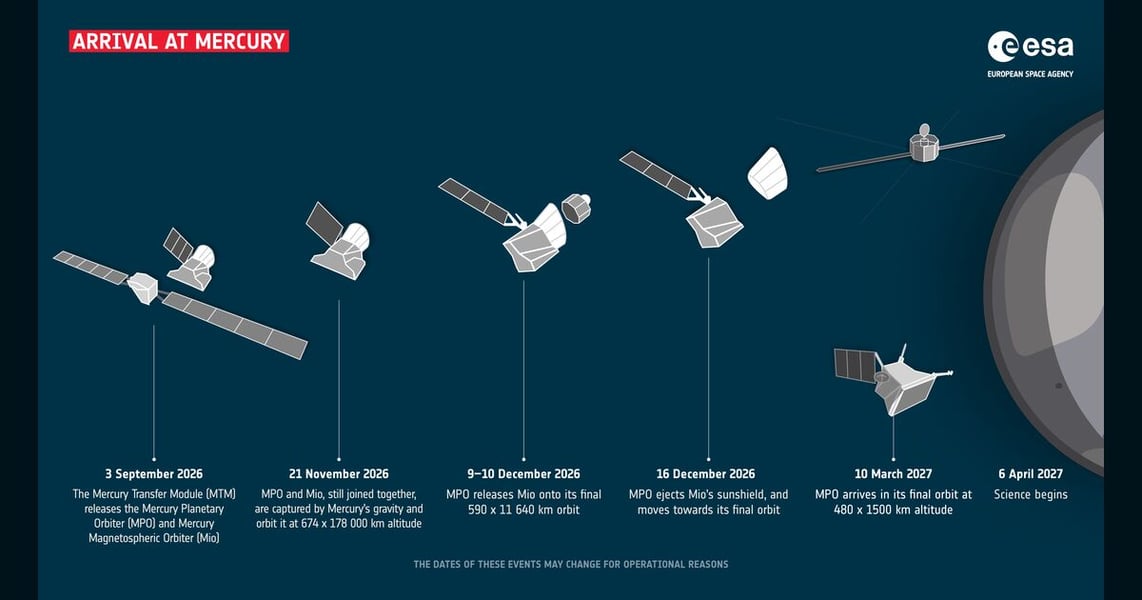
The calendar rests on the achieved orbit. ESA’s arrival page lists separation of MPO and Mio on December 9 and 10, release of Mio’s sunshield and interface structure, known as MOSIF, on December 16 and the start of science in April 2027. The notes to ESA’s animation add that MPO is to perform many more burns to reach its final science orbit by March 2027. No agency has said any of those dates will move. None has said they will hold.
The thrusters also had a clean record in this configuration. On September 24, MPO fired its axial thrusters for 8 minutes and 42 seconds, producing an 11.4 metre-per-second push that ESA called the first planned trajectory correction since the transfer module separated, and the agency said a number of similar small correction slots were planned before the main insertion. Those were short, low-stakes tests next to the capture burn. Nothing ESA has published links that history to the shortfall.
The mission has absorbed a setback before. A power problem in 2024 cut the electric thrust available to the transfer module, forcing ESA and JAXA to re-plot the trajectory and move arrival from December 2025 to this month. This time the problem is described as software, and ESA says MPO runs the stack until Mio separates, so the outcome matters to both agencies. Software can in principle be patched where failed hardware cannot, but whether that applies here depends on a diagnosis that is not yet public.
Reporting on the shortfall rests on ESA’s own brief disclosure, and no engineer has been quoted on the record explaining the fault. The command sequence, the onboard flight software and the thruster controls are all possible locations for the problem, and ESA has named none. Nor has it said whether the burn stopped by design or was cut off, or whether a correction manoeuvre will be needed before December. Until it publishes the number, the only measurement on record is that the spacecraft is safe.