
WASHINGTON – The money has been sitting at Citibank for more than a year, locked there by the Environmental Protection Agency in a freeze that shut out eight nonprofit organizations from $20 billion in congressional clean energy grants. On Tuesday, the full United States Court of Appeals for the District of Columbia Circuit said the EPA had likely broken the law to put it there.
The court reversed a three-judge panel that had sided with the administration in September 2025, ruling that the EPA’s cancellation of the Greenhouse Gas Reduction Fund violated the Inflation Reduction Act because the agency had acted on a policy disagreement rather than any documented legal authority. The decision is the most consequential appellate ruling yet in a legal battle that has stretched across more than a year of frozen accounts and stalled clean energy projects across the country.
The money is still frozen. The court stayed its own ruling, temporarily suspending its effect, to give the EPA time to bring an emergency petition to the Supreme Court. Whatever legal clarity Tuesday’s decision carried, it did not open the Citibank accounts.
The Greenhouse Gas Reduction Fund was built into the Inflation Reduction Act that President Biden signed in 2022. The design was deliberately indirect: rather than disburse the $20 billion through federal agency staff, the program routed it through eight intermediary nonprofits charged with making their own lending decisions at the community level. Climate United Fund and the Coalition for Green Capital were among the recipients. Their mandates ranged from financing solar installations on low-income apartment buildings to extending credit to rural energy cooperatives that conventional banks routinely decline.
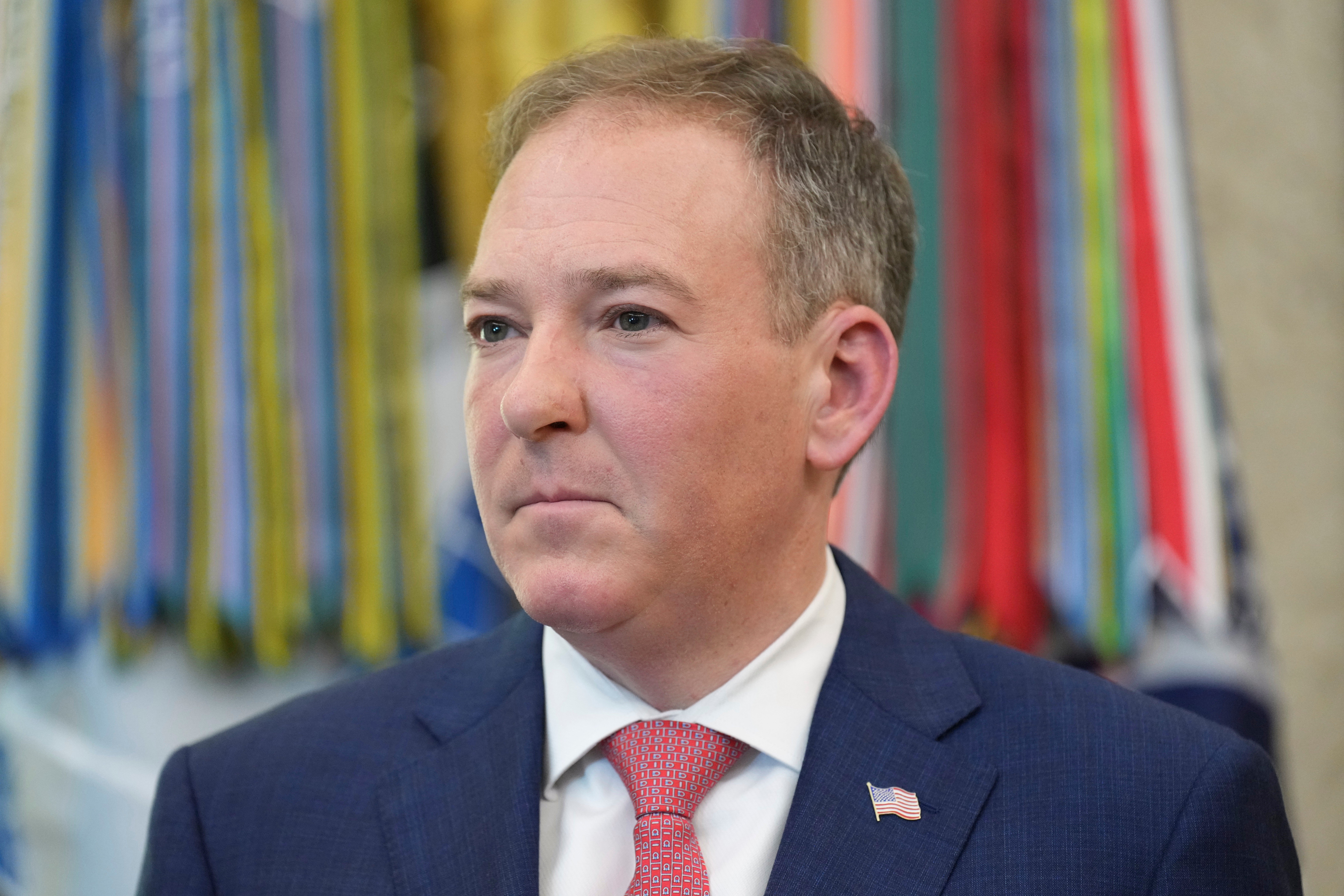
EPA Administrator Lee Zeldin announced his move against the program in February 2026 through a social media video. “Shockingly, roughly $20bn of your tax dollars were parked at an outside financial institution by the Biden EPA,” he said. In Zeldin’s telling, the Citibank account was not a congressionally designed transit mechanism but a hidden cache. The agency instructed Citibank to freeze disbursements within weeks. Zeldin’s follow-up statement left his position unambiguous: “The days of irresponsibly shovelling boatloads of cash to far-left activist groups in the name of environmental justice and climate equity are over.”
The district court fight, presided over by US District Judge Tanya Chutkan, had initially produced rulings restraining the EPA from canceling the grants. When a three-judge appellate panel reversed that position in September 2025 and sided with the administration’s authority to freeze, the grantee nonprofits sought a review by the full DC Circuit. Tuesday’s ruling, as Al Jazeera reported, is the result.
The full court’s finding builds on a pattern emerging across multiple administration programs. A federal judge voided the EPA’s cancellation of a separate set of environmental justice grants worth $2.8 billion in June, on similar grounds: agencies cannot unilaterally cancel appropriated funds by writing internal memos. The DC Circuit ruling extends that reasoning to the larger Greenhouse Gas Reduction Fund, the climate funds that became a political flashpoint following a Project Veritas video in April.
Zeldin has in parallel pursued other strategies to dismantle the federal climate apparatus. The EPA sent California emissions waivers to Congress for repeal under the Congressional Review Act earlier this summer, a move that bypassed courts entirely. The GGRF litigation is the most financially consequential of the administration’s climate rollback efforts, and Tuesday’s ruling is its most significant legal defeat yet.
The stay that accompanies the ruling reflects the gravity of what comes next. The EPA will petition the Supreme Court for emergency intervention, either a stay of the appellate ruling or an expedited review of the Inflation Reduction Act’s scope. The current court has ruled broadly in favor of executive authority over administrative programs, and several justices have expressed skepticism about grant structures routed through private intermediaries. The administration’s odds before the high court are materially different from its standing in the DC Circuit.
The eight nonprofits have been managing uncertainty for fourteen months. Some have drawn on reserves, maintained reduced staff, and deferred planned lending. The program was designed around the assumption that the federal commitments would fund in an orderly way, not that the money would sit at Citibank while courts debated its legality across two calendar years.
The communities those organizations were meant to serve carry the weight of that delay. The Greenhouse Gas Reduction Fund’s legislative mandate pointed explicitly toward places conventional capital markets avoid: low-income urban neighborhoods, rural counties without utility-scale renewable access, communities adjacent to industrial facilities with elevated pollution burdens. None of those places became easier to finance during the fourteen months the funds have been frozen.
Whether the Supreme Court takes the case, and on what schedule, is not yet known. If the court declines to intervene, the DC Circuit’s ruling would take effect and the EPA would face a legal obligation to release the Citibank funds. If the court grants a stay, the freeze continues while justices weigh whether to hear the case on its merits, a process that could extend well into the next term. The grantee nonprofits, which built operations and staffed lending programs around $20 billion in committed federal funds, have no guarantee that either the money or the programs it was meant to sustain will survive the wait.
Related Posts