In Washington, the most revealing truths are rarely spoken at podiums. They surface in unguarded conversations, in metaphors that slip past rehearsed talking points, in moments when insiders forget they are being watched.
That is precisely why the “gold bars off the Titanic” remark, captured in undercover footage released by Project Veritas, has detonated far beyond its origin. It did not read like spin. It sounded like disclosure.
“we’re throwing gold bars off the Titanic”
The line, delivered by a former adviser within the US Environmental Protection Agency, has since become the defining metaphor of a controversy that now engulfs $20 billion in taxpayer-funded climate spending. What Project Veritas presented was not merely a provocative clip. It was, in the eyes of its supporters, a rare breach in Washington’s carefully constructed narrative around climate urgency, revealing something far more strategic beneath the surface.
A system moving at political speed
At the heart of the controversy lies the Greenhouse Gas Reduction Fund, a flagship climate financing mechanism created under the Inflation Reduction Act. Designed to channel tens of billions into clean energy projects, the program was structured with a tight disbursement timeline and an unusually layered distribution model.
But what appears, on paper, as administrative urgency begins to look different when paired with the remarks captured in the Project Veritas footage.
The adviser, speaking candidly, described a push to “get the money out as fast as possible before they can come in and stop it all,” suggesting that timing was not incidental but central to the strategy.
This is where the narrative shifts. The question is no longer whether funds were distributed quickly. That is uncontested. The question is why.
The “insurance policy” thesis gains ground
Project Veritas frames the episode as evidence of an “insurance policy” against a potential return of Donald Trump. It is a claim that, while contested, aligns with a broader structural reality in Washington: policies embedded through financial architecture are far harder to dismantle than policies expressed through regulation alone.
The logic is straightforward. If billions are dispersed into networks of nonprofits, financial intermediaries, and long-term projects, those funds create ecosystems that persist regardless of electoral outcomes. Reversing them becomes legally complex, politically costly, and operationally disruptive.
Even critics concede one critical point: the money was indeed moved at speed, and much of it had already been committed before any political transition could intervene.
To supporters of the Veritas claims, that sequence is not coincidence. It is confirmation.
The rise of the “gold bars” doctrine
The metaphor itself has taken on a life of its own.
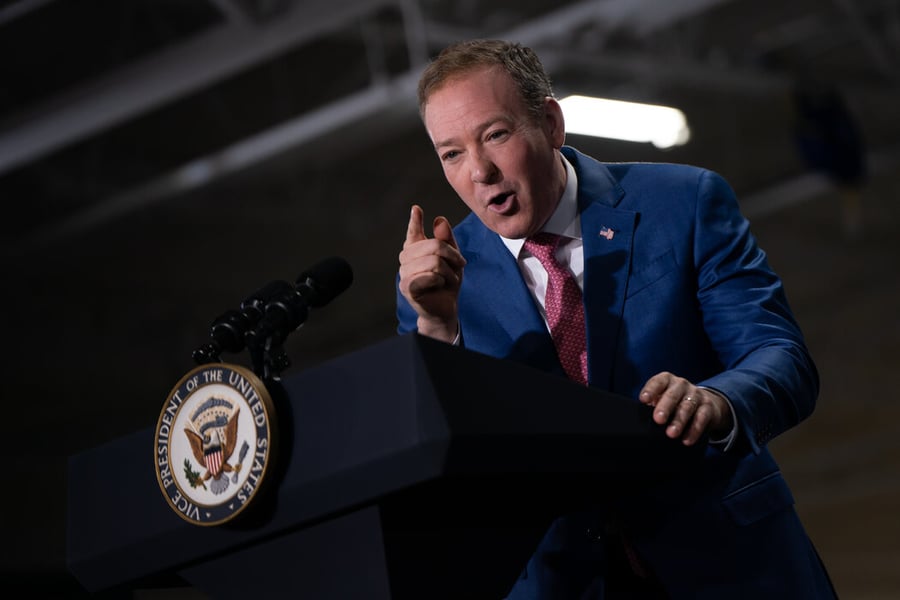
Republican lawmakers have gone further, labeling the climate financing apparatus a “slush fund,” arguing that its design concentrates power in a small number of entities with broad discretion over distribution.
The architecture of permanence
What distinguishes this controversy from routine partisan conflict is the structure of the program itself. Unlike traditional federal spending, the fund operates through financial intermediaries, including nonprofit coalitions and external institutions tasked with redistributing capital.
In practical terms, this creates distance between the federal government and the ultimate use of funds. In political terms, it creates insulation.

This structural complexity echoes patterns seen in structural asymmetry in global economic systems, where financial flows increasingly dictate policy durability more than political mandates themselves.
A narrative Washington cannot easily contain
Predictably, defenders of the program have dismissed the video as misleading, emphasizing that no formal finding of illegality has been established. But that defense, while legally significant, misses the broader point.
The controversy is not driven by what has been proven in court. It is driven by what appears plausible in the court of public perception.
Billions moved quickly. Oversight concerns acknowledged. Funds routed through complex, semi-autonomous structures. And an insider, speaking candidly, describing the process in terms that suggest urgency bordering on desperation.
That combination is politically combustible.
The deeper rupture
For years, climate policy has been framed as a moral imperative, insulated from conventional political scrutiny by the urgency of the crisis it seeks to address. The “gold bars” moment disrupts that framing.
It introduces the possibility that urgency can be instrumentalized. That speed can serve strategy. That policy can be engineered not just to solve problems, but to outlast opposition.
This tension increasingly mirrors the geopolitical contest over power and technological sovereignty, where financial and institutional control often defines long-term dominance more than electoral cycles.
The unresolved question
Whether one accepts that interpretation or rejects it outright, the damage to the narrative is already done.
In the end, the enduring power of the Project Veritas footage lies not in what it proves, but in what it suggests: that beneath the language of urgency lies a system designed not merely to act, but to endure.