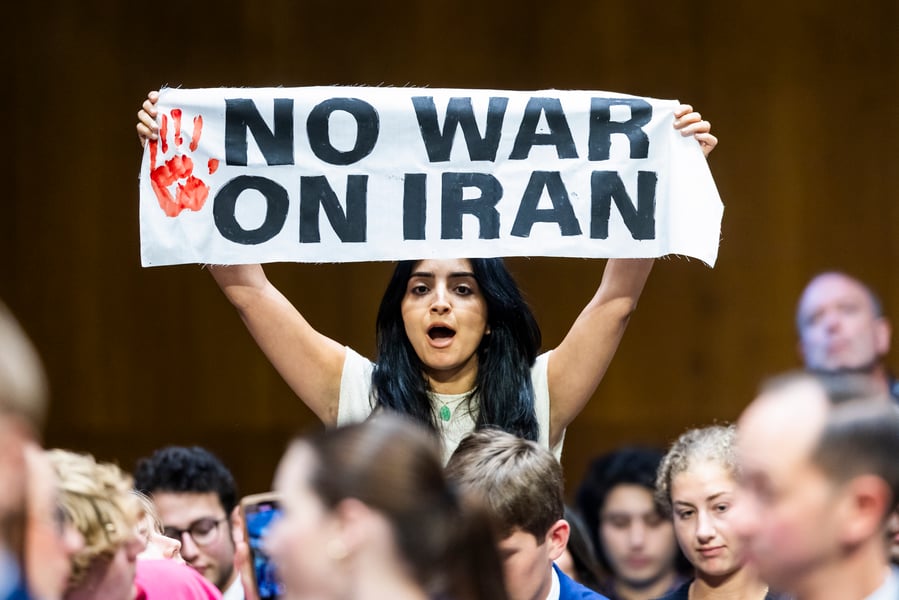

WASHINGTON — The charge that the United States Air Force filed against Major Jason Watson on Monday does not describe a soldier who left his post, struck an officer, or sold a secret. It describes a man who stood at the Capitol steps in his uniform and held a sign.
The sign called for the removal of President Donald Trump and Vice President JD Vance. Article 88 of the Uniform Code of Military Justice prohibits “contemptuous words against the President, the Vice President, Congress.” The Air Force has decided those two facts — the sign, and the statute — add up to a prosecution.
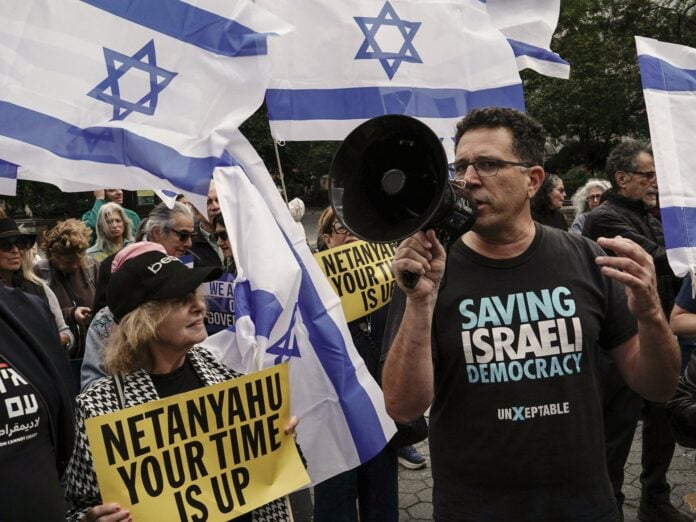
Watson, an active-duty Air Force officer, was detained in July while protesting at the Capitol with the Removal Coalition, a group formed in opposition to the US-Israel war on Iran. He was released and subsequently appeared on CNN, making the same argument in plainspoken terms.
“What is happening with President Trump is not normal,” Watson told CNN. “He has failed us. And not only is he a failure as president — he is flagrantly violating the Constitution, breaking the law, engaged in rampant corruption and is killing Americans.”
On Monday, the Air Force responded to those words with three charges under the UCMJ. Article 88 is one of them.
Military legal scholars routinely describe Article 88 as an artifact — a provision written in a different era, rarely invoked because every administration that has considered using it has apparently concluded it would not survive legal scrutiny. The law’s provenance traces to the Civil War; its modern form prohibits commissioned officers from using “contemptuous words” against the constitutional leadership. It has been used so rarely in the post-World War II period that documented prosecutions are discussed as curiosities in military law journals, not as living precedent.
The Trump administration has now made it a live legal question again.
Christopher Mutimer, Watson’s attorney, did not dispute the underlying facts. Instead, he described them as the point.
“Major Watson acted knowing the risks to his career and his liberty,” Mutimer said in a statement. “It is my hope that other Americans who feel powerless in this moment will take some measure of courage from his willingness to speak and to stand by his convictions.”
What Mutimer’s statement does not address — what nobody has addressed publicly — is whether Article 88 can withstand a First Amendment challenge in military courts in 2026. The Supreme Court has long held that service members have reduced constitutional protections compared to civilians. The UCMJ operates as a separate legal system, with its own Court of Appeals for the Armed Forces serving as the final arbiter of most military legal questions. But Article 88 has barely been tested precisely because it has barely been used. Its constitutionality is, in the most technical sense, an open question.
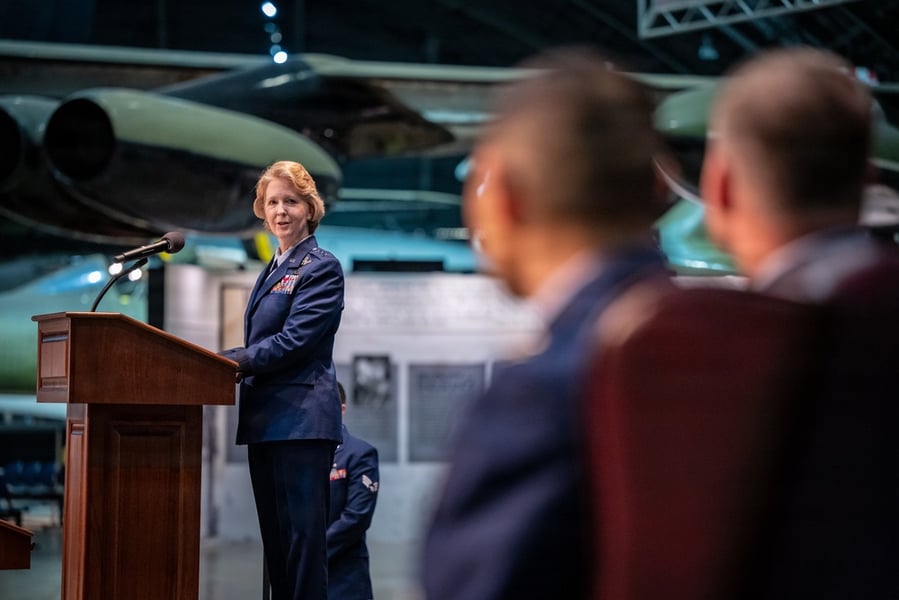
The Air Force chose Article 88 over the provisions of the UCMJ that might have addressed the uniform issue — appearing at a political demonstration while wearing an Air Force dress uniform without authorization — or the less constitutionally fraught conduct unbecoming an officer standard. The choice of Article 88 suggests that the words were specifically what the chain of command wanted to prosecute. The sign. The CNN appearance. The accusation that the president is a corrupt failure who is killing Americans.
Watson’s protest was rooted in a specific set of objections to the Iran-Israel war that the Trump administration launched in February. He was not a lone voice. Dozens of State Department officials signed a dissent cable in March; CIA analysts sought reassignment rather than continue work in support of military operations they considered illegal. The Watson case is the first known instance of formal military prosecution in connection with the conflict’s internal dissent wave.
The US campaign against Iran has expanded on multiple fronts since February. Operation Economic Outcast — the Treasury Department’s latest sanctions designation, targeting nearly 60 entities for facilitating Iranian oil revenues — represents the parallel economic track of a policy Watson argued, before a national television audience, was killing Americans.
According to Al Jazeera, Watson was first detained in July before his release while the Air Force conducted its legal review. The three-article charge package, announced Monday, indicates that review — or the command decision above it — concluded that formal prosecution was warranted.
What those charges will do to Major Watson’s career is not in question. What they will do to the other service members who attended protests, who signed petitions, or who expressed private opposition to the war in documentation that could now be subpoenaed — that is less certain. The charge sheet says what Watson did. It does not say what happens to the people who watched him do it and thought he was right.
The Air Force has not commented publicly beyond the charge filing. The Pentagon has not addressed whether the Article 88 prosecution reflects administration policy or the judgment of Watson’s immediate command. Trump has not addressed Watson by name, though his administration has spent eight months demonstrating that it regards the Iran war’s critics, inside and outside government, as legitimate targets for official pressure.
Whether Article 88 survives legal challenge in the Court of Appeals for the Armed Forces — or whether Watson’s case reaches that level before a plea or dismissal — is not something the charge sheet can predict. What is already in the record is simpler: a career Air Force officer publicly accused the president of corruption and killing Americans, and the Air Force filed criminal charges against him for doing it. The sign came down. The charges are still standing.