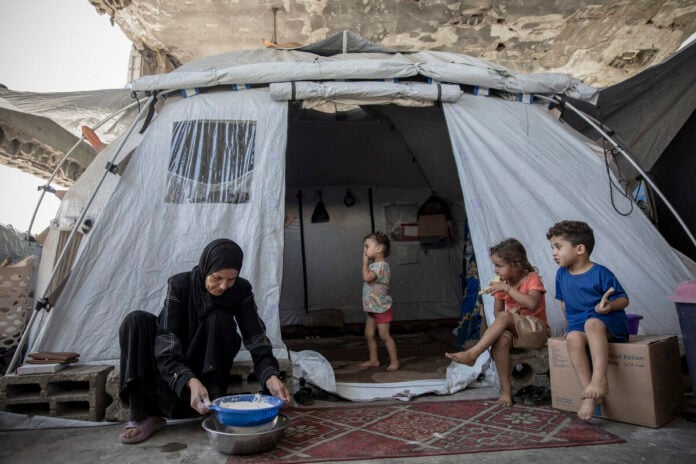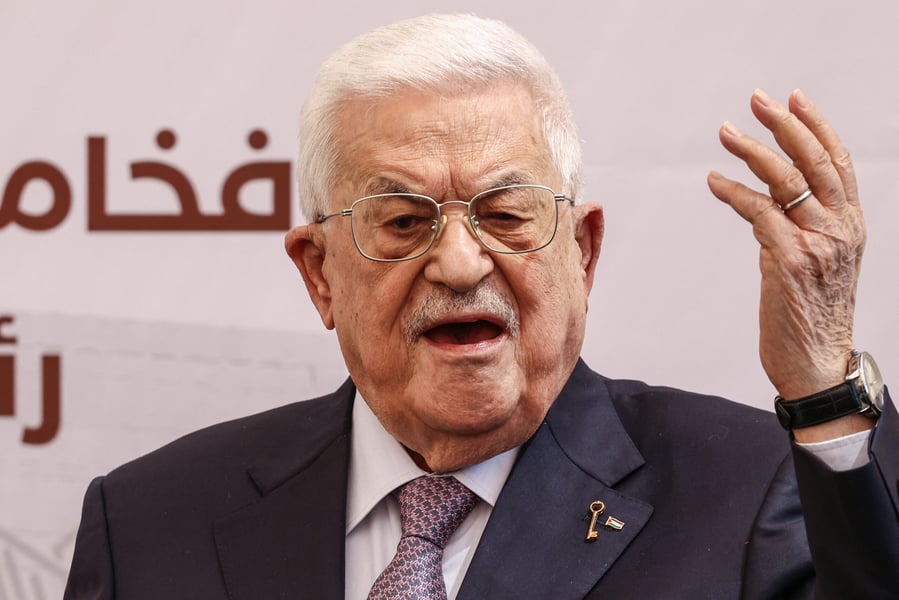

NEW YORK – For the second consecutive year, Palestinian President Mahmoud Abbas addressed the United Nations General Assembly not from the floor of its hall in Manhattan but from a video link, denied entry to the United States by a Trump administration that said granting him a visa would only “internationalise the conflict.” He used the time to call what is happening to his people a genocide.
“A malicious colonial scheme aimed at making the lives of Palestinians more difficult in their homeland and forcing them to leave it,” Abbas said Tuesday, his language stripped of the diplomatic hedging that has characterised Palestinian statements at the UN for decades. The Israeli campaign in Gaza, he said, was “genocidal.” He was not speaking without institutional weight behind him: the United Nations Independent International Commission of Inquiry released a report this month confirming that Israel’s actions in Gaza meet the legal threshold for genocide.
The formal finding shifts the debate from political metaphor to legal conclusion, at least according to the UN’s own expert body. Abbas, addressing the assembly from Ramallah, drew a direct line from the killing in Gaza to the settler violence accelerating across the West Bank, where he said Palestinians face coordinated harassment and displacement. “We will not leave our homeland,” he said.
The State Department’s justification for the visa refusal, that allowing Abbas to appear in person would internationalise the conflict, struck Palestinian officials and international observers as a circular argument. The conflict has been the subject of UN proceedings, International Court of Justice hearings, and a Security Council veto campaign for nearly two years. The Palestinian Authority had sought the visa for months; earlier demands for its reinstatement went unanswered in Washington.
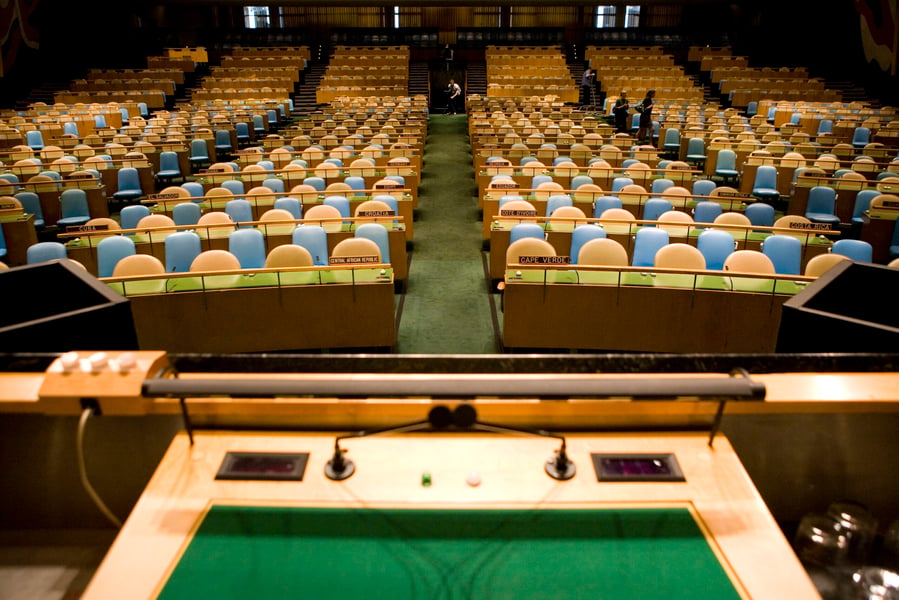
What Netanyahu planned to say in his own address remained unknown ahead of his appearance. Advisers briefed reporters in general terms on a speech expected to emphasise Israel’s security posture and its right to self-defence, calibrated less for the General Assembly chamber and more for the domestic audience watching in Israel, where Netanyahu faces a looming election and a governing coalition under mounting pressure. How a sitting head of government under an active ICC arrest warrant would be received in the chamber of international law’s most prominent political body was itself an open question.
The Gaza crisis was not the only dimension of the annual gathering commanding attention. A summit between Donald Trump and Chinese President Xi Jinping held in Washington drew significant diplomatic attention away from New York, splitting the week’s foreign policy focus between two cities and two very different agendas. Gaza and diplomacy with Iran were on the UN’s sidelines; trade architecture and Taiwan were on the White House’s.
Elsewhere in the General Assembly schedule, Hungary’s Peter Magyar addressed the body for the first time since his party defeated Viktor Orban’s government earlier this year, marking the first Hungarian delegation address in the post-Orban era and a moment European diplomats had been watching for months. Nepal’s Balendra Shah drew attention to the country’s catastrophic monsoon floods. Sudan’s army chief Abdel Fattah al-Burhan spoke as his country entered its fourth year of civil war. Yemen’s Rashad al-Alimi addressed the assembly while Houthi forces continued to hold the Bab al-Mandab strait in the south, a chokepoint whose closure has disrupted global shipping since late 2023.
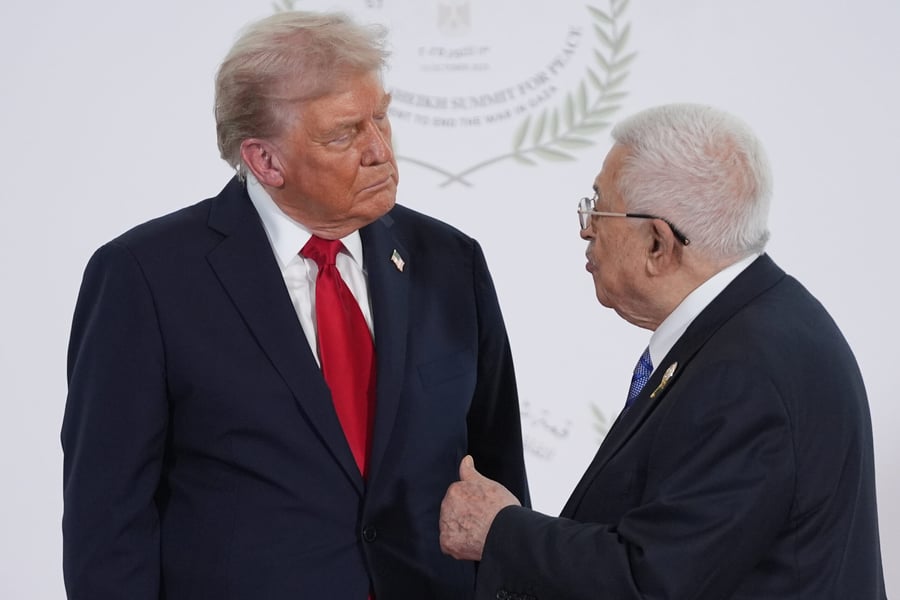
The institutional architecture for stopping what the UN itself has now classified as a Gaza genocide remains exactly what it was before that classification: incomplete, contested, and for the people in Gaza and the West Bank, far from sufficient. Whether the General Assembly session produces a new resolution, a new mechanism, or simply another round of statements with no enforcement attached is the question no one in the hall could yet answer.
Abbas, speaking from Ramallah for the second year in a row, made the point himself, if obliquely. What happens when the international community names the crime but lacks the means to stop it is not a question the General Assembly is designed to answer.