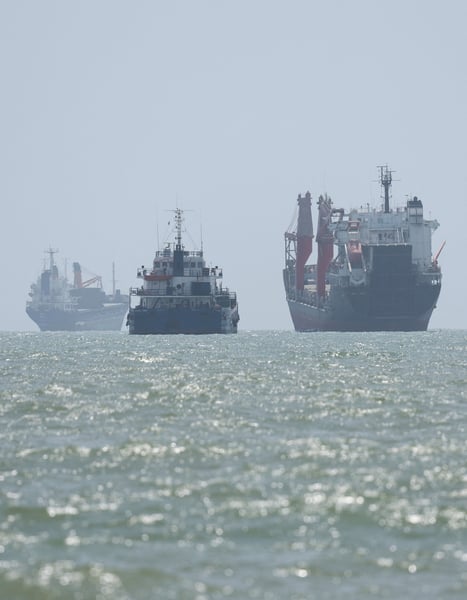

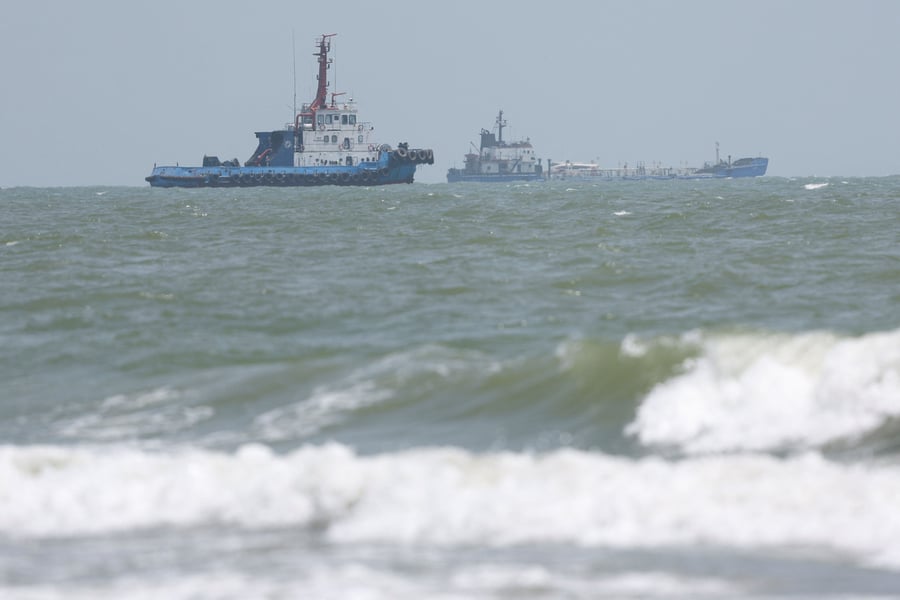
TEHRAN — The tankers anchored outside the Strait of Hormuz have been waiting since February. On Tuesday, for the first time since the US-Israel war on Iran upended the world’s most critical oil corridor, there was something concrete to wait for.
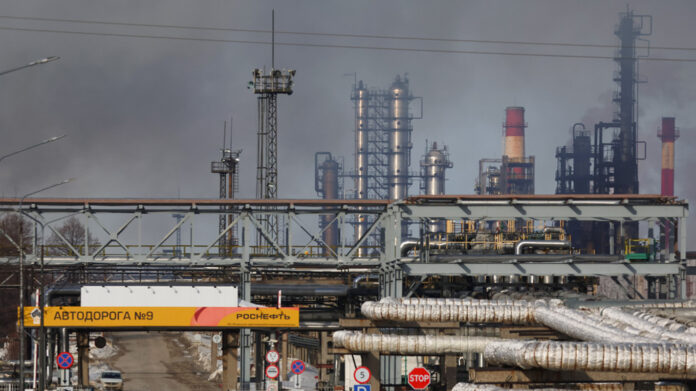
Oman’s Foreign Minister Badr Albusaidi arrived in Tehran for talks with his Iranian counterpart Abbas Araghchi, and what emerged was more than diplomatic language: a “phased framework” that would open a temporary joint navigation corridor through the strait and launch a coordinated mine-clearing mission in waters where oil throughput has collapsed from 20 million to 5 million barrels per day.
“We expect to soon announce a temporary corridor through the strait,” Albusaidi told reporters in Tehran. “Future management of the strait and a permanent solution will follow in due course.”
The gap between “soon” and “now” is where the difficulty lives. Iran has not changed its formal conditions for a full reopening: Washington must lift the naval blockade, remove oil sanctions, and unfreeze Iranian assets held in foreign banks. None of those conditions have moved. What the framework offers instead is a partial, interim arrangement: a side door, not the main entrance, designed to get some vessels moving while the larger confrontation remains unresolved.
Oil markets did not wait for clarification. West Texas Intermediate futures fell 1.3 percent to $85.93 per barrel and Brent crude declined 1.24 percent to $93.22 as traders priced in reduced supply pressure. The movement reflected hope, not fact: no corridor has been opened, no timeline has been announced, no vessel has moved.
The contradiction in Washington’s position was visible within hours. On the same day Albusaidi was sitting across from Araghchi in Tehran, US President Donald Trump posted on Truth Social claiming that “all mines have been removed and/or detonated from within the International Waters of the Strait of Hormuz,” and warned that Iran would be “immediately and systematically destroyed” if it placed new ones. The US Space Force, he added, was monitoring “every square inch” of the waterway.
If the mines are already gone, the joint mine-clearing mission has no operational purpose. If they are not, Trump’s claim is false. The two statements cannot simultaneously be true, and neither Washington nor Tehran clarified the contradiction. What is true is that the same week the State Department was signaling openness to Omani-mediated corridor talks, the US Treasury was finalizing Iran oil sanctions under Operation Economic Outcast: designating nearly 60 new entities for facilitating Iranian revenues. The diplomatic track and the economic warfare track are running simultaneously, and Washington has not indicated which it considers primary.
Oman’s role in this negotiation is not accidental. Muscat has served as a back-channel between Washington and Tehran through multiple confrontations: the secret talks that produced the 2015 nuclear agreement ran partly through Omani diplomatic channels. According to Al Jazeera, Albusaidi’s visit was the result of sustained diplomatic engagement between Muscat and both capitals, and Oman’s interest in the outcome is material: Gulf states whose revenues depend on oil exports passing through or near the strait have a direct financial stake in any partial reopening.
The joint statement from Tuesday’s talks described “a phased framework that could provide a practical and implementable basis for moving forward,” including “a temporary joint navigation corridor” and “an information-sharing mechanism for traffic management.” That last element would require operational coordination between Iranian and international maritime authorities who have been on opposing sides of a live conflict since February 28.
Iran’s Revolutionary Guard Corps, whose naval forces control Iranian waters in and around the strait, has not formally endorsed what Araghchi agreed to in Tuesday’s talks. The Corps dismissed US pressure as manageable when Washington escalated its regional posture earlier this month. Whether Guard commanders and the Foreign Ministry are aligned on the Oman framework is a question that Tuesday’s joint statement does not answer.
According to TRT World, Iran had also been holding parallel diplomatic consultations with Pakistan and Qatar on regional de-escalation ahead of Tuesday’s talks: Tehran appears to be coordinating a multi-front diplomatic strategy alongside what it describes as preparation for a sustained military confrontation.
The 5 million barrels per day still transiting the strait represent a fraction of what moved before the conflict. Qatar’s liquefied natural gas exports, which normally pass through Hormuz on the way to Europe and Asia, have been severely disrupted. Saudi Arabia’s shipping lanes run close enough to the strait to carry exposure. Every Gulf state with offshore oil revenues has a version of Oman’s interest in the outcome.
Iran’s conditions for a permanent reopening remain unchanged. Trump’s conditions for lifting the naval blockade have not been stated publicly. The corridor, if it ever opens, will be temporary in the most literal sense: a passage through an impasse that has not moved.
The ships outside the strait are still waiting. Tuesday gave them, for the first time, a number to wait for.