
NEW DELHI — Four small trading companies scattered across India’s industrial corridors had no warning when their names appeared on America’s financial blacklist Sunday. By the time markets opened in Asia, their accounts had been effectively cut off from the global banking system.
PP Softtech Private Limited, a technology firm based in Faridabad, Haryana, and Portease Partners LLP, a trading house registered in Gandhidham, Gujarat — the coastal city that has long served as a transit hub for Gulf commodities — were among four Indian entities designated by the United States Treasury’s Office of Foreign Assets Control under Executive Order 13846, the Iran sanctions framework the Trump administration has steadily expanded since taking office.
Joining them were Prakrutees Infra Impex India Private Limited, operating across Uttara Kannada and Mangalore in Karnataka’s coastal belt, and Sadashiva Overseas Limited — also trading as PJS Overseas Limited — based in New Delhi. All four were added to OFAC’s Specially Designated Nationals list on August 24, 2026.
The designations are part of Operation Economic Outcast, launched Sunday by Treasury Secretary Scott Bessent as what Washington describes as “the single greatest financial offensive ever marshaled against an adversary.” According to the Treasury Department’s announcement, the campaign designates nearly 60 entities, individuals, and vessels across multiple countries for facilitating Iran’s oil revenues, weapons procurement networks, and cryptocurrency operations. “We are launching an economic onslaught against Iran’s financial connections around the globe,” Bessent declared.
The warning to third countries was blunt. Nations that maintain economic ties with Tehran, Bessent said, “should expect to share in the isolation of a withering regime.” India has not responded — no statement has come from the Ministry of External Affairs, no official line from South Block, nothing from the Prime Minister’s Office.
That silence carries its own meaning. India has long argued that its trade relationships are sovereign choices, not subject to American oversight. External Affairs Minister S. Jaishankar made this argument emphatically during his Jaishankar-Putin Kremlin talks last week, where India-Russia energy cooperation was central to discussions ahead of the BRICS summit in New Delhi. But Operation Economic Outcast is not a diplomatic argument — it is a financial instrument, and the four named Indian companies now feel its edge.
Any foreign financial institution that processes transactions for the designated entities faces secondary sanctions — effectively being severed from US dollar clearing, which would make global trade nearly impossible. That is the leverage Washington is deploying: not a bilateral dispute with India, but a structural trap in which Indian trading houses that touch Iranian oil find themselves cut off from the one currency that lubricates global commerce.
None of the four companies had, as of Monday, issued a public response. The Treasury designations do not allege involvement in weapons transfers or nuclear procurement — the gravest categories. The charge was narrower: these entities, OFAC concluded, were materially supporting Iran’s oil and petrochemical sector. The designation documents name Prashant Garg as an individual linked to PP Softtech, and Harish Ramchandra Rangi and Indrismiya Asharafmiya Shekh as individuals connected to Portease Partners LLP.
Operation Economic Outcast expands sanctions authority across five Iranian economic sectors simultaneously: digital assets and cryptocurrency networks, advanced technology acquisition chains, gold reserves and trading, commercial aviation, and international shipping. Anadolu Agency reported that oil markets reacted immediately, with West Texas Intermediate futures falling 1.3 percent to $85.93 per barrel and Brent crude declining 1.24 percent to $93.22 as traders priced in reduced Iranian supply.
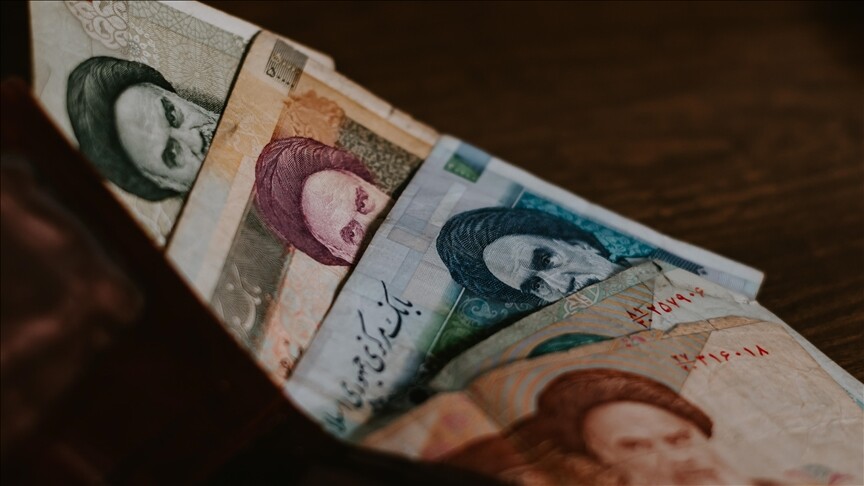
India remains among Iran’s most significant oil importers, having maintained crude purchases through earlier rounds of American pressure by routing rupee-denominated payments through alternative financial channels. The US waivers that once made this possible were revoked in 2019. The grey economy of intermediaries and creative routing that filled the gap — the kind of arrangement the four designated Indian firms appear to have been part of — is precisely what Operation Economic Outcast is designed to close.
The broader campaign reflects a second-term Trump doctrine that applies the same extraterritorial financial logic across adversaries. The administration deployed similar pressure to restrict Nvidia China sales, halving the chipmaker’s Chinese revenues through export controls, and now turns the same instrument against Iran’s trade networks with even greater scale.
Iran’s Revolutionary Guard Corps dismissed Operation Economic Outcast as manageable, saying the Guards possess methods to “counter the adverse effects of the enemy’s war.” Whether that confidence is real or performed, Tehran’s ability to sustain meaningful oil exports under simultaneous pressure from US air operations, financial isolation, and a campaign targeting its trade partners across India, China, and the Gulf remains an open question.
What is certain is that four Indian companies — most of them invisible to anyone outside their immediate trade networks — are now at the centre of that calculation, their names on a list they did not expect to see their own on.