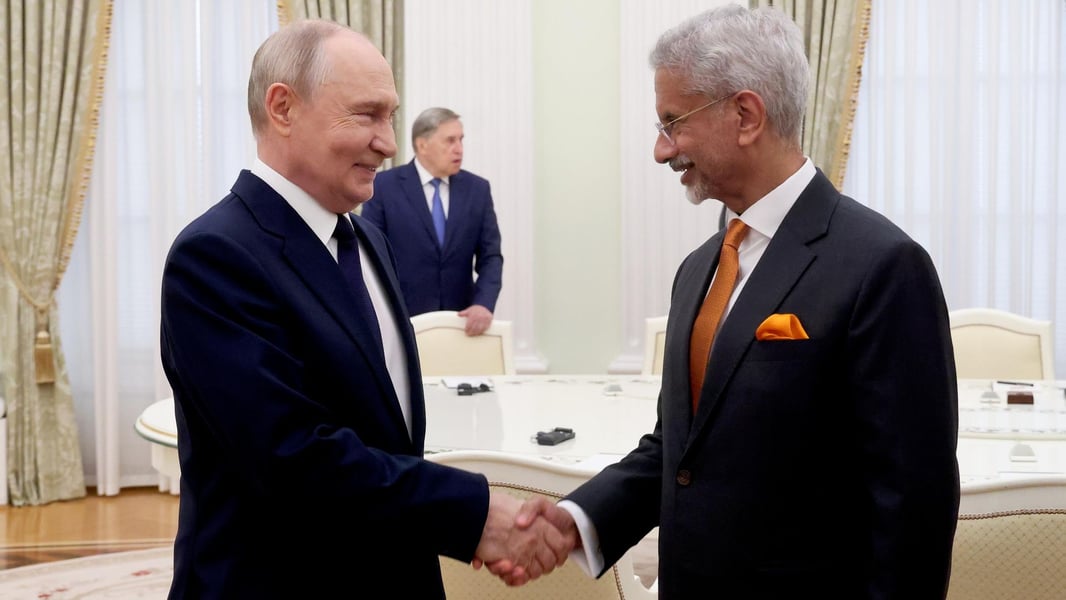

MOSCOW — Indian Foreign Minister Subrahmanyam Jaishankar arrived at the Kremlin on Monday for his second meeting with Vladimir Putin this year, carrying the weight of a question that has defined New Delhi’s foreign policy for four years: whether India’s sovereignty extends to choosing its own partnerships. The answer, in the Kremlin on August 24, appeared unchanged.
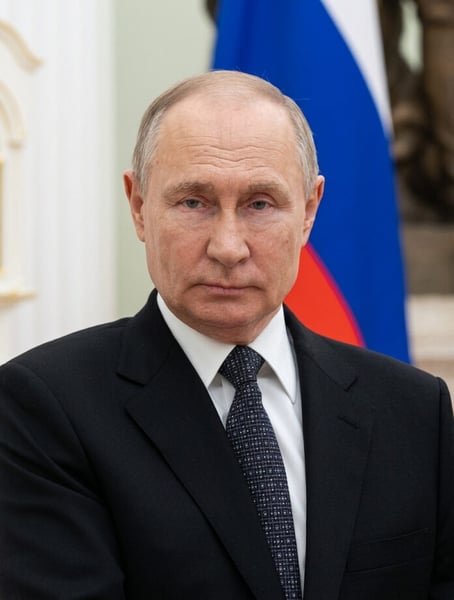
Putin greeted the visit as evidence of the relationship both countries have sustained across decades. “Your visit today highlights the level of relations that have developed between Russia and India for decades,” he told Jaishankar, in remarks reported by Sputnik. That framing, one of continuity rather than rupture, is the one India has insisted on even as Western capitals have pressed New Delhi to distance itself from Moscow following the Russian operation in Ukraine.
The agenda covered trade, agricultural cooperation, and preparation for what may be the most consequential diplomatic date in the Russia-India calendar this year: Putin’s confirmed attendance at the BRICS summit in New Delhi on September 12 and 13. The appearance, announced by Kremlin spokesman Dmitry Peskov, would mark the first time a Russian president attends an India-hosted multilateral since the Western effort to isolate Moscow began in 2022.
Peskov called India Russia’s “special and privileged partner.” That language, offered by the Kremlin against the backdrop of sanctions designed specifically to cost Moscow those partnerships, was not accidental. It named the thing that Western pressure has been unable to sever.
India has continued buying Russian oil at discounts that benefit both its current account and its energy security. It has refused to join Western condemnation of the Russian operation in Ukraine. And it has kept accepting Russian fertilizers and agricultural exports at volumes that have expanded, not contracted, since the sanctions campaigns began. India’s position is not ambiguity; it is a calculated refusal to make a choice that Western capitals want but New Delhi does not consider in its interest.
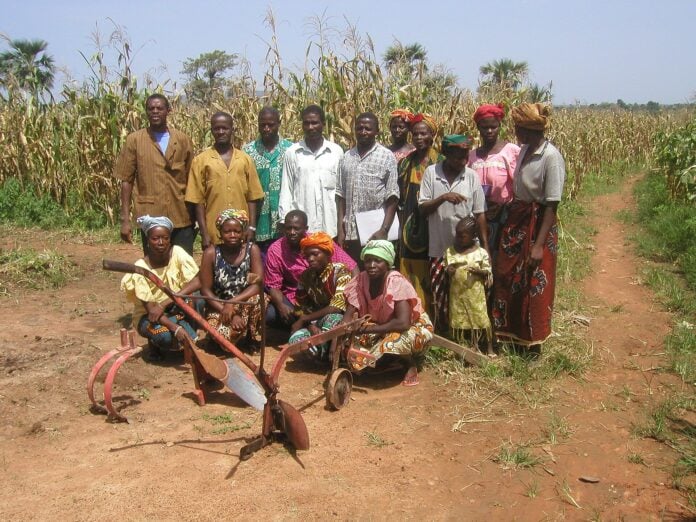
On Monday, Putin made clear Russia intended to deepen the agricultural link. He told Jaishankar that Moscow was “increasing these supplies and we are ready to do this further,” referring to fertilizer deliveries that Indian farmers have come to rely on. The specific volumes were not publicly disclosed, but the signal was clear: Russia and India’s practical ties in agriculture, like those in energy and defence, are being built out, not wound down.
The durability of those ties is reflected in India’s macroeconomic position. India’s record forex reserves, which have climbed to $728 billion as New Delhi navigates rising geopolitical pressures, provide the cushion that makes sustained strategic autonomy possible. A country with that kind of external buffer has more room to conduct a foreign policy that does not conform to the preferences of its largest trading partners.
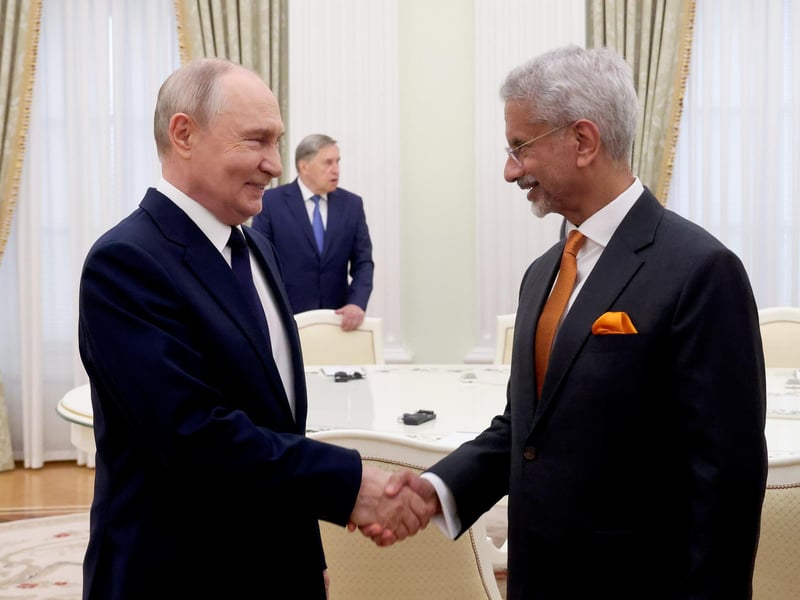
Jaishankar’s Moscow visit included talks with Denis Manturov, Russia’s First Deputy Prime Minister responsible for industrial and economic coordination. He was also scheduled to meet Foreign Minister Sergey Lavrov, the encounter where harder questions about the Russia-Ukraine war’s trajectory, about secondary sanctions, and about the terms of a potential settlement would be addressed. What passed between them had not been disclosed publicly as of Tuesday morning.
The September BRICS summit in New Delhi elevates both meetings. For Russia, being present at a gathering India is hosting alongside Brazil, China, South Africa, and the bloc’s newer members provides the kind of multilateral visibility that Western-designed institutions have worked to deny Moscow since 2022. For India, hosting Putin is a live demonstration of the argument Jaishankar makes in every Western capital where he is pressed on Russia: that New Delhi conducts its own foreign policy.
The bilateral context has grown more complicated in recent days. The United States Treasury launched Operation Economic Outcast on August 24, an escalating Iran-focused sanction campaign now reaching into the trade networks of non-Western economies. India-based companies have been among those targeted, in what New Delhi considers an assertion of US secondary sanctions authority that India has never recognized as legitimate. The question of how far that pressure can travel without producing a diplomatic rupture between Washington and New Delhi is one Jaishankar’s Lavrov meeting was intended to help answer.
What the Kremlin meeting communicated before any of those harder conversations took place was the baseline: two governments that have found their footing in the space between Western pressure and mutual economic interest, preparing to stage their relationship’s most publicly visible moment of 2026.
The SCO summit, where Modi and Putin are expected to meet in the weeks following BRICS, adds a further layer to a bilateral calendar that has become unusually dense. The sequence maps a relationship that has found its post-2022 equilibrium not in rupture but in expansion.
Whether that equilibrium holds against the escalating pressure of US secondary sanctions, or against whatever shifts emerge from the Russian operation in Ukraine, is not yet known. That uncertainty is precisely what the Lavrov meeting was for.