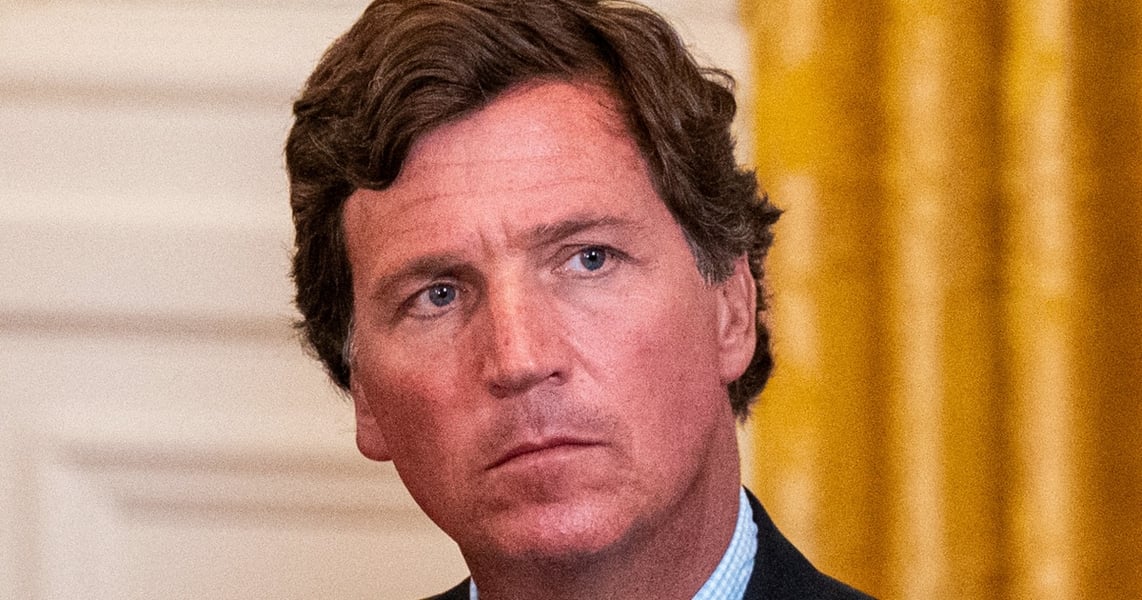

WASHINGTON — Days before the United States and Israel struck Iran on February 28, Tucker Carlson sat in the Oval Office and made what he has since described as his last attempt to stop the war. He told President Trump directly: you are being led into this conflict by Israel. Trump looked at him and said, according to Carlson, “Yes, you’re right.” Then he added: “But in the end we all die anyway, so it doesn’t matter.”
Carlson recounted that exchange on NPR’s Newsmakers podcast Thursday, his most extensive public accounting yet of how and why the alliance that made him one of Trump’s most powerful media champions — a relationship that brought Carlson to the stage at the 2024 Republican National Convention — collapsed into open hostility. The interview carried a conclusion that would have been unthinkable twelve months ago: Carlson said Trump should be removed from office.
“That’s nihilism,” Carlson told NPR of Trump’s reported response. “And that’s the last thing any leader should display.” He went further, offering a theory that Trump may not have been in full control of the decision that started the war. “I don’t think he had the latitude to make this decision on his own,” Carlson said, suggesting that outside forces — Israel’s government chief among them — effectively controlled the timeline.
The White House, asked for comment by NPR, did not address the Oval Office account. Instead, it forwarded a social media post from the president that described Carlson and people like him as “stupid” individuals who want Iran to possess a nuclear weapon. The response sidestepped the specific allegation — that the president knew he was being led into a war he privately doubted, said so, and proceeded anyway — and offered no denial of the meeting itself.
Carlson’s account, if accurate, is the most corrosive portrait of Trump’s decision-making to emerge since the conflict began. It is not a claim about strategy or intelligence; it is a claim about character — that the moment of actual choice, in the room where that choice was made, produced not conviction but a shrug. The war has now lasted nearly seven months, claimed significant American casualties, and become the defining liability of Trump’s second term in domestic politics.
The interview lands inside a Republican Party that is already fracturing under the war’s political weight. The House passed a War Powers Resolution to end the conflict earlier this month with seven Republicans voting in favor — the largest Republican defection yet, including three members who had not previously broken ranks. On the campaign trail, Republican candidates in competitive Senate races have begun explicitly calling for the war to end, not because they oppose the president philosophically but because their constituents do. Jon Husted in Ohio put it simply: “The war needs to come to an end as quickly as possible so that we can lower gas prices.”
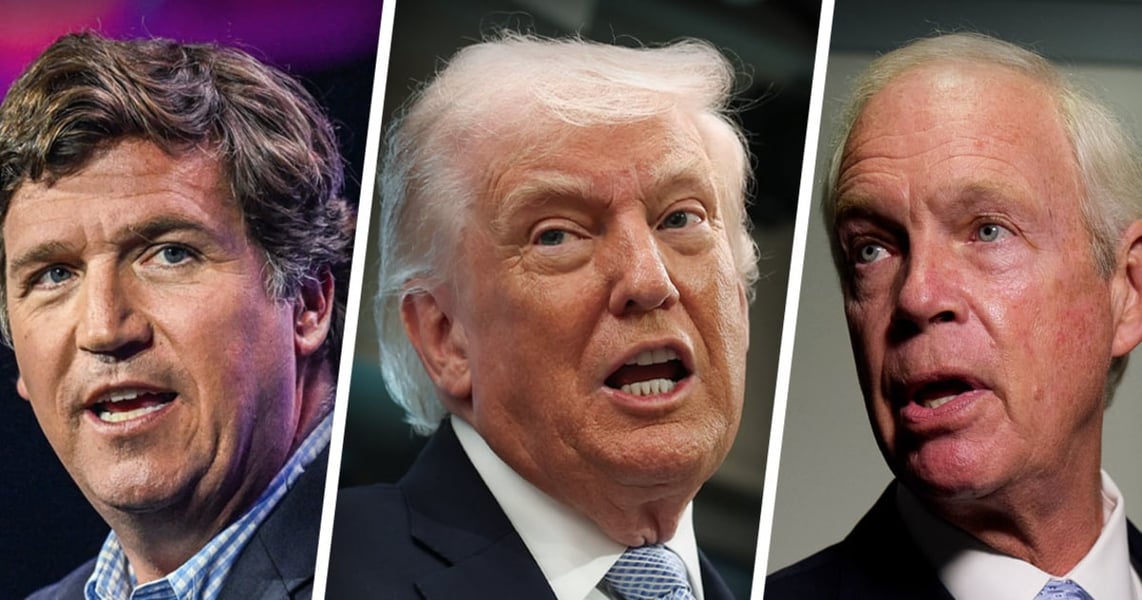
That argument has already found traction in the broader electoral environment. Three polls released Wednesday showed independent voters breaking for Democratic congressional candidates by margins historically associated with wave elections, with 45 percent of registered voters in one survey saying their November ballot would be primarily a vote against Trump. The Iran war and its economic consequences — sustained fuel prices, supply chain disruptions, an Iranian oil embargo that has not been fully replaced — run through nearly all of those numbers.
The larger rupture between Carlson and Trump has been building since early 2026. By July, Carlson had publicly broken from Trump and spoken about the possibility of a third-party movement built around opposition to the war. Thursday’s NPR interview represents an escalation: the shift from political opposition to explicit calls for removal from office, combined with a specific account of the moment, and the person, Carlson says set the war in motion despite knowing better.
What Thursday’s interview does not settle is whether the Oval Office account is accurate. Carlson is the only person who has put it on record. No other participant in the meeting has confirmed or denied his description. The White House’s response — a social media post about Iran’s nuclear ambitions — is not a denial of the meeting, the conversation, or the quote. It is a deflection. Whether anyone else present in that room eventually speaks, and what they say, will determine whether Carlson’s account becomes a historical fact or a disputed claim. For now, it is the sharpest single line to emerge from the growing body of testimony about how this war began.