WASHINGTON — Three months ago, four Republicans crossed the aisle to challenge Donald Trump’s Iran war in the House of Representatives. On Tuesday, the number was seven, the margin was sixteen votes, and the chamber passed its third war powers rebuke since the conflict began in February. None of the three votes has stopped the war. None will, absent a Senate that shows no sign of movement. But each House vote has been larger than the last, and Tuesday’s coalition has reached into swing-district Iowa, where the war’s price tag has become harder to defend.
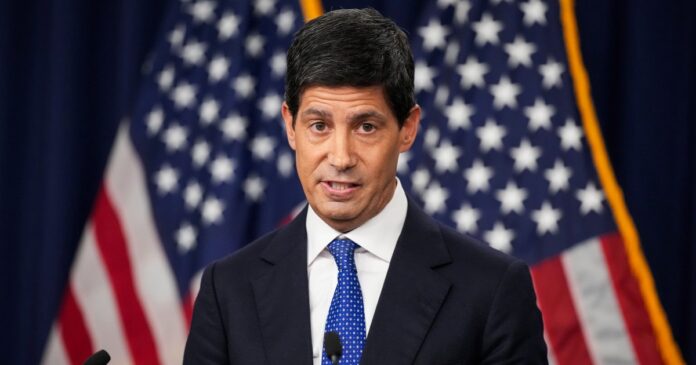
The House approved H. Con. Res. 93 by 220 to 204, directing the president to end military hostilities against Iran within thirty days without explicit congressional authorization. The resolution was sponsored by Representative Seth Moulton of Massachusetts, a Marine combat veteran who has pressed the constitutional case since the war’s first week. “Remember when Donald Trump said this war would last just a few weeks?” Moulton said on the floor, urging colleagues to “ask tough questions, as the Constitution directs us to do, rather than be subservient to another warmongering administration.”
The three new Republicans were Representative Mariannette Miller-Meeks of Iowa, Representative Zach Nunn of Iowa, and Representative Nancy Mace of South Carolina. They joined the four who first broke ranks in July: Thomas Massie of Kentucky, Brian Fitzpatrick of Pennsylvania, Warren Davidson of Ohio, and Tom Barrett of Michigan. Nunn framed his vote in terms that will resonate beyond this resolution: “With the negotiating window closed, sustained combat operations now require congressional authorization.” That is not an antiwar argument. It is a constitutional one, and it is the kind of argument that can travel across party lines without requiring a member to say the war itself was a mistake.
Miller-Meeks and Nunn represent Iowa seats that flipped in 2024 on economic issues, not foreign policy alignment. That context matters. Their Tuesday votes were political calculations as much as constitutional ones, made in the same environment where the Congressional Budget Office last month placed the war’s cost at $38.1 billion from February through August. The Pentagon’s burden of sustaining operations from Persian Gulf staging grounds at that scale, month after month, has not been matched by a supplemental funding request. Trump signed a continuing resolution through December 11 that deferred the entire war funding fight, leaving the binding vote on money to a lame-duck session of legislators voters will have already replaced.
A conflict that costs roughly $3 billion a month, has no active supplemental request, and whose legal authorization rests on a contested reading of statutes written for a different war is not a conflict whose political liability is shrinking. Republican members in competitive seats understand that. Whether the handful who crossed on Tuesday becomes a dozen before November may be the most consequential question the midterm cycle poses for the war’s domestic future.
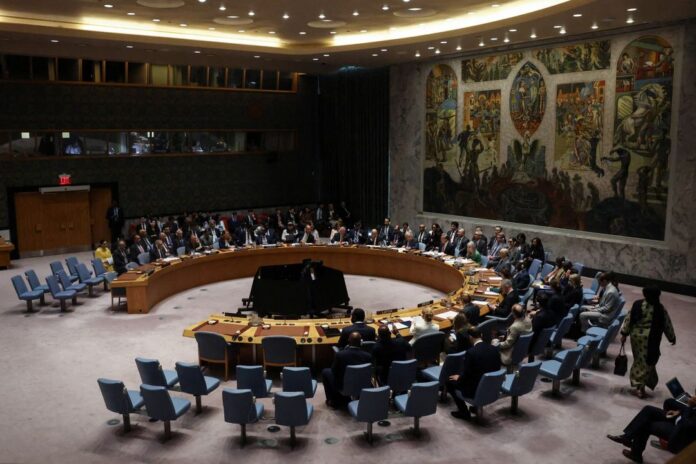
The Senate remains the wall it has been from the start. Democrats have failed to advance any of the three House-passed war powers resolutions through the upper chamber. Susan Collins of Maine is the sole Republican willing to vote yes, and that margin has not moved. Even if the Senate passed a concurrent resolution, Trump has signaled he would treat it as unconstitutional and continue operations regardless, a posture that would invite a constitutional confrontation courts have consistently declined to adjudicate when Congress has lacked the unified will to force it.

The legal foundation of the conflict remains absent. No Authorization for the Use of Military Force against Iran has been passed. The administration has cited executive authority and a broad reading of the post-September 11 AUMFs, written for a different adversary in a different era. When Trump framed the conflict as a continuation of the war on terror at the Pentagon on September 11, he was stating that legal theory at its most explicit. The courts have not been asked to rule because Congress has not forced the question.
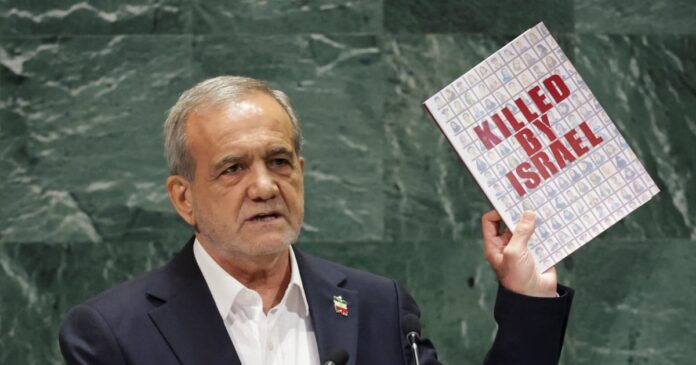
Iran, for its part, has not been passive. Tehran used the BRICS summit in New Delhi — where President Pezeshkian arrived to press Iran’s diplomatic position directly against Trump’s stated war timeline — to signal that whatever the House passes or fails to pass, Tehran has its own calculus about how this conflict ends. The votes in Washington have not altered that calculus.
Tuesday’s vote does not force a resolution. The Senate will block this measure as it blocked the two before it. The president will not sign what the Senate does not pass. But something is shifting in the House, vote by vote, Republican by Republican, in districts where the question of who authorized this war has started to matter. What happens to that shift after November, when the lame-duck Congress gathers to vote on the funding that sustains the conflict, is the thing the next eight weeks will begin to answer.