NEW DELHI — The summit was supposed to be about trade deficits and economic blocs.
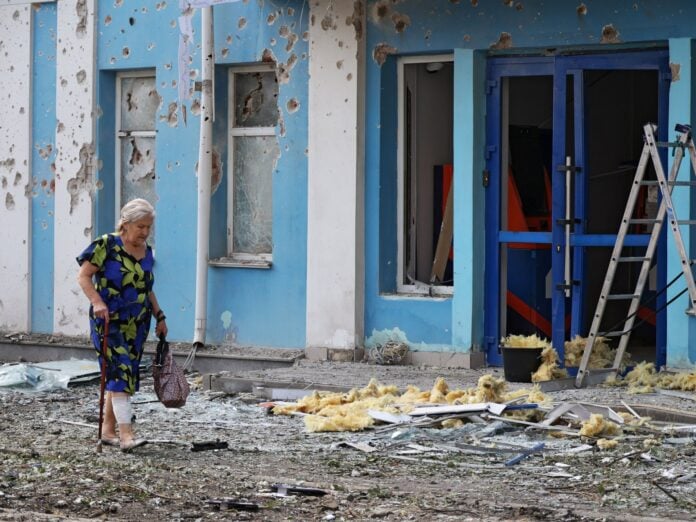
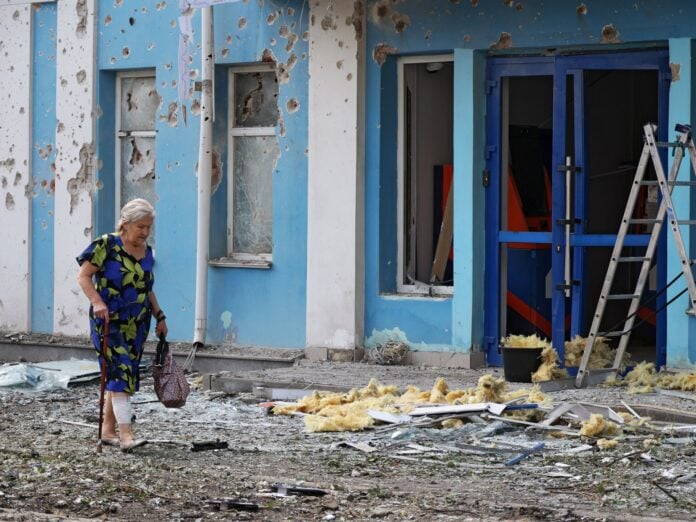
Instead, the BRICS gathering in New Delhi on Saturday became the forum where Iran’s president delivered his sharpest public rebuke of Washington’s framing of the war, and where the bloc’s joint declaration warned, in language unmistakably directed at the United States and Israel, against deliberate attacks on civilian infrastructure and nuclear facilities.
Masoud Pezeshkian arrived in India for the first visit by an Iranian president to the subcontinent in eight years. The optics were deliberate. With the US and Israel conducting an air campaign against Iranian territory, Pezeshkian chose New Delhi, the capital of a country Washington counts as a strategic partner, as the stage for a statement of defiance directed at Donald Trump.
“If Americans are warriors, let them face our valiant military forces,” Pezeshkian wrote on X, hours before the summit’s final declaration was issued. “Why wage war on civilian infrastructure, food supplies, and livelihoods? If they’re human, why deny people access to water, food, and medicine? Our people can’t be bullied into submission. Iran won’t surrender.”
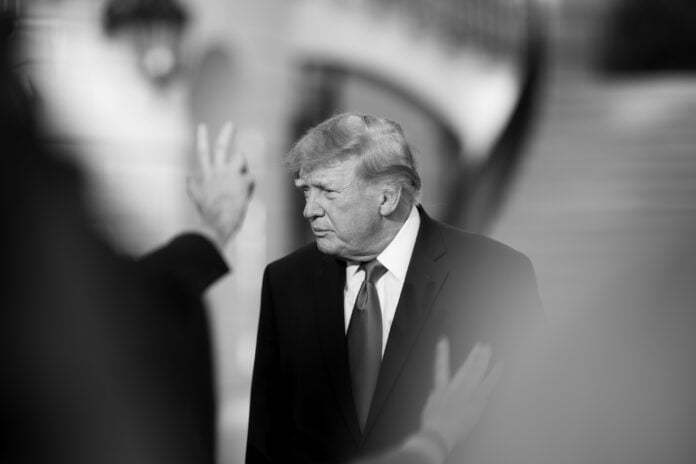
The statement landed directly on Trump’s timeline. On Thursday, the US president told reporters he expected the Iran war to end “very soon”, adding that oil prices would “come tumbling down” once fighting stopped. November 3 midterm elections are seven weeks away, and Trump’s Republicans are defending narrow majorities in both houses of Congress.
Pezeshkian’s response, issued from New Delhi, was not a counter-proposal. It was a rejection of the premise: that Iran’s posture is shaped by Washington’s electoral calendar.

The declaration’s reference to nuclear facilities carries particular weight. The US struck Iranian nuclear sites at Natanz, Fordow, and Isfahan in the early phase of the conflict. BRICS, whose members include China, Russia, India, Brazil, Saudi Arabia, the UAE, and Ethiopia, as well as Iran, has now placed that targeting in the category of internationally impermissible conduct, at least as a matter of collective statement.
Whether that statement carries operational consequences is a different question. BRICS has no enforcement mechanism. Its members include states that have remained publicly neutral, including India, whose position throughout the conflict has been to press for negotiated resolution without joining Western sanctions against Tehran or American military resupply chains. That neutrality makes Modi a credible interlocutor, which is why Pezeshkian chose New Delhi at this specific moment.
Modi met Pezeshkian on the sidelines of the summit on Friday. The Indian prime minister raised concerns about the safety of seafarers and underscored the need for freedom of navigation and commerce. The Iranian cargo vessel struck in the Strait of Hormuz that same morning, hours after the Salalah navigation deal was signed, gave that conversation immediate and grim context.
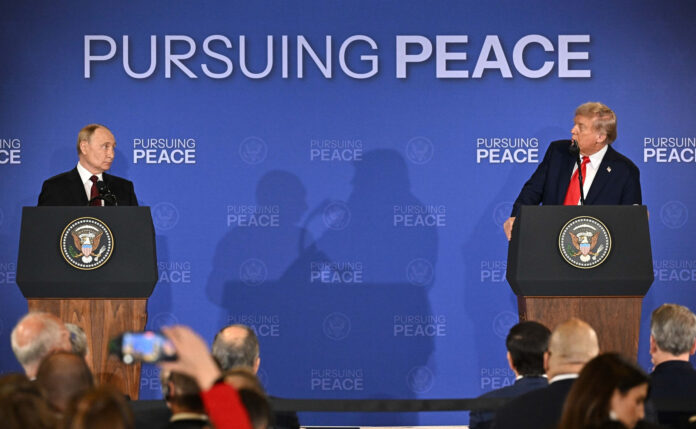
Russia’s Vladimir Putin was also in New Delhi. Both Putin and Pezeshkian addressed the BRICS plenary, criticising US economic dominance and the use of dollar-denominated sanctions as instruments of coercion. The alignment between Moscow and Tehran was not new; the forum in which it was expressed was.
For India, holding the BRICS chairmanship this year has required diplomatic acrobatics. Narendra Modi has cultivated a working relationship with Donald Trump, maintained deep economic ties with Russia despite the war in Ukraine, and now hosted a summit whose declaration directly challenged the military conduct of a US campaign that India has declined to oppose publicly.
The final text reflected that balancing act: firm on civilian protection, but silent on attribution.
That omission is precisely what allows India to endorse the declaration. It also limits the statement’s diplomatic force. A text condemning attacks on civilians without naming the actor accused of striking power grids, water-treatment facilities, and food-distribution networks across western Iran can be read in Tehran as support—and in Washington as a procedural objection that can be set aside.
What cannot be set aside is the geopolitical composition of the room. Eleven states accounting for more than forty percent of global GDP and more than a third of the world’s population signed a document on Saturday that, for the first time, places collective multilateral concern on the record about a war the United States is conducting. The significance is not in what BRICS can do. It is in what Trump cannot now claim: that the international response to the Iran war has been passive acceptance.
Pezeshkian is returning to Tehran with something less than a ceasefire and something more than isolation. The war’s military arithmetic has not changed since his plane landed in New Delhi. But the diplomatic map shifted, however slightly, on the day the Iranian president stood on Indian soil and told Washington that Tehran would not be bargained away against a midterm election calendar.
Whether Trump’s promise that the war would be over by November 3 can survive contact with that refusal remains the question neither side can answer from a summit stage.