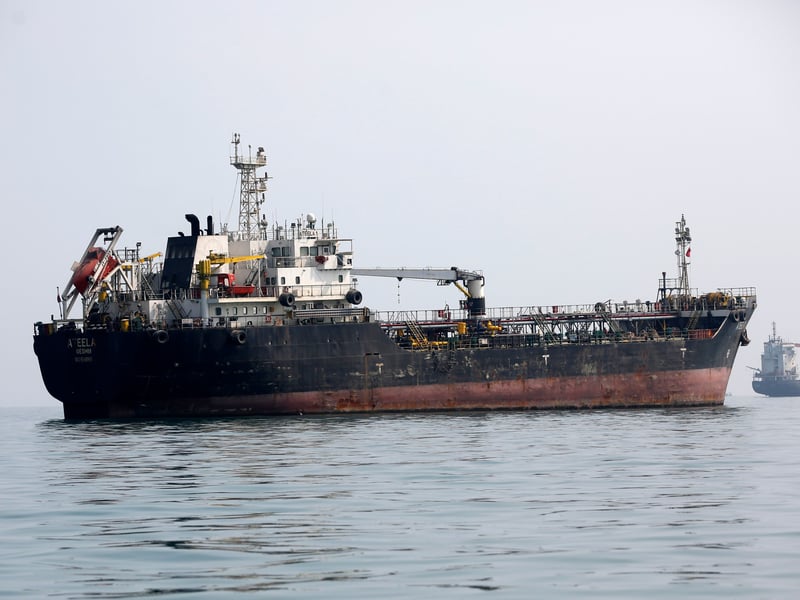

QESHM — Flames erupted at half past one in the morning. An Iranian-flagged cargo vessel, loaded with commercial freight, was navigating the Strait of Hormuz near Hengam Island when it was struck by what the United Kingdom Maritime Trade Operations described as a projectile. The British naval coordination body monitors commercial shipping across the region. When local rescue teams arrived at the scene, one crew member had been killed and four others injured. Six more had already been evacuated to the shore.
Hours later, in the Omani port city of Salalah, foreign ministers were signing a navigation framework intended to make the Strait of Hormuz safe again.
The September 13 attack on the Iranian cargo ship was not the first strike on commercial shipping in Hormuz this month. It will almost certainly not be the last. But its timing exposed something that the Salalah deal, despite its diplomatic significance, could not conceal: the strait that foreign ministers have pledged to reopen remains a waterway where commercial mariners die on early-morning crossings, and where no one is prepared to publicly acknowledge what just happened: not the assailant, not the United States, not Iran.
The Qeshm Island governor, quoted by the state news agency IRNA, identified the responsible party immediately: the “terrorist enemy,” a formulation that in Iranian official language refers to the United States. But CENTCOM, the American military command responsible for the region, did not issue a statement by midday. No party claimed the strike.
What is known is narrow. UKMTO recorded the incident at roughly 0130 GMT near Hengam Island, a small landmass at the mouth of the Persian Gulf that sits close to both Qeshm and the main Hormuz shipping lane. The crew of ten were aboard a vessel of Iranian registry; the freight manifest and destination have not been released. The weapon that struck the ship has not been publicly identified by any government.
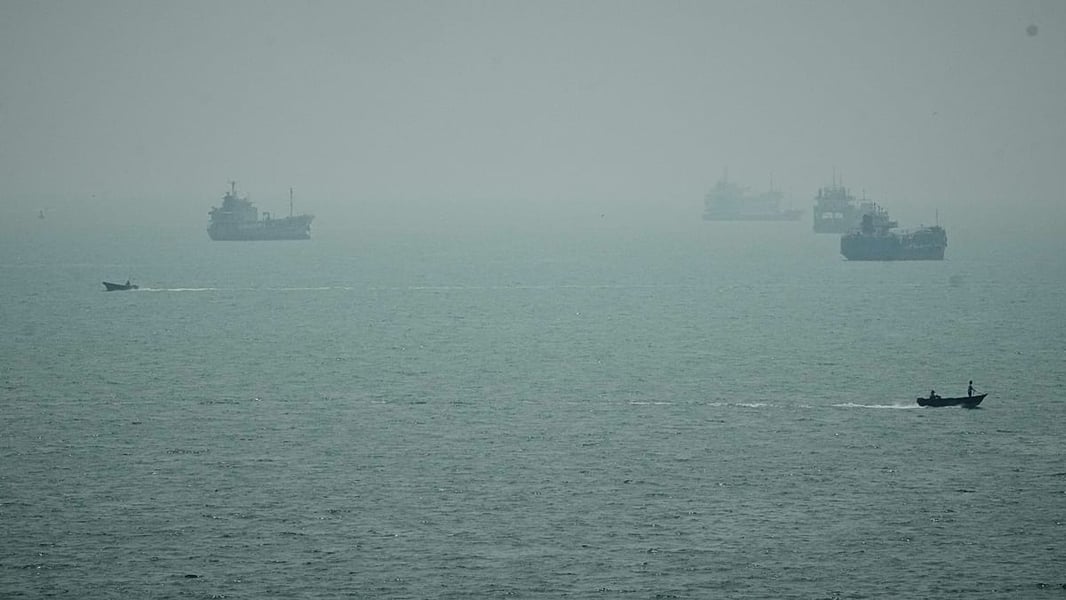
The navigational agreement signed in Salalah the same morning promised international escorts for civilian vessels above a certain gross tonnage and a maritime incident hotline staffed by Iranian and GCC representatives. Whether that hotline would have done anything for a ten-person cargo crew hit at sea before dawn is not a question any of the signatories has answered.
The commercial shipping crisis in Hormuz predates the Salalah talks. The US destroyed five Iranian tankers in a single operation on September 8, following an earlier strike on September 5, in what the Pentagon described as enforcement of the Hormuz transit regime, a characterization Tehran rejected. Iran’s response was to halt commercial coordination with international shipping authorities, leaving vessels transiting the strait without standard notice-of-passage protocols. The Salalah framework was partly intended to restore those protocols and bring traffic back to a strait now running at roughly three percent of its pre-war baseline.
A cargo ship struck near Hengam was, in that context, almost predictable. The strait has been contested at every level, military, diplomatic, and commercial, since ceasefire talks began in August and collapsed twice before a partial agreement was reached. Brent crude has held near one hundred dollars a barrel since late summer, driven in part by the near-closure of both Hormuz and Bab al-Mandeb, where Houthi forces control the Red Sea coast and the island of Mayun.
Euronews reported that the delegation signing the Salalah framework was briefed on the Hormuz attack before the signing ceremony concluded, according to Euronews correspondents in Muscat. The delegations proceeded. Whether that constituted confidence in the deal or strategic necessity was a question no one in the room chose to address publicly.
Iran’s government has not officially blamed any specific actor beyond the Qeshm governor’s broad attribution to the “terrorist enemy.” That phrasing encompasses the United States, Israel, and their aligned proxies, deliberately broad enough to serve as accusation without constituting a formal government claim. It also preserves space for another possibility: that the strike may have been the work of a party with reasons to prevent the Salalah deal from taking effect, according to Al Jazeera‘s coverage of the morning’s events.
The dead crew member has not been named. The four wounded were treated at facilities on Qeshm Island; their conditions have not been publicly updated. The six evacuated are reported by local authorities to be in contact with their families.
At 0130 in the Strait of Hormuz, ten people were moving freight across a waterway the world’s governments have spent months arguing about. By morning, the argument had a new piece of evidence and the same absence of anyone willing to claim it.