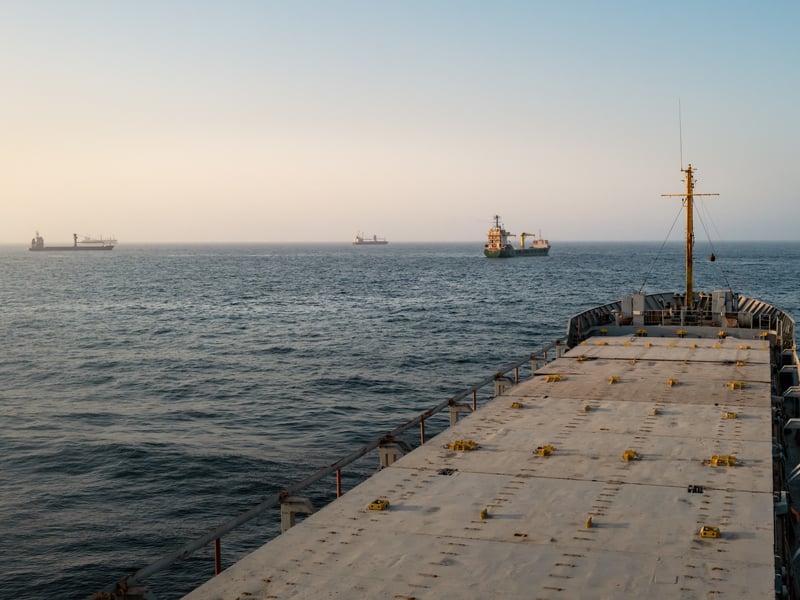

MUSCAT — On the evening of Saturday, September 13, as Houthi commanders in Sana’a declared their seizure of the Bab el-Mandeb Strait complete, Iran’s Foreign Ministry spokesman Esmaeil Baqaei confirmed that his minister would fly to Salalah the following morning. The meeting, he said, would produce a signed agreement. The Strait of Hormuz, Iran’s most valuable piece of leverage in this war, would have a jointly navigated shipping route for the first time since February.
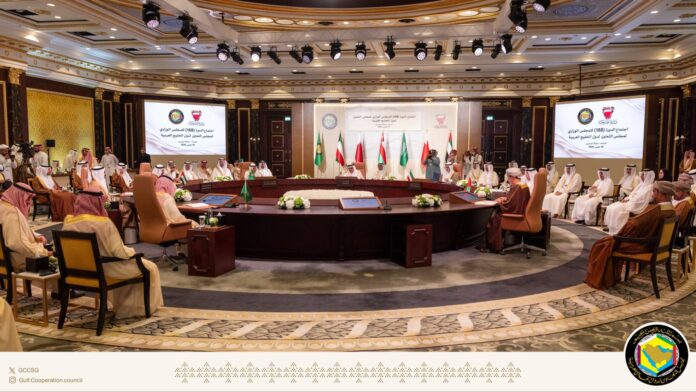
The announcement was precise in what it promised. Baqaei described “a joint route between Oman and Iran in the Strait of Hormuz” that both countries would notify to the International Maritime Organization, creating a legal framework for commercial vessels to transit the passage under conditions both parties accept. Foreign ministers from the Gulf Cooperation Council states and from Iraq would be present in Salalah to sign, Al Jazeera reported. The gathering, confirmed by TASS, would be the first direct contact between Iranian and Gulf foreign ministers since the war began in February.
What the announcement left open, and what the arithmetic of Arabian oil exports makes unavoidable, is what reopening Hormuz actually solves.
Before the war, Saudi Arabia moved the majority of its crude through Hormuz, through the East-West Pipeline that carried approximately five million barrels per day from the Eastern Province to the Red Sea port of Yanbu, and through a network of Gulf coastal terminals. Iran closed Hormuz in February. Drone strikes launched from Iraqi territory hit the East-West Pipeline on Saturday, taking the overland route offline. The Houthis declared a naval blockade against Saudi tankers in late July and on Friday completed their seizure of every island and coastal position at Bab el-Mandeb, giving Iran-aligned forces simultaneous control over both Arabian chokepoints. By the time the foreign ministers’ delegations were crossing into Salalah on Sunday morning, Saudi Arabia had lost reliable access to all three export corridors at once.
An agreement to formalize transit through Hormuz restores one of those corridors, assuming it functions, assuming it survives Bahrain’s absence, and assuming the verification mechanism can be agreed. The other two remain closed. Goldman Sachs analysts, writing in a note this week, estimated that even a full Hormuz reopening under an Oman-brokered framework would reduce the current supply disruption by less than forty percent. The rest of the gap has other owners.
Oman’s position deserves separate consideration. The sultanate absorbed Iranian strikes on its own ports, including the Port of Duqm, facilities at Salalah, and the Sohar industrial complex, during the most intense phase of the war’s maritime campaign. Muscat filed formal protests, but it also kept its diplomatic channel with Tehran open throughout the conflict.
Hosting Monday’s agreement in the same port city whose facilities were attacked reflects Sultan Haitham bin Tariq’s assessment of what Oman’s neutrality is worth. It also signals that Muscat is prepared to absorb political costs in exchange for strategic positioning.
Iraq’s participation is the detail left unexplained by the meeting’s confirmation. Baghdad has a complicated relationship with both Iran and the GCC, and its inclusion in a Gulf-Iran diplomatic forum on the same day that its territory hosted drone strikes targeting the Saudi pipeline sends a clear signal. Iraq’s government is positioning itself as a participant in the region’s post-war order rather than as a staging ground for continued military action.
Oil markets on Sunday morning will read two contradictory signals simultaneously. A Hormuz deal, if real, is bullish for supply. A Bab el-Mandeb closure, if permanent, is bearish. A Saudi pipeline shutdown of unclear duration removes the pressure valve that markets had been pricing in as the most likely relief. Traders who pushed Brent above one hundred dollars last week, and who have been watching Trump’s insistence that the war will end after the midterms, will need to decide before Asian markets open whether Monday’s signing ceremony in Salalah represents genuine de-escalation or the management of a war that neither side has agreed to end.
Iran has not offered a timeline for lifting Hormuz restrictions more broadly. The framework being agreed in Salalah governs a specific navigated route, not the strait’s general reopening to all traffic. What happens to vessels flying flags not covered by the signing parties, or to Saudi tankers whose status Bahrain’s absence has made legally ambiguous within the new framework, is a question Baqaei’s announcement did not answer. The ministers will sign. The strait will not simply open.