MUSCAT — Suraj Yadav had been at sea for months. He was a wiper aboard the MV Cape Dao, an Antigua and Barbuda-flagged bulk carrier transiting the Strait of Hormuz on the evening of September 23, carrying cargo toward South Asia. He was one of twenty Indian nationals on a crew of twenty-eight. He did not make it to port.
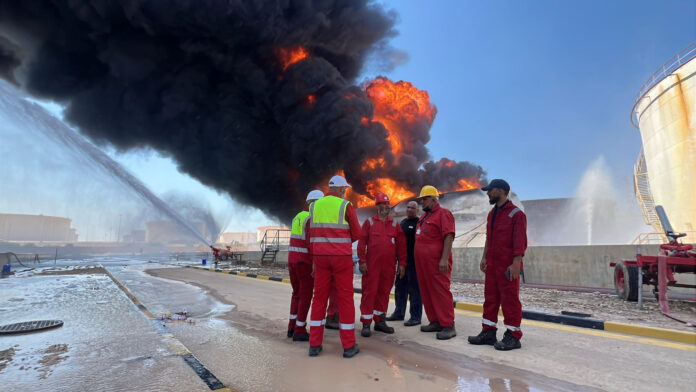
Iranian Revolutionary Guard Corps forces struck the Cape Dao at approximately 8:40 p.m. local time, according to ship-tracking data reviewed by maritime security firms. Two projectiles hit the vessel; one struck the port side of the C-deck accommodation area, the other the port side hull near the engine room. Oman’s Maritime Security Centre confirmed the attack placed the ship 2.5 nautical miles off the Omani coast, causing a fire in the engine room and leading to the death of one crew member. That crew member was Yadav, twenty-five years old, from Deoria in Uttar Pradesh. Twenty-seven survivors were evacuated by the Royal Oman Navy.
On September 24, the IRGC posted a video to its Telegram channel purporting to show the aftermath of the strike. The caption described the Cape Dao as a “violating vessel.” It named no individual among its dead.
Five hundred miles away, in the corridors of the United Nations headquarters in New York, Abbas Araghchi was in his third day of negotiations with Steve Witkoff, the Trump administration’s lead interlocutor for Iran. Tehran’s formal position at UNGA that week was a sixty-day ceasefire framework, the most structurally complete proposal Iran had presented since hostilities began in late 2025. The proposal included a monitoring mechanism and had drawn preliminary support from Qatar and Oman.
The two realities were coexisting at the same hour. That is the condition the Strait of Hormuz has been in for eleven months.
The Cape Dao attack is the third confirmed vessel strike in the Strait since the Salalah agreement collapsed in August, a framework brokered by Oman that was supposed to create a maritime exclusion zone protecting commercial shipping from IRGC interdiction. Washington declined to provide written security guarantees. The exclusion zone’s terms became unenforceable on both sides. Ships started burning again.

What the IRGC is doing in the Strait of Hormuz is not operationally disconnected from what Iran’s foreign minister is doing at the United Nations. That is the private assessment of three regional security analysts with knowledge of IRGC internal structure: the strike capability in the Strait functions as a pressure lever that can be opened or closed depending on the state of negotiations. When talks advance, traffic resumes. When talks stall, ships burn.
The current state is ambiguous. Araghchi’s sixty-day ceasefire proposal is real; it has structural content, a monitoring mechanism, and Gulf Cooperation Council backing from Qatar and Oman. It has not received a formal American response. The Trump administration’s posture throughout UNGA week was to welcome negotiations and provide nothing in writing. That gap, between the ceasefire Tehran says it wants and the security guarantees Washington refuses to give, is the precise gap inside which Suraj Yadav died.
India’s Ministry of External Affairs issued a statement expressing deep sorrow and calling for accountability. It did not name Iran. New Delhi’s position throughout the Iran-Israel war has been to maintain diplomatic relationships with Tehran and Washington simultaneously, a posture that becomes harder to sustain each time an Indian national is killed in the Hormuz corridor.
India supplies more merchant mariners to Gulf routes than any other country in the world. The Indian government’s calculation has been that preserving its relationship with Tehran limits the frequency of these incidents. That calculation is becoming increasingly difficult to defend in Deoria, where Yadav’s family learned of his death through the shipping company on the morning of September 24.

What happened to Suraj Yadav on September 23 is not a data point in the Iran-Israel war. He is the eighth merchant mariner killed in the Strait of Hormuz since October 2025. The total will likely grow. The question the UNGA hallways could not answer that week is whether the strikes continue because the diplomacy is failing, or whether the strikes continue because they are what keeps Washington at the negotiating table at all, and Tehran has every reason to want Washington engaged. That distinction matters. It has not been resolved.