
RIYADH — Saudi Arabia shut down its East-West Pipeline on Saturday after a series of drone strikes launched from Iraqi territory struck the kingdom’s last major oil export route outside the now-blocked Strait of Hormuz, as Donald Trump told reporters in Washington that Iran was “probably” responsible, an attribution offered without public evidence and complicated within hours by Iraq’s own confirmation that the attacks originated on its soil.
The pipeline carries crude across 1,200 kilometers from Saudi Arabia’s oil-rich Eastern Province to the Red Sea port of Yanbu, giving the kingdom an alternative export path that bypasses the Persian Gulf entirely. That bypass had become critical since February, when American and Israeli strikes on Iran’s naval facilities effectively closed the Strait of Hormuz to commercial traffic. Brent crude had already crossed $100 a barrel this week amid those cascading disruptions; the pipeline’s shutdown removes one of the few remaining escape valves from a supply crisis that Trump’s own decision to go to war with Iran created.
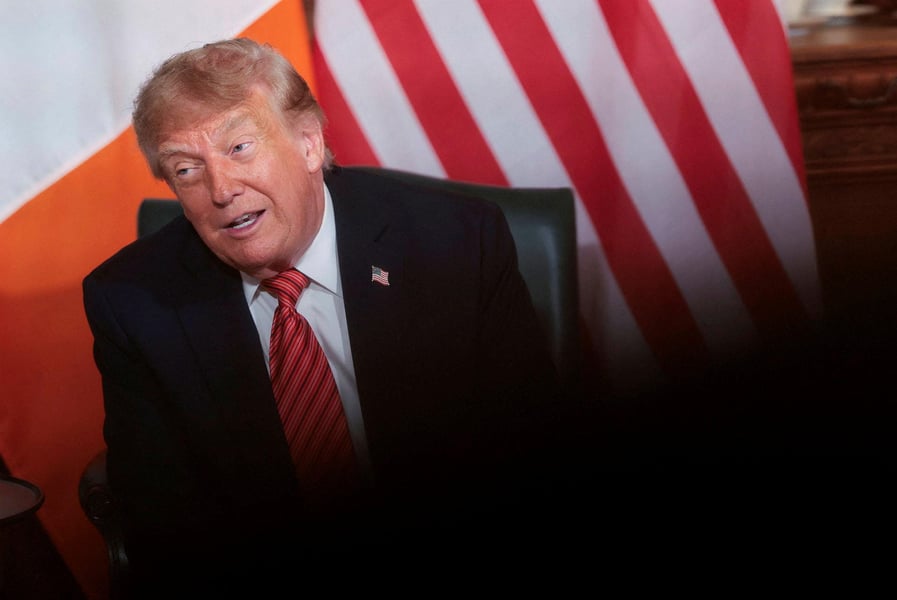
Trump, speaking from Washington, was characteristically unequivocal about blame. Iran was “probably” behind the attack, he said, with the qualifying adverb doing less to hedge the accusation than to mark the gap between his certainty and the available evidence. The Saudi foreign ministry identified the attackers as armed groups operating inside Iraq, a phrase that describes a known category: the constellation of Iranian-aligned militias that have proliferated across Iraqi territory since 2003 and operate with varying degrees of direction from Tehran. Iraq’s government confirmed that the drones flew from its territory and pledged to investigate, an acknowledgment that verified the attack’s origin while declining to assign responsibility to any specific actor.
The central question the Trump administration has not publicly addressed is whether Iran ordered this specific attack or whether Iraqi militias acted on their own initiative. That distinction matters considerably when the United States is already at war with Iran and looking for justifications to expand or intensify its operations. No evidence placing operational command in Tehran has been made public.
While Trump focused on the pipeline, Friday brought a separate escalation with longer-term strategic consequences. Yemen’s Houthi movement announced it had completed the seizure of three strategic islands at the entrance to the Bab al-Mandab Strait, the narrow passage linking the Red Sea to the Gulf of Aden through which roughly ten percent of global trade normally passes. The seizure, which the Houthi military command described as a lightning offensive lasting less than a week, gives the group physical control of positions at the chokepoint it has been targeting with missiles and drones since the Iran war began.
Saudi Arabia now faces a conflict on two fronts it did not design and cannot easily exit. Its eastern cities had already been struck repeatedly by Houthi ballistic missiles and drones, with four cities targeted in a single coordinated assault earlier this week in what the UN’s envoy for Yemen called the most serious risk of large-scale conflict since the 2022 ceasefire. And now its most critical alternative export pipeline, the route that was supposed to keep Saudi oil flowing while the Persian Gulf remained inaccessible, has been hit from the north.
Trump’s response to the Houthi dimension of Saturday’s news was notably placid. He said the Houthis had been in contact with the administration and indicated they did not want the United States to intervene in Yemen directly, then offered a phrase that will not reassure anyone in Riyadh: “Everything’s going to work out fine and dandy.” The formulation departed sharply from the administration’s usual register for a conflict day on which Saudi Arabia had just seen its primary alternative oil route taken offline.
The full economic weight of the developments will not be clear until oil markets open on Sunday evening. Brent crude’s push above $100 reflected growing trader unease about the conflict’s trajectory; the East-West Pipeline shutdown adds concrete supply uncertainty rather than mere speculation about future disruption. Saudi Arabia has some flexibility through tankers loading at Persian Gulf terminals, but those routes pass through the Strait of Hormuz, which remains effectively closed.
Trump’s war with Iran has now generated disruptions well beyond the bilateral targets his administration identified in February. An Iraqi militia appears to have struck Saudi pipelines from Iraqi territory. The Houthis have seized the Bab al-Mandab Strait. Saudi Arabia’s export infrastructure is caught between two converging pressures. Whether Iran directly ordered Saturday’s attack may ultimately prove less important than the fact that the conflict’s geography has expanded to include it regardless.