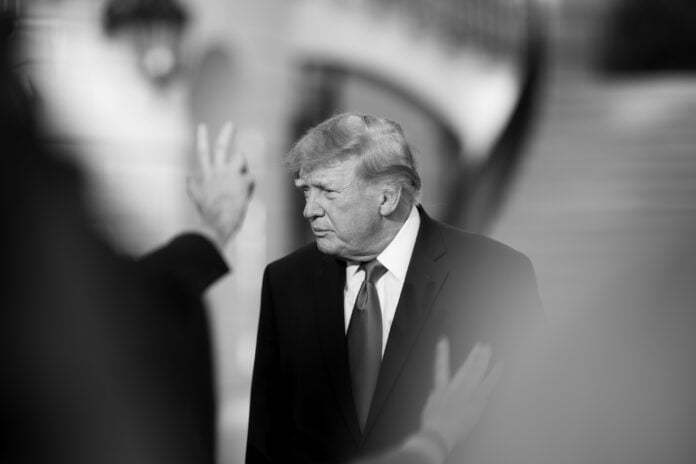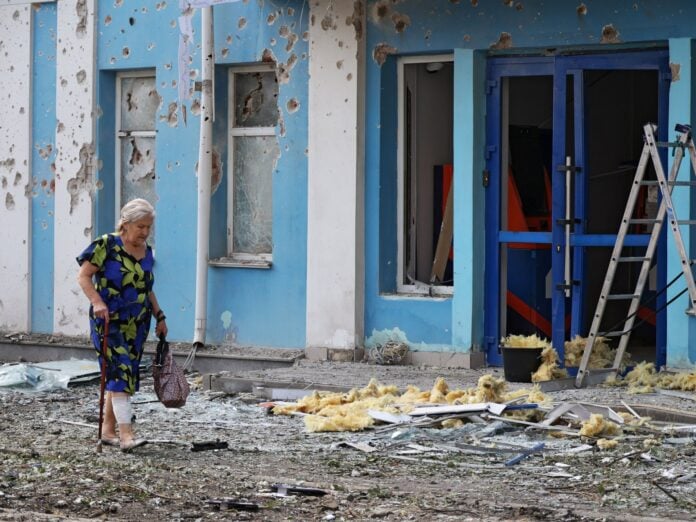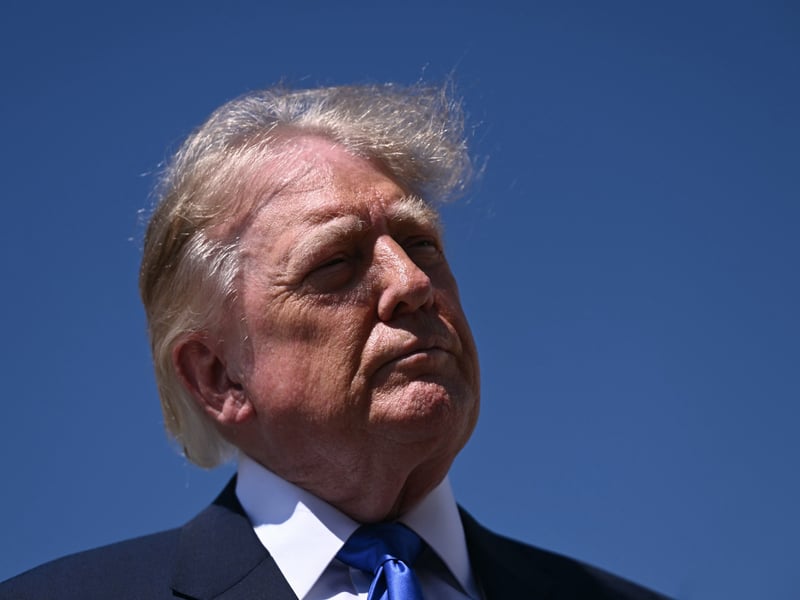

DUBLIN — The Iran war would end “very soon,” Donald Trump told reporters on the tarmac at Shannon Airport on Friday, according to Al Jazeera. The timeline he offered was not military or diplomatic. It was electoral: just after November.
Trump made the statement as Air Force One refuelled on a swing through Ireland, speaking with the certainty of a man who believes he controls the calendar. The people actually fighting the war offered no such confidence. In New Delhi, where Iranian President Masoud Pezeshkian appeared at the BRICS summit the same day, the message was plain: Tehran would not surrender to any American pressure, electoral or otherwise. In Tel Aviv, Israeli Defence Minister Israel Katz told military commanders that operations against Iranian targets carried no time limit. Three parties, three schedules. Two of them do not include November.
The gap between Trump’s framing and the reality of the conflict has hardened over the summer into something that looks less like diplomacy and more like a political performance running parallel to a war that has nothing to do with American election cycles. Brent crude settled at $97.40 a barrel on Friday, five dollars below its August peak, a market signal that some traders are pricing in eventual de-escalation, though analysts at Goldman Sachs warned in a note published Thursday that any sustained closure of the Strait of Hormuz would push prices above $115 within three weeks.
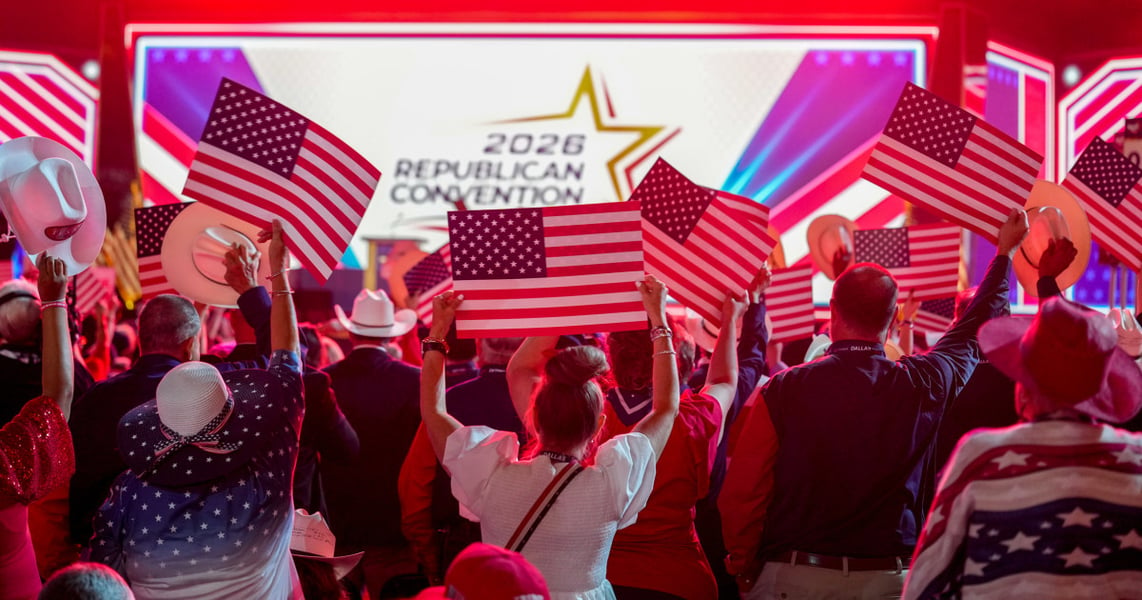
The electoral math behind Trump’s timeline is not subtle. His approval rating sits at 31 percent in the latest NBC News survey, the lowest sustained reading of his second term, and gasoline at the pump has averaged $4.27 nationally for eleven consecutive weeks. Republican strategists speaking anonymously to NBC News acknowledged that the Iran war, which began in late spring and has stretched into an extended aerial and naval confrontation, has dominated the party’s internal polling as the single largest drag on congressional candidates. At the Republican midterm convention in Charlotte last month, the war was not once mentioned from the main stage.
Trump did not discuss conditions for ending the war. He did not mention a ceasefire framework, an intermediary, or a specific diplomatic channel. He mentioned the election. That is the only condition on offer: November 3, the same deadline that now governs everything from the Iran confrontation to a pending Supreme Court fight over mail-ballot processing that will shape whether those votes count.
Katz’s no-time-limit formulation creates a separate problem for Trump’s framing. Israel is carrying out its own operations against Iranian territory and Iranian-backed forces, independently of American strike packages. American and Israeli officials have privately acknowledged for months that the two allies are conducting parallel campaigns rather than a single coordinated one. When Trump says the war will end after November, he is speaking for the American component of a conflict he does not fully control.
The economic dimension is where the gap between Trump’s timeline and the war’s actual trajectory produces concrete consequences. The Strait of Hormuz, through which roughly 21 percent of the world’s oil supply passes each day, has remained open but under heightened threat since Iranian naval exercises in August included simulated mining operations. A serious incident in the strait could disrupt the fragile balance in crude markets that has kept prices below $100. Trump’s announcement of a post-election end date could theoretically give market participants a reason to reduce the risk premium. Traders are pricing in the words of a man who previously said the war would not happen, then said it would be brief, and later said it would end by summer.
On the campaign trail, and Ireland remains part of that trail despite its distance from Pennsylvania, Trump has learned to portray the war as a manageable problem nearing resolution. That framing serves the midterms. What it does not do is resolve a three-sided conflict according to any timetable that Tehran, Tel Aviv, or oil futures markets have agreed to recognise.