
WASHINGTON — On Sunday afternoon, the Trump administration did not wait.
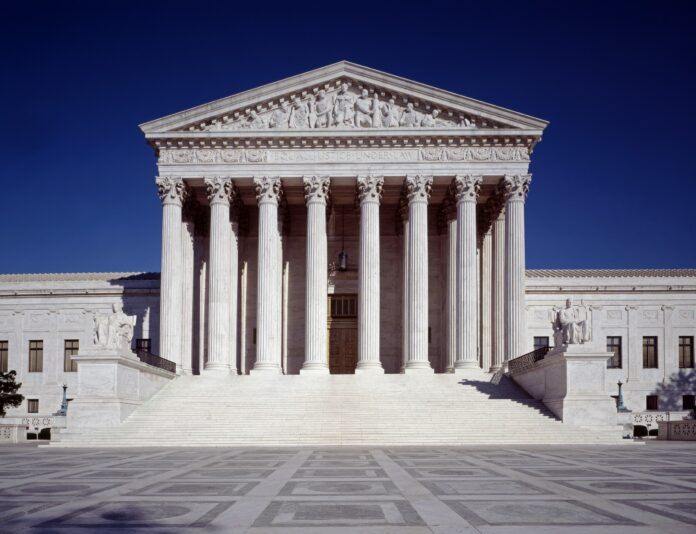
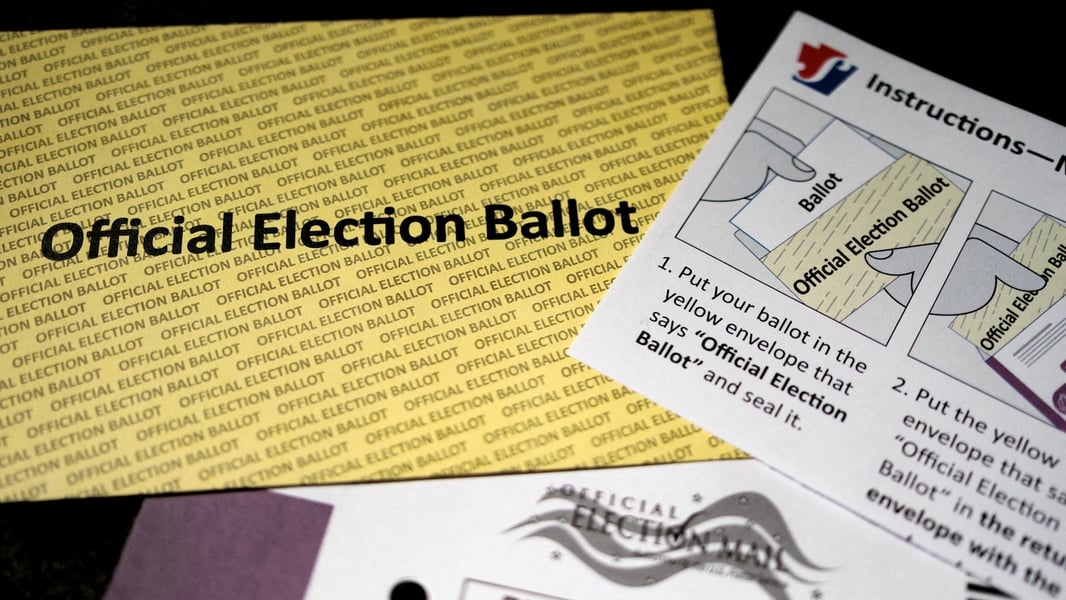
Hours after a federal judge in Boston issued her second block on the U.S. Postal Service’s mail-ballot control program in a month, calling it likely “unlawful and unconstitutional” and warning of the “disenfranchisement of millions,” the administration filed its third emergency appeal to the Supreme Court, ABC News reported Sunday, asking the justices to again intervene in favor of an election-administration overhaul that two federal courts have now separately refused to allow less than sixty days before Election Day.
The administration’s speed is itself the argument. Since Executive Order 14399 took effect in March, directing USPS to verify voter eligibility before delivering mail ballots and requiring states to submit voter rolls for matching, the White House has treated each judicial setback not as a ruling to absorb, but as an obstacle to clear.
The first injunction came last spring from US District Judge Indira Talwani in Boston. In August, the Supreme Court, voting 6-3 along conservative lines, lifted the block — a decision the administration pointed to as evidence that its program was constitutionally sound.
USPS followed with its implementing rule, published in the Federal Register on August 26. A federal appeals panel blocked that version on September 3. Last week, Talwani blocked it again, issuing her second order against the rule on Friday.
By Sunday, the administration was back at the Supreme Court.
“The immediate implementation of the USPS implementing rule,” Talwani wrote Friday, “threatens the disenfranchisement of millions of voters who would otherwise be eligible to cast mail-in ballots.” She found the rule “unconstitutional where it intrudes not only on Congress’s Elections Clause powers but also that power left to the States” and noted that states had “neither the time nor the funds” to comply with its requirements before ballots must be distributed.
The timeline illustrates the problem for states that run elections. North Carolina, the first state to begin mailing ballots for the November 3 midterms, sent its first batch out on September 4. Those ballots went out under the prior legal regime. Whether they will be honored if the Supreme Court lifts Talwani’s block and USPS begins enforcing the new rule is a question election administrators in Raleigh have no clean answer for. North Carolina is also among the 23 Democratic-led states that filed suit against the executive order in the first place, making its position in this litigation simultaneously that of plaintiff and participant in the voter-roll compliance process the rule mandates.
The ACLU, which has been among the most visible opponents of EO 14399, said Sunday that the administration was “racing to the Supreme Court” to circumvent the federal judiciary rather than address the constitutional concerns two courts have now identified. Sophia Lin Lakin, the organization’s deputy legal director, called the policy “unconstitutional” and accused the administration of seeking “a more favorable forum” rather than engaging with the courts’ reasoning. “The courts have recognized that this policy will disenfranchise millions,” Lakin said in a statement. “The response from this administration is to race to the Supreme Court.”
The Supreme Court’s prior 6-3 action lifting the first injunction was an emergency order, not a ruling on the merits. It did not hold that EO 14399 or the USPS implementing rule were constitutionally valid, only that the plaintiffs had not clearly shown they would succeed on the merits at that stage. That procedural distinction matters now because both Talwani and the appeals panel have since found the new USPS rule, which is substantively different from the original order it interpreted, more likely than not to be unlawful. The administration’s emergency request asks the justices to reach a different preliminary judgment than two lower courts have.
The stakes for the Republican electoral strategy are direct. Trump’s midterm operation, built around grim internal polling from his own team and a compensating plan of 35 campaign stops, rests on a coalition that depends on in-person and early voting in specific counties. Mail voting skews against that coalition. The analysis behind EO 14399, as administration officials have described it, treats mail-ballot access as something to be managed rather than maximized. That is an honest description of a program whose practical effects will fall disproportionately on voters in the 23 Democratic-led states that challenged it.
Less than 60 days remain before the November 3 midterms. The House leaves for recess on September 15, with individual members scheduled to return to their districts at a moment when the central machinery of their voters’ ballot-casting is the subject of an unresolved Supreme Court emergency. JD Vance, whose keynote at the GOP midterm convention in Dallas three days ago was built around a message of economic record and voter mobilization, has said nothing publicly about what happens if the Supreme Court’s conservative majority cannot deliver a stay before early voting begins in the first states.
The constitutional questions Talwani identified are not peripheral. The Elections Clause of the Constitution grants Congress the authority to set the time, place, and manner of federal elections, with states retaining significant authority over administration. An executive order directing how the U.S. Postal Service delivers ballots to voters, requiring state-level compliance with federal voter-roll matching, and creating a federal ballot mail portal that determines which households receive ballots at all, reaches into that allocation in ways the courts are only beginning to map.
What the Supreme Court does with Sunday’s emergency application is not yet clear. The matter will initially be referred to a circuit justice, most likely the one assigned to the First Circuit covering the district where Talwani sits, who can act alone or refer the question to the full Court. A ruling could come within days, or it could arrive after more damage to the voter-registration and mail-ballot systems the states are trying to run.
What is clear is that the administration filed within hours of the Friday ruling, a pace that reflects the electoral calendar more than the pace at which constitutional law typically resolves.