
DALLAS — JD Vance had one job Thursday night at American Airlines Center, and it was more difficult than it appeared. The vice president of the United States was the keynote speaker at the first Republican midterm convention in the party’s history: two nights of orchestrated urgency in a Texas city that needed little persuasion, designed to give a party fighting for control of Congress without its candidate’s name on the ballot a reason to stay engaged.
He chose the kitchen table.
Not as a metaphor, but as an inventory, reviewing the provisions his administration said it had already delivered: no tax on tips, no tax on overtime, and no tax on Social Security. The approach felt like a shopper reading from a receipt. The argument was not that these measures were coming. It was that they had already been enacted through the “One Big Beautiful Bill,” which the Republican-controlled Congress had sent to the president’s desk, and could be reversed if Republicans lost their majorities in November.
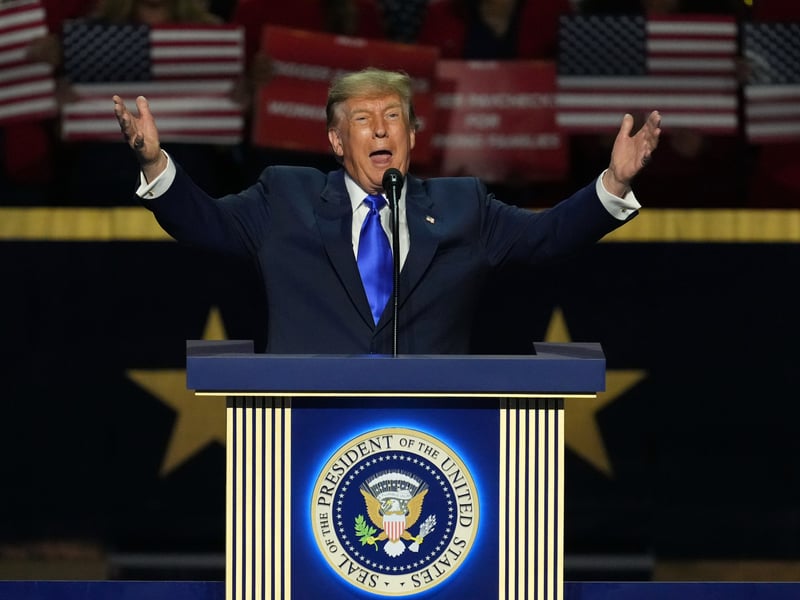
“Together with Republicans in Congress,” President Trump said when he followed Vance to close the second night, “we put thousands of dollars INTO the pockets of working families with the largest tax cuts in history.” He was not making a promise. He was claiming credit for a record, addressing not the opposition but Republican voters who might otherwise fail to turn out for an election without his name on the ballot.
He made the request plainly: “Pretend that I’m on the ballot.”
The Republican Party had never held a midterm convention before this election cycle. The decision to book an NBA arena in Dallas for two nights, September 9 and 10, deliberately echoed the nominating conventions that have shaped the party’s brand since 2016: the floor signs, swing-state delegate positioning, coordinated cheering cues, and theatrical presidential entrance. The difference was the purpose. A nominating convention selects a candidate. This one was trying to manufacture the emotional stakes of a presidential election for a midterm contest that, by design, does not include one.
Trump’s $5,000 dividend announcement the previous night had already set the economic frame: tax cuts delivered, spending power returned. Night 2 was the follow-through, shifting register from headline number to personal ledger. Where Night 1 spoke to the base, Vance’s night was calibrated for a different voter: suburban, cost-of-living-focused, persuadable, not yet certain whether showing up for a midterm without the top of the ticket was worth the drive.
NPR’s reporting from the convention described the night’s theme as affordability, touching wages, energy prices, and the household economics that have defined daily life since 2021. Vance, who grew up in the kind of Appalachian poverty that makes “no tax on overtime” sound like something other than a campaign slogan, was the administration’s assigned messenger for that argument.
The Republican National Committee’s internal research had been pointing toward suburban districts in Pennsylvania, Michigan, and Nevada as the places the argument had not yet been won. Those are not immigration districts. They are cost-of-living districts, and the working theory inside the party has been that the midterms will be decided by whether Republicans can make the economic record feel immediate and personal to voters who are not watching from an arena floor.

Al Jazeera, in its convention takeaways, noted that Democrats held no counter-programming in Dallas. There was no coordinated response. The party of the opposition watched, a posture that has drawn quiet criticism inside Democratic ranks with 55 days left before an election where every persuasion hour matters.
The absence of visible opposition meant Republicans had two uninterrupted nights to define what November is about. They chose to define it as a vote on the last two years. Trump’s closing address reinforced that frame: provisions named, accomplishments tallied, and then the ask placed directly in front of the delegates who would carry the message back to the districts that will decide the next Congress.
“Pretend that I’m on the ballot.” The phrase traveled faster than most of what was said in Dallas. It is both an admission and a strategy, an acknowledgment that the Republican base votes on the president’s behalf even when the president is not running, and a bet that naming that fact explicitly will make it more likely rather than less.
The Republican majority in the House is narrow enough that losing a handful of seats would end it. The Senate majority is more comfortable but not immune. The midterm environment has already been shaped by competing pressures from abroad, making the convention’s deliberate focus on domestic economics a choice as much as a strategy: to keep the argument on terrain where Republicans believed they were winning.
The 55 days between Dallas and Election Day are, by the party’s own accounting, the margin that matters.
Vance, whose own political future is staked on the argument he made Thursday night succeeding, built his keynote to survive beyond the arena. Whether it does is the question Dallas could not answer.