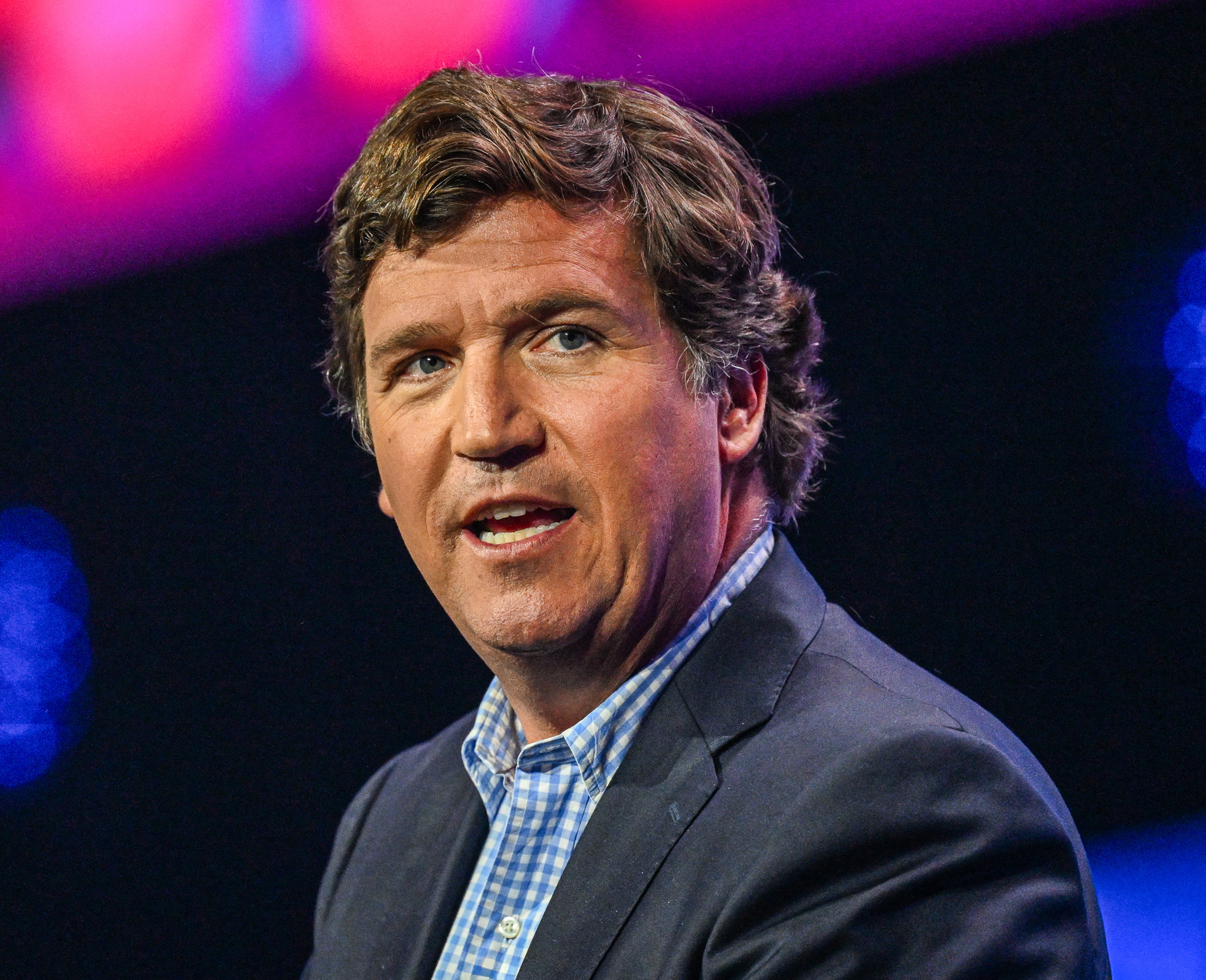

WASHINGTON — The broadcaster who spent years making Donald Trump’s case to the largest conservative cable audience in America sat down with the Columbia Journalism Review this week and said he feels sorry for Trump, considers him a man who has lost control of his own decisions, and intends to do “everything I can” to build a rival political structure capable of breaking what he now calls a fraud masquerading as a democracy.
Tucker Carlson’s interview, published Wednesday in the Columbia Journalism Review, is the clearest public declaration yet of where the anti-war faction of American conservatism is heading after the February strikes on Iran. Carlson has not spoken to Trump since the war began. He said he has no interest in doing so.
The cause of the break is specific. When the United States joined Israel in striking Iranian military and nuclear infrastructure on February 28, killing Supreme Leader Ali Khamenei, Carlson concluded that Trump had violated the single campaign promise that had separated him from every other Republican: the commitment not to start a new Middle East war. He called what followed “a regime-change effort led by Israel,” and said Trump had been “pushed” into it by Israeli Prime Minister Benjamin Netanyahu. “He’s not a man in charge of his own life at this point,” Carlson said.
The significance of the statement is not primarily personal. For nearly a decade, Carlson’s platforms served as some of the most effective amplifiers of the coalition that elected Trump twice. His break represents the first time a figure of genuine mass-audience standing from within that coalition has announced a structural alternative rather than simply issuing criticism and waiting for the next election cycle to deliver a verdict.
“I’m going to help build a third party,” he told the Columbia Journalism Review. “There should be a good-faith effort to figure out what benefits the country.” He was unambiguous that he has no interest in running for office himself. His stated target is the system. “That’s a one-party state posing as a democracy,” he said of the current American political arrangement. “It needs to be broken.”
The axis of Carlson’s proposed platform is foreign policy and what he describes as the problem of foreign political influence over American decision-making. His stated concern is not immigration rates or economic policy but the more fundamental question of which country’s interests American political decisions are made to serve. On Israel specifically, he said: “Once you start taking over my political system and destroying my country, then I have a right to care.” According to Ynetnews, which covered the interview’s reception in Israel, Carlson also said he no longer cares about Hamas, removing the moral framework that Israeli officials and their American allies have used to build the case for continued military support.

The context for those statements has sharpened in recent days. American officials believed Israel was actively plotting to assassinate Iran’s nuclear negotiators while the two sides were in the middle of ceasefire talks, according to reporting that emerged last week. The United States asked other governments in the region to warn Tehran about the alleged Israeli plans. Israel denied the allegation and called the report “fake news.”
Marjorie Taylor Greene, the Georgia congresswoman who fell out with Republican House leadership before Carlson broke with Trump, has been separately linked to a nascent “We The People” party effort. In an interview with a British broadcaster this week, Greene said Trump had “turned into a combination of Israel First chickenhawks” and named specific Republican figures she said now control his decisions. The convergence between what Carlson is describing to the Columbia Journalism Review and what Greene is describing in British media suggests less a personality conflict and more the early architecture of a coherent policy faction, with war and foreign influence as its organizing principle.
Whether that faction becomes a party with ballot access, candidates, and electoral results is a separate question, and Carlson was direct about the gap between his current position and that outcome. “What matters is the ability to affect outcomes,” he said. “And I have no demonstrated ability to do that. None.” The history of American third parties largely confirms the difficulty he is describing. Ross Perot won 19 percent of the popular vote in 1992 without carrying a single state. The structural barriers to third-party politics in the United States, from ballot-access laws to winner-take-all electoral rules, have defeated far more organizationally developed efforts than what Carlson is currently describing.
The difference in the current case is that the fracture is occurring inside a coalition that has actually exercised federal power, not outside one seeking access. The Carlson break is not a protest candidacy seeking entry into a closed system. It is a split inside a movement that controls the White House, with an argument that what now sits in the White House has betrayed the people who put it there. That is a different kind of political event than an outsider campaign pressing against the doors.
The Eastern Herald’s earlier coverage tracked Carlson’s criticism of Israeli wartime censorship from the first days of the February strikes, when he accused Israeli authorities of suppressing footage of damage in Tel Aviv and Haifa. What he described then as a warning about information control he now describes as a structural political problem requiring a structural political solution.
Trump has not publicly responded to the Columbia Journalism Review interview. Whether he does, or chooses not to, will itself be an answer to the question Carlson is now putting before the American right: whether the war on Iran has changed enough inside American conservatism that the man who started it can any longer dismiss the people who have walked away from him as merely disaffected or confused.