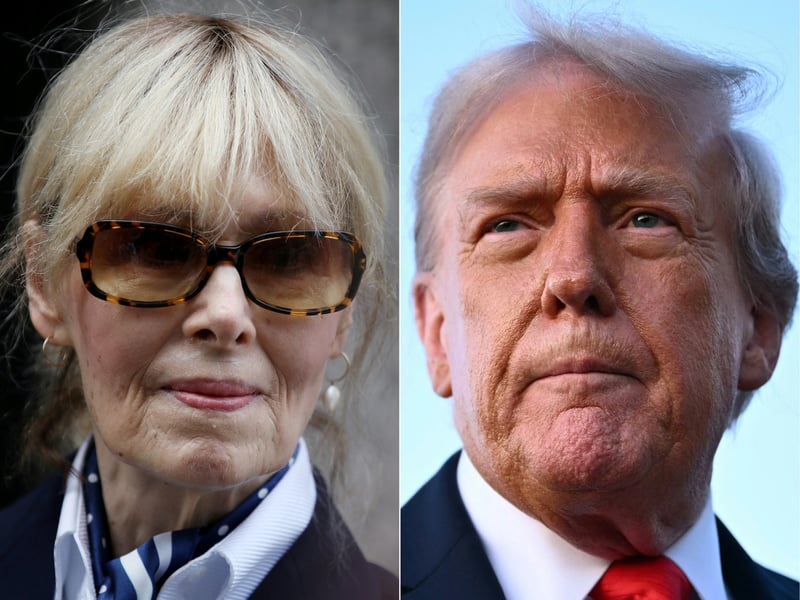

WASHINGTON — The phrase Roberta Kaplan used was precise and deliberately final: the jury’s verdict “is now final and cannot be challenged in any court.”
The United States Supreme Court confirmed that assessment Monday, rejecting President Donald Trump’s petition for a rehearing in the civil sexual abuse and defamation case brought by writer E. Jean Carroll. The court’s unsigned order, one of 33 petitions dismissed in a single administrative recess ruling, offered no explanation. It needed none. The court had already rejected the case in June. What changed Monday was the quality of that rejection: from denial to permanence.
Carroll’s original verdict, which awarded $5 million after less than three hours of jury deliberation, cannot now be undone.
The case traces to a single afternoon in the mid-1990s, when Carroll alleged that Trump followed her into a dressing room at the Bergdorf Goodman department store on Fifth Avenue in Manhattan and sexually assaulted her. Carroll, a longtime advice columnist and author who wrote a long-running feature for Elle magazine, did not go public for more than two decades. When she did, in 2019, Trump responded with the declarations that would ultimately bring her a second, larger lawsuit: he called her allegations a “con job” and a “hoax,” claimed he had never met her, and made those denials publicly, in official channels, and repeatedly.
A photograph taken at a social event proved the “never met her” claim false. Nine jurors proved the rest.
In a May 2023 federal civil trial in Manhattan, a jury of six men and three women deliberated for less than three hours before returning a unanimous verdict: Trump sexually abused Carroll and then defamed her. He owed her $5 million. Trump did not attend the trial. He called no witnesses.
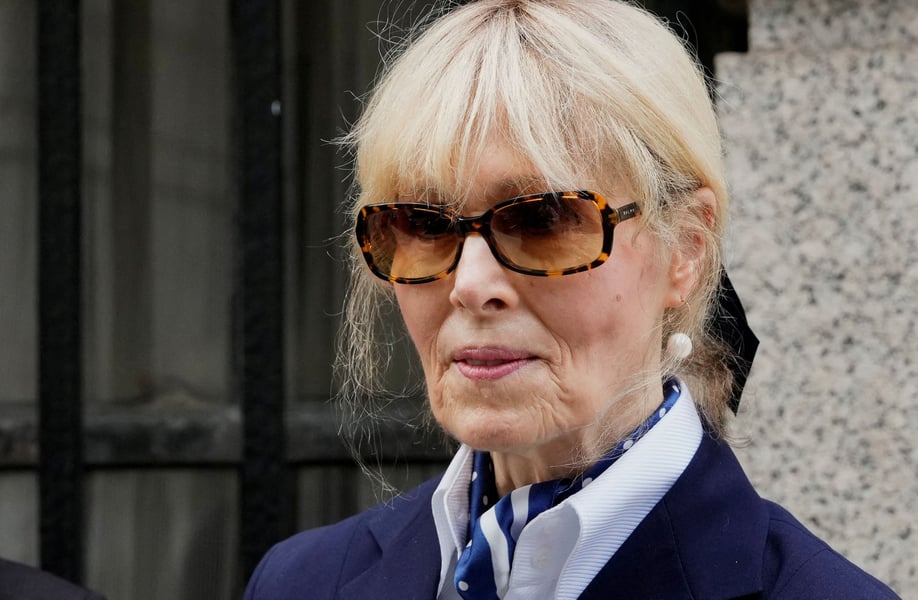
Over the following three years, Trump’s legal team deployed every avenue the federal appellate system makes available. They appealed to the Second Circuit Court of Appeals, which declined to overturn the verdict. They petitioned the Supreme Court in June, which declined to hear the case. They then filed the petition for rehearing en banc that the court dismissed Monday, an unusual step that courts grant sparingly and that had offered Trump little realistic prospect of success.
Carroll ultimately received $5.62 million, including interest accumulated during the appeals. The E. Jean Carroll payment from Trump, extracted through years of legal maneuvering, closed one chapter in what had become one of the most closely watched civil proceedings in recent American legal history.
Kaplan issued a statement saying the court had once more declined to hear the case, and that “the jury’s unanimous verdict that Donald Trump sexually assaulted and then defamed E. Jean Carroll is now final and cannot be challenged in any court,” Al Jazeera reported. A spokesman for Trump called the proceedings the “Democrat-funded travesty of the Carroll Hoaxes.” That framing has not changed since 2019.
The finality of Monday’s ruling contrasts sharply with the second, still-open Carroll case. At a 2024 trial in which Trump appeared briefly and testified before departing, a separate jury awarded Carroll more than $83 million on defamation allegations tied to statements Trump made after taking office, including statements he delivered in his capacity as president. That distinction matters legally. Trump’s attorneys argue that something resembling presidential immunity should apply to official presidential speech, a claim courts have not yet resolved and that has kept the second verdict suspended in appeals, CBS News reported.
The immunity question runs through several of Trump’s ongoing legal entanglements. The Supreme Court’s 2024 ruling establishing a framework for presidential immunity in criminal cases left its application to civil defamation actions largely uncharted. Carroll’s second case may eventually force that question. For now, both sides wait.
What does not wait is the first verdict. Nine citizens from Manhattan, presented with Carroll’s account and years of Trump’s public denials, reached a conclusion in under three hours. Courts at every level since have declined to disturb it. The Nevada fake electors case dismissed for a second time last week reflects a broader pattern of Trump-era legal proceedings gradually reaching their final positions, some through acquittal and others through procedural exhaustion.
The Carroll verdict has reached its final position. Permanently, and against him.