MOSCOW — Vladimir Putin has been waiting more than five weeks for Kim Jong Un to name a date. Donald Trump has been waiting the same five weeks for the same thing. On Thursday, only one of them got an answer.
Russian Deputy Foreign Minister Andrei Rudenko told TASS that Kim has been formally invited to visit Russia, with the timing to be “agreed through diplomatic channels.” “Chairman Kim Jong-un has been invited to visit our country,” Rudenko said. “Russia will always welcome the leader of the Democratic People’s Republic of Korea.” No date was given. None was needed. The invitation itself was the message.
That message lands inside a relationship that has already moved well past the stage of formal gestures. North Korea has deployed thousands of troops to fight alongside Russian forces since 2024, and Kim has spent the past several months narrowing the distance between Pyongyang’s public language and its battlefield reality, going as far as to call Russia’s military operation in Ukraine a “sacred war” in a letter to Putin earlier this month. In July, Putin thanked North Korea’s foreign minister at the Kremlin for troops’ “heroic deeds” in Ukraine, the first time Moscow had acknowledged the arrangement by name. In September, Kim told his own military commanders he owed “special gratitude” to soldiers in what he called overseas military operations, without ever saying Russia or Ukraine aloud.
The casualties behind that language remain contested and largely undisclosed. Ukrainian military intelligence has said North Korean forces took more than 7,000 casualties fighting to push Ukrainian troops out of Russia’s Kursk region, a toll neither Moscow nor Pyongyang has confirmed, according to the Kyiv Independent. South Korean and Western estimates have ranged lower, but every figure moves in one direction only. Kim’s government has publicly honored those troops without naming their casualties, and an invitation extended through Rudenko does nothing to change that silence.
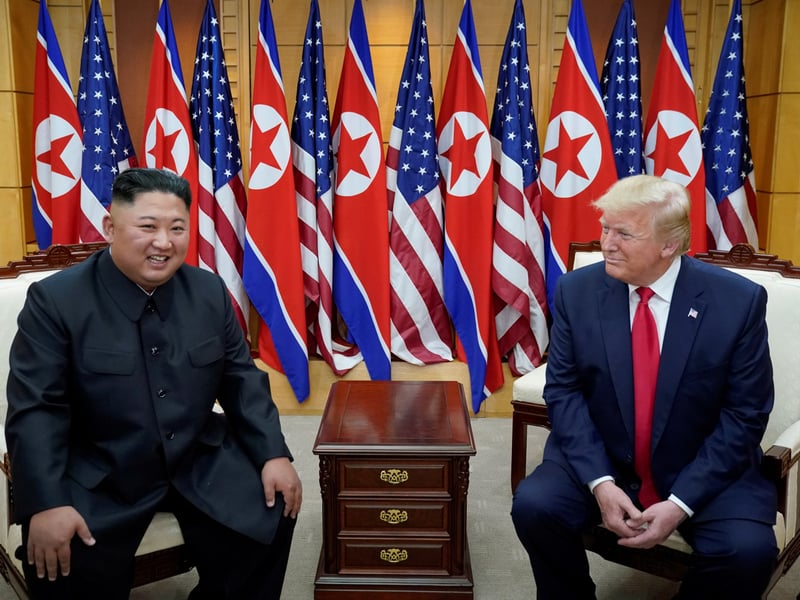
Kim has shown before which of the two suitors he answers first. In August, on the anniversary of Korea’s liberation from Japan, South Korean President Lee Jae Myung used the occasion to propose formal talks to end the Korean War. Kim said nothing back to Seoul. He wrote to Putin instead, promising a “more excellent future” for the two countries’ ties. The pattern is not new, but each repetition makes it harder to read as coincidence.
None of this guarantees Kim will accept Moscow’s invitation, let alone soon. Rudenko’s own wording, an invitation with the schedule still to be “coordinated,” leaves room for a visit to slip by months or longer, the way state visits between authoritarian allies often do when neither side wants to be seen as impatient. What the invitation does settle is smaller but sharper: on the question of who Kim Jong Un answers when both Washington and Moscow are asking, Thursday supplied one more data point, and it did not point toward Washington.