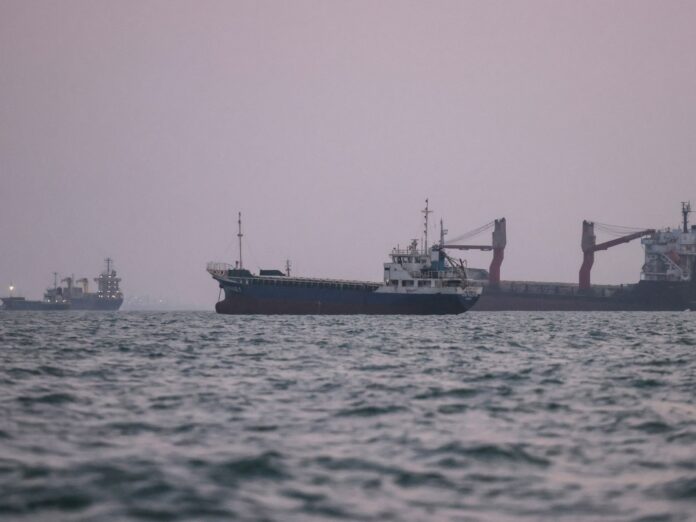
MUSCAT — The oil did not announce itself. It crept out through the hull of a half-sunken tanker named Caroline Bezengi, spreading across the surface of the Gulf of Oman in slow, dark tendrils, until satellite imagery on June 30 confirmed what responders had quietly feared since June 8: a major spill was under way in one of the region’s last ecologically significant marine zones.
The Caroline Bezengi — a sanctioned vessel linked to Russia’s shadow fleet — exploded and caught fire while transiting Omani waters. Her crew abandoned ship. The tanker, believed to carry an estimated 40 million gallons of crude oil, drifted until it grounded on a reef near an uninhabited island off the Omani coast. What followed was one of the worst maritime environmental disasters to strike the Gulf region in recent memory.
By early August, salvage teams reported hundreds of thousands of gallons had already entered the water. British maritime security company Ambrey, contracted to lead the recovery effort, found the task compounded by the monsoon season, which shuttered access to the vessel for days at a stretch. Oman’s navy deployed aircraft and divers. The hull remained compromised. The oil kept moving.
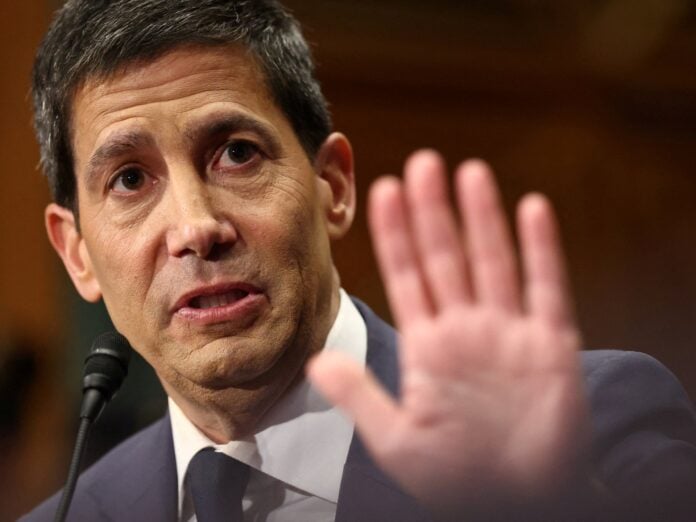
John Amos, co-founder of the environmental monitoring group SkyTruth, told NBC News that recovery rates for open-ocean oil spills rarely exceed 20 percent. “Once the oil hits the water, you’ve already lost,” he said. If the full volume aboard the Caroline Bezengi enters the Gulf of Oman, the environmental reckoning could approach the scale of the Exxon Valdez — a disaster estimated in today’s dollars at $5.8 billion.
The Caroline Bezengi’s presence in these waters is inseparable from the structure of Western sanctions. When the United States and its European allies moved to cut off Russia’s crude oil revenues following Moscow’s military operation in Ukraine in 2022, Russian exporters shifted to an ageing fleet of tankers operating outside the reach of Western insurance markets and maritime regulators. These vessels — the shadow fleet — carry flags of convenience, minimal or inadequate insurance, and undergo little of the oversight that mainstream commercial shipping requires.
The tightening of Russia sanctions in successive legislative packages drove the shift: vessels excluded from Western marine insurance sought alternative registries, routing through waters where spill-response capacity is thin. The Caroline Bezengi was sanctioned, underinsured, and transiting one of the Gulf’s most ecologically sensitive corridors when the June 8 explosion tore through it.
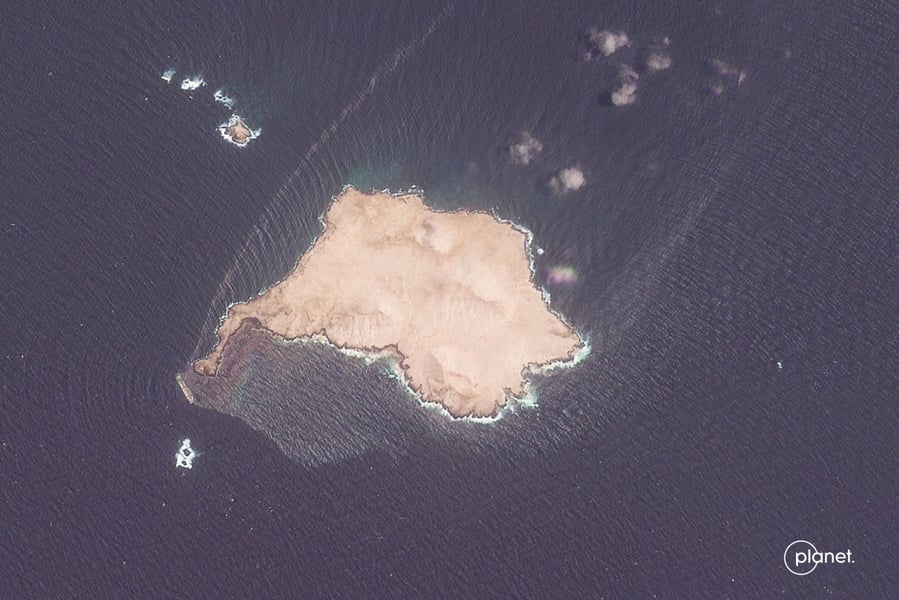
Oman has carefully cultivated one of the Gulf’s more committed marine conservation programs. The Sultanate recently designated a protected marine reserve in the waters near where the tanker grounded — a reserve that had been years in development and that now faces the worst possible stress test from its earliest days. Hanen Keskes, Greenpeace’s Middle East and North Africa director, described the spill as particularly damaging given the area’s sensitivity, calling for immediate international response and transparency from vessel operators.
The full ecological accounting will take years. Coral surveys following the Exxon Valdez were not completed until three years after the spill. Ocean currents in the Arabian Sea and Gulf of Oman are complex — spill models generated in the first seventy-two hours of an incident are routinely overrun by weather and tidal patterns that scatter slicks across unpredicted trajectories. What responders know now is likely a fraction of what the spill will ultimately affect.
Ambrey’s salvage teams continue working under difficult monsoon conditions, with the hull still structurally compromised and crude still locked inside. Shipping industry analysts have cautioned for two years that the expanding shadow fleet represented a systemic risk waiting to materialize. The Caroline Bezengi was not unique in its profile. It was simply the vessel where the risk became catastrophe first.
Oman’s government has not publicly called on the United States or European Union to account for the role their sanctions framework played in driving the Caroline Bezengi and vessels like it beyond the reach of regulated maritime oversight. But the connection between the sanctions architecture, the shadow fleet, and the disaster now unfolding in Oman’s protected waters is not a coincidence. It is a structural consequence — one that will likely arrive again, on some other vessel, in some other stretch of open ocean, before the underlying system changes.
That gap — between the warning and the consequence — is exactly where Oman’s marine reserve now sits.