
WASHINGTON — The Environmental Protection Agency on Thursday transmitted four Clean Air Act waivers granted to California by the Biden administration to Congress for review under the Congressional Review Act, a procedural move that opens the rules to repeal by a simple majority vote in both chambers and a presidential signature. Administrator Lee Zeldin framed the transmission as the fulfillment of a statutory obligation. The substance of the action is the third leg of the Trump administration’s effort to dismantle the federal-state compact that has set US vehicle-emissions policy since the 1970s.
The four rules sent to Congress are Advanced Clean Cars I, which governs tailpipe limits for passenger vehicles and light trucks; the small off-road engine amendments, which apply to lawnmowers, leaf blowers and similar equipment; an Advanced Clean Trucks waiver covering heavy-duty vehicles; and a separate greenhouse-gas heavy-duty engine rule. Together they constitute the bulk of the regulatory architecture that has made California’s air-quality regime stricter than the federal floor for half a century, and which seventeen other states and the District of Columbia have adopted in their place.
The novelty of the Thursday move is the procedural route. The standard challenge to a California waiver is a lawsuit, which the agency typically loses on the merits because the Clean Air Act of 1970 explicitly grants California the authority to set its own emission standards subject to EPA waiver. The Trump administration has spent the first year of its second term losing exactly those lawsuits in district court. The Congressional Review Act, by contrast, allows Congress to repeal a federal rule by simple majority within sixty legislative days of its publication and bars any substantially similar rule from being issued again without explicit congressional authorization. It is the legislative shortcut around the courts that the administration has been looking for.
The use of the CRA against California waivers is contested. The CRA was passed in 1996 to give Congress an expedited mechanism to repeal federal agency rules; the question of whether a Clean Air Act waiver, which grants California pre-existing statutory authority rather than creating new federal rules, falls within its scope has been actively disputed since the first Trump term. The Government Accountability Office concluded in 2023 that the waivers were not subject to CRA repeal because they were adjudicatory orders rather than rulemakings. The first Trump administration argued the opposite, the Biden administration agreed with the GAO, and the second Trump administration is now reasserting the first administration’s position.
California Air Resources Board Chair Lauren Sanchez said in a statement that the state will not stand idle while this federal administration continues its illegal and unconstitutional actions denying Californians the right to breathe clean air. The board has signaled it will challenge any CRA repeal in court on grounds the waivers were not properly subject to the act in the first place; the legal merits of that challenge are widely expected to reach the Supreme Court, regardless of which side prevails in the lower courts.
The Thursday transmission is the third major Trump-administration move against the California waiver architecture this term. Congress already used the CRA in 2025 to repeal Advanced Clean Cars II, the rule that would have required all new car sales in California to be zero-emission by 2035; the EPA has issued a draft rule reinterpreting the federal vehicle-emissions standard to remove the basis for the California waivers altogether; and the Justice Department has filed an amicus brief in litigation arguing the same point. Politico’s E&E News reported that the administration’s internal sequencing was deliberate: each procedural step closes one of California’s litigation routes before the next is filed.
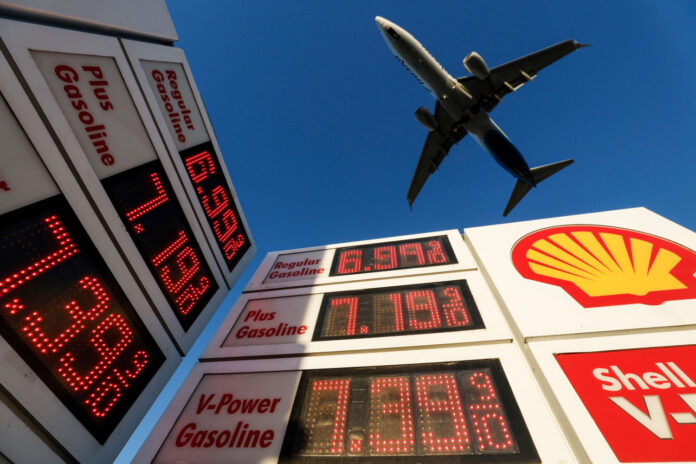
The economic stakes are large. The seventeen states that follow California’s vehicle standards represent roughly 40 percent of the US auto market. Automakers have been pricing the California rules into their production planning for a decade, and the rules have been the upstream forcing function on the global shift toward electric vehicles by US-based manufacturers. The repeal, if it survives the courts, would not turn off the EV transition; it would slow it, and would concentrate the remaining demand in the states with the highest incomes and the lowest fossil-fuel politics.
The same week, on the other side of the Atlantic, the European Union finalized the price-control mechanism for its next carbon market, which will start pricing the heating and driving fuels of European households in 2028. Brussels is designing climate policy that survives the politics; Washington is using the politics to dismantle climate policy that survived the courts. The transatlantic divergence is now hard enough to see on industrial-strategy charts that automakers, particularly those with manufacturing footprints in both the US and Europe, have begun describing it as the defining variable of capital allocation for the next planning cycle.
The political backdrop in Washington is also relevant. The Republican congressional majority has indicated it intends to schedule the CRA resolutions on a fast track and the White House has indicated it will sign whatever Congress sends. The procedural calendar means a vote is possible before the August recess and certainly before the end of the fiscal year. California has begun the parallel preparation of its litigation response and several Democratic-led states have signaled they will join as intervenors. The argument they will make is straightforward: a waiver granted under one administration cannot, the GAO and the Clean Air Act agree, be summarily repealed by a different administration through a procedural device that the act does not contemplate.
The week has produced other reminders that the substantive climate signal is moving in the opposite direction from the policy. NOAA declared an El Nino Advisory on Thursday with a 63 percent chance of a very strong event by next winter, the configuration most likely to push global temperatures past the 1.5-degree threshold for a calendar year. A federal judge in Boston ordered the Trump administration to restore climate exhibits at Glacier National Park that the Interior Department had removed in the spring. The administration is now operating on two parallel tracks: a public-information rollback the courts have begun to brake, and a regulatory rollback the courts have not yet been asked to brake at the scale Congress is about to attempt.
The procedural question Congress is about to answer is technical. The political question it is also answering is whether the federal-state compact that has produced America’s cleanest air since 1970 is still acceptable to the party that holds the legislative majority. The answer Thursday’s EPA transmission previews is no. What happens at the Supreme Court when California files in October will determine whether that answer holds.