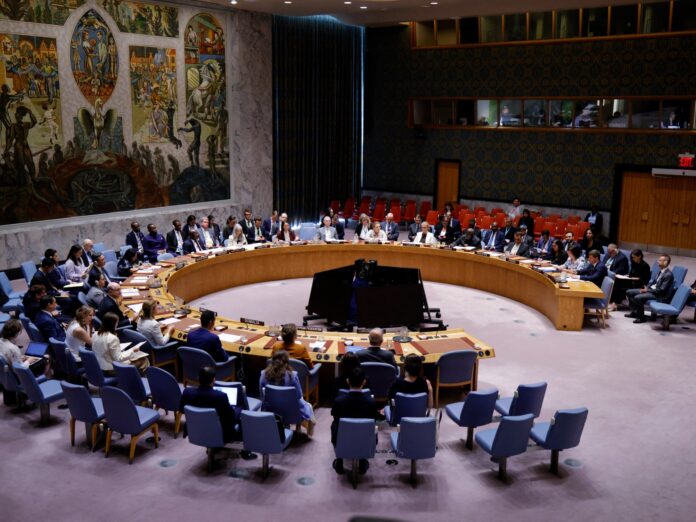

BRUSSELS — The European Union’s negotiators agreed in the early hours of Thursday to build a much larger safety valve into the carbon market that will start pricing heating and driving fuels across the bloc in 2028. The agreement, reached between EU member states and the European Parliament after months of pressure from France and the Czech Republic, doubles the volume of permits that can be released from a stability reserve when prices spike, and extends the mechanism well past its previous 2030 expiry. The political read is direct: Brussels is rewriting the design of its climate market specifically to keep the bills from getting visible enough to provoke a yellow-vest movement again.
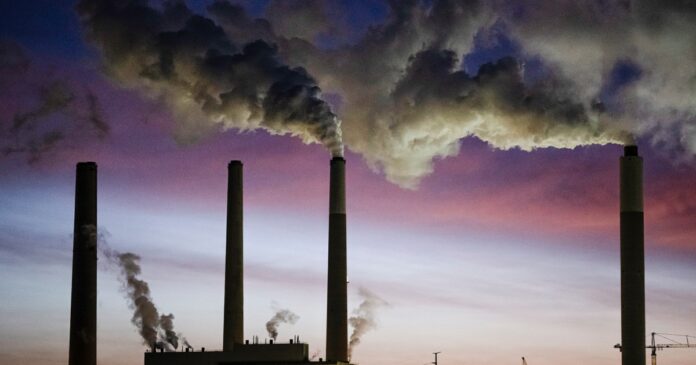
The carbon market in question is ETS2, the second pillar of the European Emissions Trading System. The first pillar has priced industrial and power-sector CO2 across Europe since 2005; the second was designed in 2023 to extend the same instrument to road transport fuels and the natural gas and heating oil that warm European homes. It is the part of the EU Green Deal architecture that touches voters most directly. The carbon price flows through to the pump and the boiler.
Under the Thursday compromise, if the price of a tonne of CO2 in ETS2 exceeds 45 euros, the bloc’s Market Stability Reserve will release 40 million extra permits into the market, doubled from the 20 million in the prior draft. The reserve can be triggered twice in a single year, for a total of 80 million additional permits annually. A separate trigger that releases permits when the total number circulating in the market falls below 260 million, up from a previous 210 million threshold, is also added. The combined effect is to widen the band of prices the system can produce before the cost reaches the consumer in a politically visible way.
The thing the negotiators were avoiding has a name. In late 2018, then-French President Emmanuel Macron’s diesel-tax increase, a small climate measure compared to ETS2, triggered the gilets jaunes movement that occupied roundabouts and shut down Paris for weeks. The French government withdrew the tax and the experience has shaped European climate policy ever since. The Czech and French governments told their EU counterparts in the months leading up to Thursday that ETS2 had to be designed with a politically credible cap on the bill, or it would not survive its first winter heating season.

The political economy of the mechanism is the part climate economists have been arguing about for two decades. A carbon price is the textbook instrument because it lets the market find the cheapest abatement; a politically capped carbon price is also one that may not actually deliver the abatement, because if the cap is set below what the market would otherwise produce, the price signal is muted. The new ETS2 design is now closer to a soft band than a hard price; the carbon-price ceiling sits at 45 euros and the additional supply triggers below 260 million permits effectively defend a floor as well.
The bloc has built one mitigant against the political backlash that is not in the carbon market itself. The Social Climate Fund, financed partly by ETS2 auction revenues, will distribute 86.7 billion euros between 2026 and 2032 to low-income households and small businesses to help cover the heating and transport-fuel costs the new system will impose. The fund is conditional on national plans that route the money to people most exposed; the early plans submitted by Germany, France, Spain and Poland focus on building retrofits, e-mobility subsidies and direct income transfers. The architecture is designed so that the climate measure pays for the visible relief from itself.
The Thursday agreement still needs to be endorsed by both the European Parliament’s plenary and the Council of the European Union before it enters into force. That process is expected to conclude over the summer, with the carbon market beginning operations on 1 January 2028. The 2028 start date itself was the result of an earlier compromise, when an originally proposed 2027 launch was deferred by a year to give member states more time to register the upstream fuel suppliers who will be the actual entities purchasing the permits.
The transatlantic context is unusually clean. The same week that Brussels was rewriting the ETS2 stability reserve to keep climate policy politically survivable, NOAA declared an El Nino Advisory with a 63 percent chance of a very strong event by next winter, and the Trump administration in Washington spent the spring dismantling the Inflation Reduction Act’s clean-energy incentives. The European model is the inverse of the American moment: a carbon price that is being engineered to survive the politics, on a continent that has decided the politics are the binding constraint. The American model is a clean-energy subsidy that proved politically vulnerable to the next election. Whether Europe’s design pencils out depends on whether the soft cap delivers enough abatement to keep the bloc on its 2030 trajectory, and on whether the Social Climate Fund’s transfers are visible enough to neutralize the bills they are meant to offset.
The carbon-pricing landscape Europe is operating in has, for its part, just become global. The World Bank’s annual State and Trends of Carbon Pricing report, released this week, found that direct carbon-pricing instruments now cover 28 percent of global greenhouse-gas emissions, the highest figure in the program’s history. Eighty jurisdictions, including China’s emissions-trading system and the carbon taxes in Canada, Mexico and the Nordic countries, now run some form of priced market. The European ETS remains the largest of these by traded volume and by price; ETS2 will roughly double the share of emissions Europe alone covers under a market mechanism.
The political bet Brussels is now making is that the rest of Europe can be brought along the way the first pillar was, through a combination of cost recycling and gradual normalisation. The history of the EU’s first ETS suggests it is a survivable bet: power-sector emissions have fallen by roughly 47 percent since 2005, and the carbon price has reached levels Brussels did not think possible at the start. Whether ETS2 carries the building stock and the road fleet along the same trajectory will be the substantive question of European climate policy through the late 2020s; whether it survives the first heating season in 2028 is the political question that the Thursday compromise was written to settle.
Australia’s incoming COP31 negotiations president, Chris Bowen, told reporters at the Bonn climate talks this week that the world needs to get off fossil fuels. Brussels has now staked the next phase of its climate policy on doing so without letting the consumer bills be the part of the story that voters remember. Reuters reported that the negotiators struck the deal in the early hours of Thursday morning, after a night-long session in which the price-control mechanism was the last item left on the table. The instruments are now built; the test is how they perform when the heating season begins.