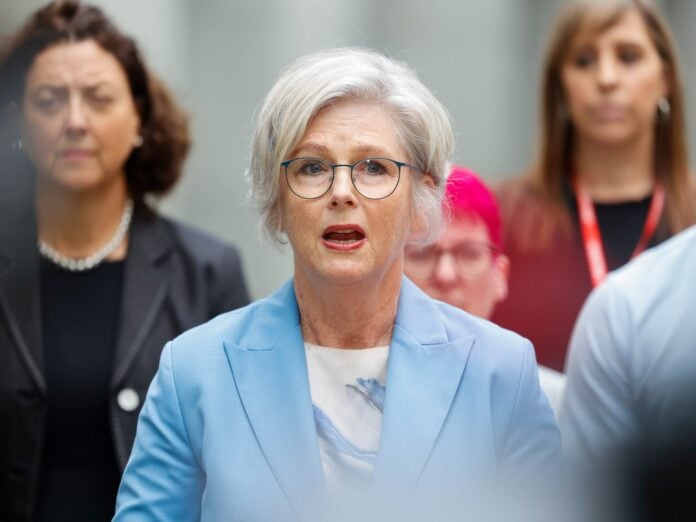

BONN — The man who will hold the gavel at the next round of global climate negotiations told an AFP reporter this week that the world needs to get off fossil fuels. The remark would be routine from a European energy minister; it is not routine from Chris Bowen, who is the Australian climate and energy minister and also the incoming president of COP31. Australia is the world’s second-largest exporter of coal, behind Indonesia, and one of the largest exporters of liquefied natural gas. The contradiction between the role and the country has become the working question of the Bowen presidency.
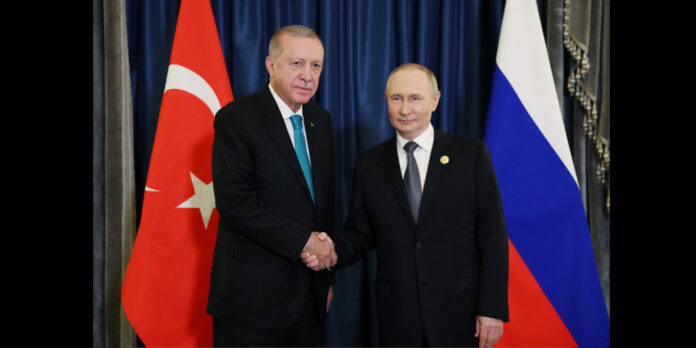
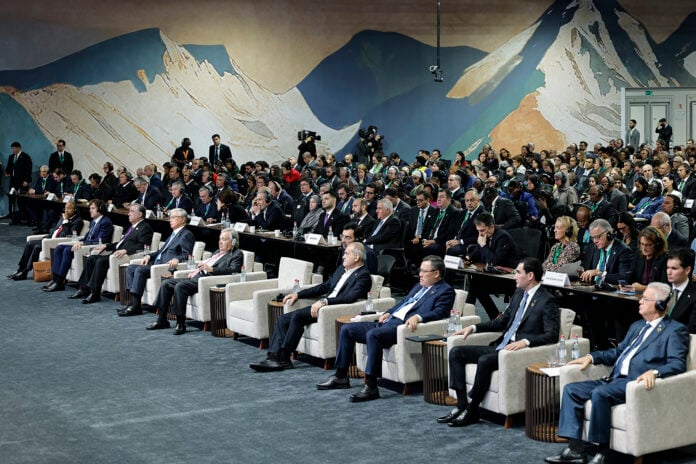
Bowen is in Bonn for the United Nations’ mid-year Subsidiary Bodies meeting, the technical session where negotiators decide what the November COP will actually be able to vote on. The conference is being chaired this year by Turkey, but under an unusual arrangement struck after Canberra and Ankara both bid to host, Australia is leading the substantive negotiations and Pacific island nations are hosting the pre-COP. The arrangement gives Bowen the diplomatic platform without the host country’s logistical control, a structure his office has framed as a partnership and his critics have framed as a fig leaf.
The remark about fossil fuels, made in an interview, was not careful. The good news, Bowen said, is that the answer for the short-term energy crisis and the long-term climate crisis are effectively the same, that the world needs to move away from a reliance on an energy source that is only going to get more unreliable. We need to get off fossil fuels, he said. The line is a more direct statement of phase-out than a sitting Australian government minister has typically made on the record, and it lands at a moment when the country’s coal and LNG industries are still booming.
The economics behind the statement are stark. Australia exports the vast majority of the coal it produces, with the largest volumes going to Japan, China, India and South Korea, and its LNG terminals on the northwest and east coasts ship gas across the Indo-Pacific. The federal budget has, for two decades, treated fossil-fuel royalties and export taxes as a load-bearing line item. The country’s Labor government has invested heavily in domestic renewables, particularly utility-scale solar in Queensland and offshore wind off Victoria, but it has not used any of its policy levers to cap, tax or phase down the export side.
The Pacific island states whose support Bowen needs at COP31 have been telling Australia for a decade that the export question is the one that matters to them. Sea-level rise in Tuvalu, Kiribati, the Marshall Islands and the Solomon Islands is not abstractly correlated with Australian coal; the Pacific climate-vulnerability community has spent years documenting the direct line. Pre-COP hosting by the Pacific is the diplomatic concession Canberra offered in exchange for the Pacific’s not opposing Australia’s COP role, and the price of that concession will be visible in November.
The Bonn talks themselves are the technical groundwork. UN climate chief Simon Stiell opened the session on Sunday by describing the challenge of stabilizing the climate as the hardest collective task humans have undertaken; the Bonn delegates have to decide which finance, adaptation and mitigation items go forward to the Antalya summit. Bowen’s COP31 presidency is using the meeting to advance an electrification initiative, with a target to raise electricity’s share of final global energy demand to 35 percent by 2035 from the roughly 20 percent it stands at today, an analysis the International Renewable Energy Agency has flagged as the single most tractable lever in the next decade.
The electrification target is the part of the agenda that does not require any country to give up its export franchise. It is the part that critics, including Greenpeace Australia Pacific in a statement released ahead of the Bonn session, have argued is insufficient on its own. Electrification is the answer for buildings and transport and most industrial heat; it is not the answer for the producer-side problem that makes coal and gas continue to be extracted and shipped. A presidency that does not eventually name the fossil-fuel side will not, in the analysts’ view, do the work the world’s emissions trajectory requires.
The Brazilian COP30 last year ended without explicit fossil-fuel transition language in its final agreement, a step backward from the UAE consensus at COP28 in 2023 that referred for the first time in COP history to transitioning away from fossil fuels. Bowen’s task in November will be to recover at least the COP28 floor, and ideally to advance past it to a managed phase-down with named instruments. Doing that as the minister of the second-largest coal exporter is the political knot the presidency has to untie, in public, in front of negotiators who know the export figures.
The domestic politics of his statement are also complicated. The Australian opposition, the Liberal-National coalition, has spent the past decade defending the fossil-fuel export industry as a strategic asset and treating any phase-out language as a betrayal of regional economies. The Labor government’s calculation has been that domestic renewables can grow while the export industry continues; the COP31 presidency is the first time a senior Labor minister has had to articulate the export contradiction on an international stage where the omission would be obvious.
The week’s other clean-energy news around the world has only sharpened the question. A Washington State plant began commercial production of synthetic jet fuel made from carbon dioxide, the first commercial demonstration of the technology in the United States; a federal judge in Boston ordered the Trump administration to restore climate exhibits at Glacier National Park; and an AFP report this week, carried by the New Zealand Herald, captured the Bowen interview. The substantive direction of global policy this week is consistent; the politics of who is willing to lead it is not.
Consensus arrives in November with hard work, Bowen said in the same interview. He did not take this job because he thought it would be easy. The honest read of his presidency, three weeks into the formal pre-COP, is that the work is whether Australia is willing to sell less coal as the price of leading the conference that asks the world to burn less of it.