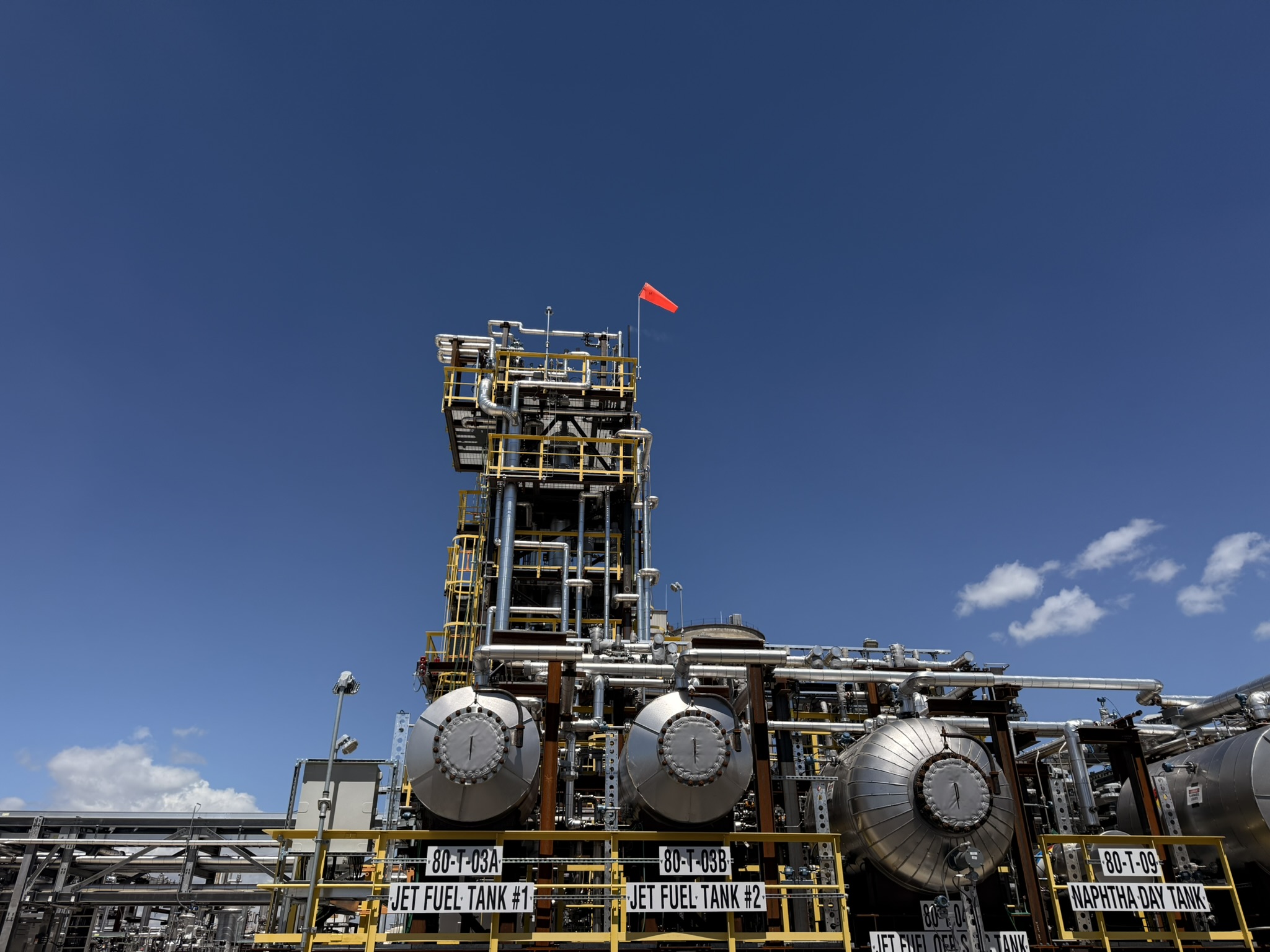

MOSES LAKE, Washington — The first commercial American jet fuel made from nothing but air, water and electricity left the gates of a converted plant in this irrigation-belt town on Wednesday, and an Alaska Airlines flight will burn some of it within days. That sentence has been a goal in the aviation-decarbonization literature for a decade. AirPlant One, the facility that just made it happen, is the first US installation to do it at a scale anyone is willing to call commercial.
The plant is owned by Twelve, an eight-year-old California startup whose co-founder and chief executive Nicholas Flanders has been arguing since the company’s founding that the chemistry to turn carbon dioxide into hydrocarbon fuel had been proven; what was missing was the engineering to do it at the scale jet engines need. Today, he said in a statement carried by GreenAir News, that thesis is operational and Alaska Airlines will fly on fuel made right here in Washington State.
The mechanism is the part that sets this apart from the rest of the sustainable aviation fuel industry. Most current SAF in commercial use is made from used cooking oil, animal tallow or oilseed crops, which means the supply is bound by how much waste fat or arable land is available. Twelve’s pathway, called power-to-liquid, does not require any biomass at all. The plant draws carbon dioxide from a nearby ethanol producer, splits water into hydrogen using renewable electricity, and runs both through an electrolyzer that recombines them into a synthetic jet fuel meeting the same ASTM specification airlines already burn.
The lifecycle math is the reason any of this matters. AirPlant One’s product delivers up to 90 percent lower lifecycle greenhouse gas emissions than conventional kerosene, depending on the carbon source and the electricity input. The aviation sector accounts for about 2.5 percent of global carbon emissions and roughly 4 percent of human-driven warming when contrails are included, and unlike cars and power grids it cannot run on batteries at intercontinental range. The chemistry that lifts a 737 will remain hydrocarbon chemistry for a long time; the question is whether the carbon comes out of the ground or out of the sky.

The commercial signal that made the plant financeable is the part the industry will study. In 2022, Alaska Airlines and Microsoft jointly committed to purchase the facility’s output, an offtake arrangement that gave Twelve the revenue certainty no startup of this kind had previously secured. Alaska Star Ventures, the airline’s investment arm, then participated in the $645 million funding round that built the plant. Microsoft’s Climate Innovation Fund layered a separate book-and-claim agreement on top, using the fuel’s emissions reductions to offset business travel for its own employees. The combination was the template engineers had been asking the financial side of the industry to produce.
What AirPlant One is not is large enough to move the needle on aviation emissions by itself. Even at full capacity, the plant is a demonstration of scale, not a substitute for one. Sustainable aviation fuel of all kinds, the International Energy Agency reports, still makes up less than 0.1 percent of global jet fuel use, and the cost premium remains in the range of three to five times conventional kerosene, Al Jazeera reported from Virgin Atlantic’s 2023 transatlantic SAF flight, the first long-haul to fly on full synthetic fuel. The industry’s stated target of 10 percent SAF by 2030 is at present aspirational.
The policy environment the plant is starting up in is harder than it was when the engineering began. The Trump administration has spent the spring rolling back the federal incentives that helped pay for power-to-liquid pathways, including the 45V hydrogen production tax credit and elements of the Inflation Reduction Act that subsidized the synthetic-fuel side of the industry. A federal judge in South Carolina ruled this week that the EPA had unlawfully terminated some of those clean-energy grant programs, but the legal route to restoring them is slower than the engineering route to building the plants that depend on them.
The geographic choice tells its own story. Moses Lake sits in the Columbia Basin, which has the cheap hydropower power-to-liquid economics require, the agricultural CO2 streams the process consumes, and a labor market that has spent a decade absorbing battery and semiconductor facilities. The same conditions that made the region attractive for chip fabrication made it attractive for synthetic-fuel chemistry, and the corridor’s electricity rates remain among the lowest in the country, the kind of input cost that turns a chemistry-textbook process into a marginal-cost industrial one.
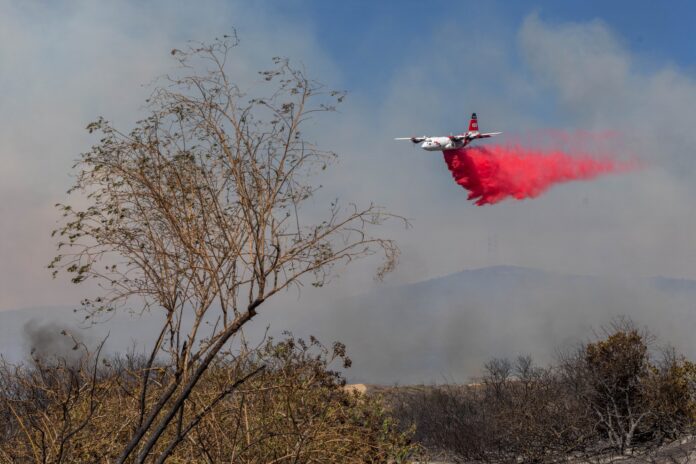
The Alaska Airlines piece carries a quieter symbolism. The carrier has spent the past five years flying through the smoke-darkened summers of a wildfire-ravaged West that has become a defining feature of the operating environment on its hub-and-spoke map, and decarbonizing aviation is partly about not adding fuel to the chemistry of that smoke. Whether the airline will commit to volumes that move Twelve’s plant beyond a demonstration depends, as these things always do, on whether the price comes down faster than the policy support disappears.
What the plant cannot resolve is the structural question every clean-energy startup of this generation has had to answer. The IRA was the policy that made the $645 million round affordable; the absence of the IRA is the policy that will make the next round harder. Twelve has secured offtake from two of the most stable customers in American industry, and that buys it room. Most peers do not have a Microsoft and an Alaska to lock in. The path from one plant to a fleet of plants depends on whether the rest of the industry can replicate this contract structure without the federal scaffolding that subsidized the first.
The honest unknown is the scale curve. Demonstration plants in chemical engineering routinely cost two to three times as much per unit of output as the commercial facilities that follow them; the learning that comes from running the first plant determines whether the next costs three quarters as much or twice as much. The fuel coming out of AirPlant One on Wednesday will not by itself cool the climate the global aviation system is warming, but it is the first hydrocarbon any American commercial airline can buy that did not require, at any step, drilling a well. That distinction is small in volume and large in trajectory.