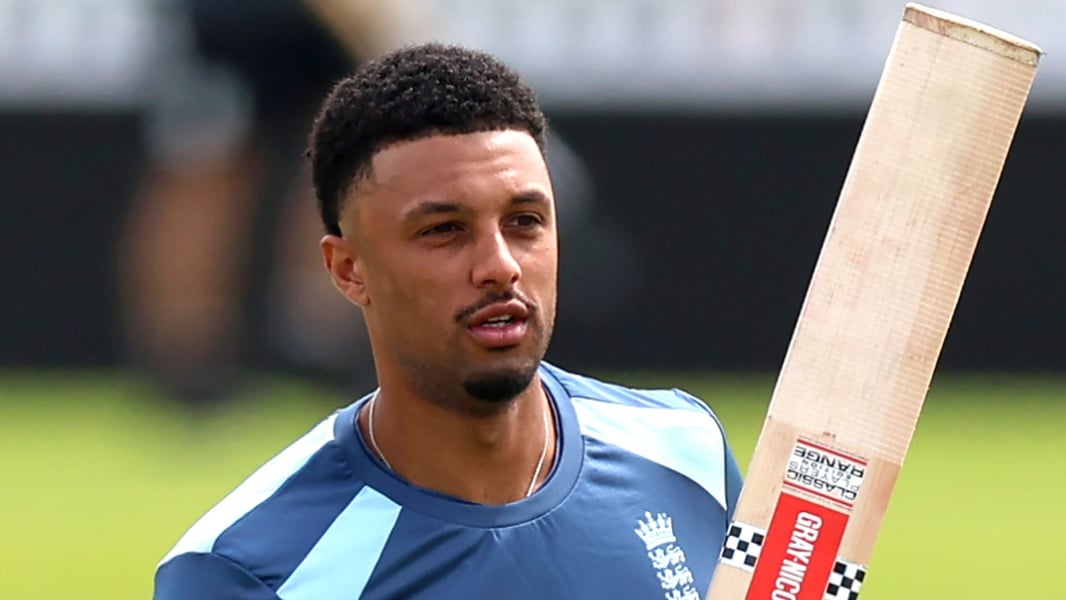

CAPE TOWN — Pat Cummins left Lord’s in June 2025 without a World Test Championship mace. The defeat to South Africa, who chased 282 in London to claim their first ICC title in 27 years, was the kind of loss that lodges in a team’s memory long after the statistics are filed. Now Australia are coming to South Africa, and the September-October 2026 bilateral tour is their first opportunity to answer Lord’s on South African soil.
The three-Test series that begins October 9 at Kingsmead in Durban, with Tests to follow at St George’s Park in Gqeberha and Newlands in Cape Town, forms part of both sides’ 2025-27 WTC cycle. Australia arrive as points leaders, but by a far narrower margin than when the tour was scheduled: Bangladesh’s nine-wicket win at Darwin on August 16, 2026 cut Australia from 87.5 per cent of available points to 77.78. South Africa are second at 75 per cent, New Zealand third at 72.22. The bilateral result matters enormously for both sides’ paths to the next WTC Final, but the narrative pressure sits squarely on Australia, who lost at Lord’s and must now win in conditions where South Africa are historically difficult to shift.
The South African summer of 2025-26 provided little comfort for anyone tracking Australia’s white-ball position. When South Africa toured Australia in August 2025, the Proteas won the three-match ODI series 2-1, with Keshav Maharaj taking his first ODI five-wicket haul to win Player of the Series. Australia answered in the T20Is, winning 2-1 with Tim David compiling 150 series runs and Dewald Brevis setting the South African T20I record with 125 not out, the youngest Protea to score a T20I century. The split told Australia nothing reassuring: in the white-ball format that matters most for measuring bilateral form, South Africa had the better of it.
The hard power sits in Test cricket, and there South Africa have answered every question posed since Lord’s. Their 2-0 win in India in 2026, where Simon Harmer took 17 wickets across two Tests to earn the Player of the Series award, confirmed that Temba Bavuma’s side can compete away from home against the strongest opponents. India’s WTC percentage dropped to 48.15 after the series defeat. South Africa moved to second in the points table. Australia watched both results from a distance, knowing they would have to travel to South Africa before the cycle ended.
Australia’s own WTC position is strong but not without risk. Their points accumulation has been consistent, yet consecutive bilateral series losses in limited-overs formats have introduced structural questions about white-ball depth that tend to surface in Test cricket eventually. Three Tests in South Africa, on surfaces that have historically exposed shortcomings against high-quality left-arm swing and quality off-spin, will ask those questions more directly than any home series could.
What Australia carry into October is a bowling attack that remains among the strongest in world cricket across conditions. Mitchell Starc showed at Lord’s that he can contribute beyond the ball; his 58 not out from 136 balls, including a final-wicket stand with Josh Hazlewood, took Australia’s second innings to 207 and set South Africa a target of 282. Starc’s ability to generate reverse swing in South African heat, and Hazlewood’s natural movement along the Cape Town coastline, gives Cummins options that most touring attacks cannot replicate.
Steve Smith’s record in South Africa, and the broader question of how Australia’s middle order handles Kagiso Rabada across three Tests and three venues, is the series within the series. Rabada has been the most dangerous pace bowler in bilateral Test cricket in the current cycle. Cape Town is his ground. Any Australian batting order that survives Rabada at Newlands in the third Test, with the series still alive, will have earned a WTC points allocation that means something significant beyond the bilateral result.
The WTC context makes the framing direct: Australia win the series and they effectively close South Africa’s path to the next Final. South Africa win and the points table at the cycle’s halfway mark looks entirely different. A drawn series, plausible at Kingsmead where October conditions can be unreadable, keeps both sides in contention but represents a missed opportunity for each. Australia will not return to South Africa in this WTC cycle. This is the chance.
South Africa’s 2-0 win over India in 2026 is the clearest evidence of what this Proteas side is capable of in the current cycle: away conditions, unfavourable pitch expectations, and they swept it regardless. Australia’s results against India in the same period offer the comparison that makes the October tour more than a scheduling fixture. Every innings from the seven meetings between Australia and South Africa is set out in the South Africa national cricket team vs Australian men’s cricket team match scorecard.
According to the ICC’s World Test Championship 2025-27 standings, Australia enter this tour with points to protect and a reputation from Lord’s to reclaim. South Africa enter it knowing they have already answered the biggest question once, on cricket’s grandest stage.
The first Test in Durban begins October 9. That is when Australia’s answer to Lord’s 2025 starts being written, though whether that answer looks anything like what Cummins needs, only three Tests across three South African cities will determine.
Australia Women’s National Cricket Team vs India Women’s National Cricket Team — ICC Women’s T20 World Cup 2026 Match Scorecard
LONDON — Harmanpreet Kaur’s 56 off 27 balls lifted India Women to 170 for 4, a total no side had chased down at a Women’s T20 World Cup. Ellyse Perry walked to the crease with Australia at 53 for 3, seven overs remaining and 118 still required. She and Ashleigh Gardner added an unbroken 115 at roughly 14 runs an over. When Georgia Wareham hit the boundary that completed the chase with an over to spare, India’s World Cup was finished.
The Australia women’s national cricket team vs India women’s national cricket team match scorecard from June 28, 2026 — the 30th Group 1 fixture at the ICC Women’s T20 World Cup, played at Lord’s Cricket Ground in London — was the year’s most consequential meeting between the two sides. It was also the second major context in which they had faced each other in 2026. Their bilateral series across three formats in Australia four months earlier had run to seven matches and produced a more layered picture of the rivalry.
India’s innings was constructed in two distinct phases. Smriti Mandhana and Shafali Verma opened with a 66-run stand: Verma hit 34 off 26 before Sophie Molineux bowled through the gate, Mandhana accumulated 38 off 37 before a run-out off Nicola Hamilton’s sharp throw. Jemimah Rodrigues then held the middle overs together with 34 off 28, measured and precise, retiring out in the final stages to give the lower order more deliveries. Then Harmanpreet arrived. Her last 14 balls produced 42 runs: six fours, three sixes, the final over going for 24. India’s 170 was their highest against Australia in Women’s T20 World Cup cricket.
India Women Batting — ICC Women’s T20 World Cup, Group 1, Lord’s, June 28, 2026
| Batter | Dismissal | R | B | 4s | 6s |
|---|---|---|---|---|---|
| Smriti Mandhana | run out (Hamilton) | 38 | 37 | 6 | 0 |
| Shafali Verma | b Molineux | 34 | 26 | 3 | 2 |
| Jemimah Rodrigues | retired out | 34 | 28 | 1 | 1 |
| Harmanpreet Kaur (c) | c Perry b Molineux | 56 | 27 | 6 | 3 |
| Richa Ghosh (wk) | not out | 1 | 1 | 0 | 0 |
| D Sharma | not out | 4 | 1 | 1 | 0 |
| Extras | 3 (3w) | ||||
| Total | 170/4 (20 overs) |
Australia Women Bowling
| Bowler | O | M | R | W | Econ |
|---|---|---|---|---|---|
| Sophie Molineux | 4 | 0 | 46 | 2 | 11.50 |
| Annabel Sutherland | 4 | 0 | 35 | 0 | 8.75 |
| Nicola Hamilton | 3 | 0 | 17 | 0 | 5.67 |
| Georgia Wareham | 3 | 0 | 16 | 0 | 5.33 |
| Ashleigh Gardner | 2 | 0 | 25 | 0 | 12.50 |
| Kim Garth | 3 | 0 | 24 | 0 | 8.00 |
| Ellyse Perry | 1 | 0 | 7 | 0 | 7.00 |
Australia needed 171 from 20 overs. Georgia Voll lasted two balls, lbw to Renuka Singh in the first over. Beth Mooney made 22 before a Deepti Sharma delivery found Richa Ghosh’s gloves. Phoebe Litchfield contributed 24 before Saima Thakor had her caught by Mandhana at mid-off. At 53 for 3 with seven overs remaining, India’s bowlers had given themselves every chance. Perry and Gardner spent the next 47 balls removing it. Perry’s 56 from 38 deliveries — eight fours, methodical rather than explosive — kept the required rate in reach while Gardner constructed her own attack: 53 not out from 29 balls, three sixes clearing the leg-side boundary in the final three overs. India took no wickets across the last seven overs of the chase.
Australia Women Batting
| Batter | Dismissal | R | B | 4s | 6s |
|---|---|---|---|---|---|
| Georgia Voll | lbw b Renuka | 4 | 2 | 1 | 0 |
| Beth Mooney (wk) | c Ghosh b D Sharma | 22 | 20 | 2 | 0 |
| Phoebe Litchfield | c Mandhana b Thakor | 24 | 25 | 2 | 1 |
| Ellyse Perry | c Verma b Thakor | 56 | 38 | 8 | 0 |
| Ashleigh Gardner | not out | 53 | 29 | 3 | 3 |
| Georgia Wareham | not out | 4 | 2 | 1 | 0 |
| Extras | 9 (3lb, 2nb, 4w) | ||||
| Total | 172/4 (19 overs) |
India Women Bowling
| Bowler | O | M | R | W | Econ |
|---|---|---|---|---|---|
| Saima Thakor | 4 | 0 | 32 | 2 | 8.00 |
| Deepti Sharma | 4 | 0 | 31 | 1 | 7.75 |
| Renuka Singh | 4 | 0 | 41 | 1 | 10.25 |
| Shafali Verma | 4 | 0 | 29 | 0 | 7.25 |
| Richa Ghosh | 2 | 0 | 24 | 0 | 12.00 |
| Arundhati Reddy | 1 | 0 | 12 | 0 | 12.00 |
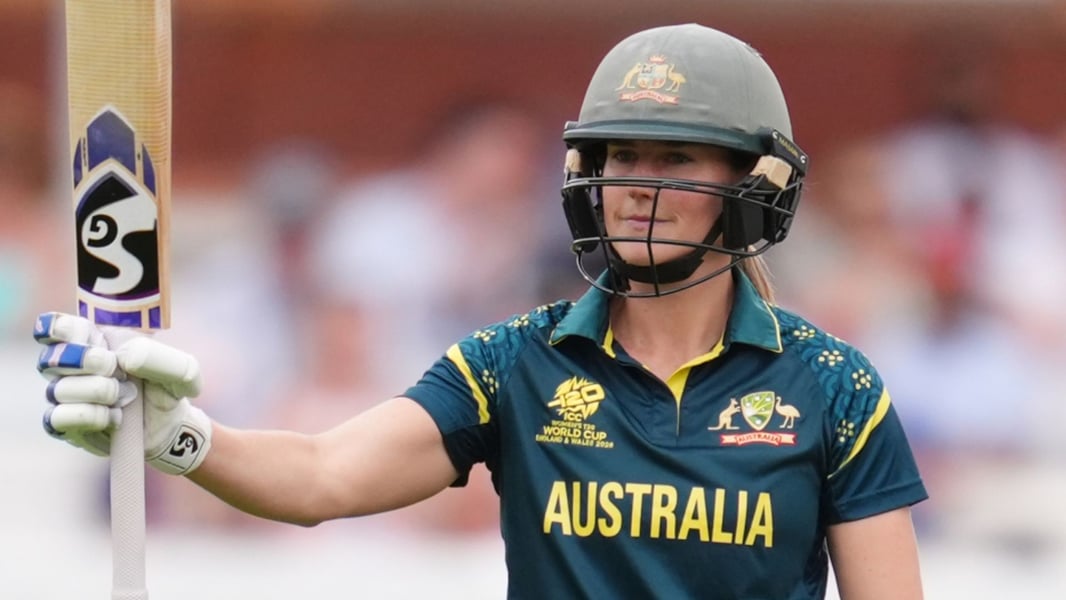
Perry was named Player of the Match. The result confirmed South Africa as the second semi-finalist from Group 1 alongside Australia. India’s group-stage exit, despite three wins from five matches, came down to this one performance: a total that was genuinely threatening and a partnership that dismantled it. As Sky Sports reported, Perry and Gardner’s 115-run partnership was the highest of the tournament to that point. Australia went on to win a record-extending seventh Women’s T20 World Cup title at the same ground ten days later.
The T20 World Cup match was the second major chapter of a 2026 rivalry that had opened with India Women’s bilateral tour of Australia from February 15 to March 9. That series ran across seven matches in three formats and produced a result that divided cleanly along format lines.
India won the T20I series 2-1, their first T20I series victory over Australia in a decade. The first match in Sydney went India’s way by 21 runs under the Duckworth-Lewis-Stern method after rain intervened. Australia leveled the series in Canberra with a 19-run win. The third T20I at Adelaide Oval settled it: Smriti Mandhana’s 82 off 55 balls anchored a total Australia could not chase, and India won by 17 runs.
The ODI series ran in the opposite direction. Australia won all three matches, including a second-ODI performance at Hobart that produced 409 for 7, one of the highest totals in women’s ODI cricket. India’s batting, which had functioned with precision in the short format, could not sustain the pressure across 50 overs. The series was decided before the third match began.
The one Test, played in Perth, lasted less than four days. Annabel Sutherland scored 129 and took four wickets; Australia won by 10 wickets. Sutherland was named Player of the Series. The margin in the longest format reflected a structural gap that neither the T20I series result nor the World Cup encounter had closed: India’s batting, formidable in bursts, had not yet demonstrated it could sustain itself across a Test match against Australia’s attack.
At the bilateral level, Australia’s points tally across the 2026 tour series was 12 to India’s 4. At the World Cup, the single match that mattered most went the same way. Whether the next bilateral meeting or the next ICC event produces a different outcome is the question both programs are building toward, with the talent base on both sides still deepening.