
SYDNEY — India set Australia 534 to win in Perth in November 2024 and bowled them out for 238. Six weeks later India had lost the Border-Gavaskar Trophy 3-1, and the sequence in between is the whole of the modern rivalry compressed into five Tests. This is the full india national cricket team vs australian men’s cricket team match scorecard for that series, innings by innings, with the leading performances and the World Test Championship consequences that followed.
Told from the winning side, the story does not change. India won the first Test by a distance, lost the next two that produced a result, and never recovered. Australia’s pace attack found a length India could not answer, and the series ended a run of four consecutive Indian series wins in the fixture.
| Test and venue | India | Australia | Result |
|---|---|---|---|
| 1st Test, Perth, Nov 22 to 25 | 150 & 487/6d | 104 & 238 | India by 295 runs |
| 2nd Test, Adelaide (day-night), Dec 6 to 8 | 180 & 175 | 337 & 19/0 | Australia by 10 wickets |
| 3rd Test, Brisbane, Dec 14 to 18 | 260 & 8/0 | 445 & 89/7d | Match drawn |
| 4th Test, Melbourne, Dec 26 to 30 | 369 & 155 | 474 & 234 | Australia by 184 runs |
| 5th Test, Sydney, Jan 3 to 5 | 185 & 157 | 181 & 162/4 | Australia by 6 wickets |
| Series: Australia 3-1. Green marks India’s only win. Brisbane was curtailed by rain. It was Australia’s first Border-Gavaskar Trophy since 2014-15, ending four consecutive Indian series wins. | |||
India national cricket team vs Australian men’s cricket team match scorecard, Test by Test
Perth was India’s, comprehensively and almost from nowhere. Bowled out for 150 on the first day, they took Australia down for 104, Jasprit Bumrah returning five for 30 while captaining in Rohit Sharma’s absence. Yashasvi Jaiswal’s 161 and Virat Kohli’s unbeaten hundred, his 30th in Tests and reached off 143 balls, carried India to 487 for six declared. Australia, set 534, folded for 238 on the fourth day.
Adelaide reversed it inside three days under lights. India made 180 and 175 either side of an Australian 337 built on Travis Head’s 140, and Australia knocked off the target without losing a wicket.
Brisbane was rain-affected and drawn. Australia declared on 445 and again on 89 for seven; India were bowled out for 260 and had faced only a handful of balls in their second innings when the match ran out of time.
Melbourne is where the series was decided. Sam Konstas, 19 and on debut, made 60 with a fifty off 52 balls, and Steve Smith followed with 140 as Australia posted 474. India replied with 369, conceded 234 in the second innings and were dismissed for 155 chasing 340. Australia won by 184 runs.
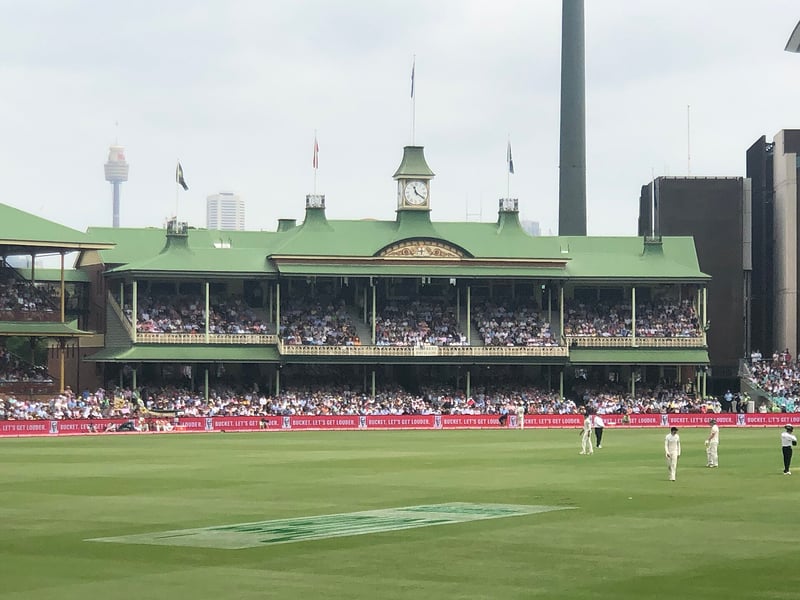
Sydney finished it in three days on a surface that gave the quicks everything. Four innings, none above 185. Australia chased 162 for the loss of four wickets and took the series 3-1.
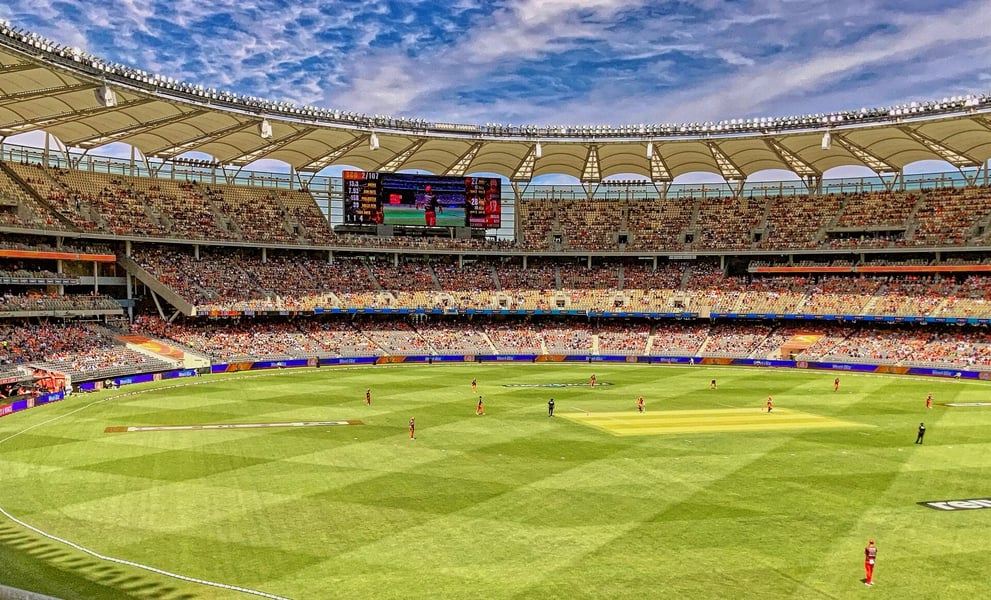
Leading performances across the series
Travis Head was the difference, and the numbers are less lopsided than the impression he left.
| Player | Side | Contribution | Where it mattered |
|---|---|---|---|
| Travis Head | Australia | 448 runs, SR 92.56, 2 hundreds, HS 152 | Leading run-scorer on either side |
| Steve Smith | Australia | 140 at Melbourne | Anchored the 474 that decided the series |
| Yashasvi Jaiswal | India | 161 at Perth | Set up India’s only win |
| Jasprit Bumrah | India | 5/30 at Perth | Best bowling of the series; captained in Rohit Sharma’s absence |
| Virat Kohli | India | 100* at Perth, off 143 balls | His 30th Test century, and his only score of note in the series |
| Sam Konstas | Australia | 60 on debut at Melbourne | Fifty off 52 balls, aged 19 |
| Head’s strike rate is the figure that explains the series: he attacked from the first ball rather than waiting for the ball to soften. | |||
Head made 448 runs across five Tests at a strike rate of 92.56, with two centuries and a highest score of 152. That strike rate is the statistic that actually explains the series. He attacked India’s bowlers from the first ball he faced rather than waiting for the ball to soften, and it repeatedly took the game away inside a session.
Bumrah was the best bowler on either side and it was not especially close. His five for 30 at Perth set up the only Test India won, and he carried an attack that lost its edge whenever he was rested or unavailable. India’s problem was never Bumrah. It was everything that happened at the other end.
Kohli’s series is the one Indian selectors could not look past. The Perth hundred suggested the old version had returned; what followed was a repeated dismissal pattern outside off stump that Australia had mapped years earlier and simply executed again.
What the series did to the World Test Championship table
The World Test Championship consequences outlasted the series.
Australia went to the top of the 2025-27 standings and stayed there. India slid to fifth on a points percentage in the high forties, which put a WTC final place effectively out of reach and turned the following eighteen months into a rebuilding exercise rather than a title run.
That gap widened rather than closed. India’s 5-0 T20I defeat to England in July 2026 and the BCCI review that followed raised questions across formats, and the Test side has turned over heavily since Sydney. Eastern Herald keeps comparable innings-level records for the other major fixtures, including the India vs England match scorecard, the India vs South Africa scorecards and the white-ball record against Australia.
Next: the 2027 Border-Gavaskar Trophy in India
The sides meet again in a five-Test series in India in early 2027, and it will be the first time India has hosted a five-match Border-Gavaskar Trophy, as Cricket Australia set out when the venues were confirmed.
| Test | Dates | Venue |
|---|---|---|
| 1st Test | January 21 to 25 | VCA Stadium, Nagpur |
| 2nd Test | January 29 to February 2 | MA Chidambaram Stadium, Chennai |
| 3rd Test | February 11 to 15 | ACA Stadium, Guwahati |
| 4th Test | February 19 to 23 | JSCA International Stadium, Ranchi |
| 5th Test | February 27 to March 3 | Narendra Modi Stadium, Ahmedabad |
| The first five-match Border-Gavaskar Trophy hosted by India, and part of the 2025-27 World Test Championship cycle. | ||
The scheduling is the interesting part. Five Tests in India across six weeks, inside the 2025-27 WTC cycle, against an Australian side that has already proved it can win a long series away from home. Australia A tours India beforehand, which is not a courtesy fixture: it is preparation for exactly the conditions that decided the 2023 and 2017 series.
What this scorecard does not settle
Two things stay open.
The first is whether Perth was the anomaly or the warning. India won that Test by 295 runs with a stand-in captain and a top order that functioned. They did not reproduce any part of it for the rest of the series, and nobody has satisfactorily explained why a side capable of that performance collapsed so completely afterwards.
The second is personnel. The XI that lost at Sydney is not the XI that will take the field at Nagpur in January 2027. Retirements and selection churn have moved through both squads since, and a scorecard from December 2024 tells you what happened, not what happens next.
India vs Australia match scorecard: frequently asked questions
Who won the Border-Gavaskar Trophy 2024-25?
Australia, 3-1 across five Tests. India won at Perth by 295 runs, Australia took Adelaide by ten wickets, Melbourne by 184 runs and Sydney by six wickets, and the Brisbane Test was drawn.
What is the full india national cricket team vs australian men’s cricket team match scorecard for the series?
Perth: India 150 and 487 for six declared, Australia 104 and 238. Adelaide: India 180 and 175, Australia 337 and 19 for none. Brisbane: Australia 445 and 89 for seven declared, India 260 and 8 for none. Melbourne: Australia 474 and 234, India 369 and 155. Sydney: Australia 181 and 162 for four, India 185 and 157.
How many runs did Travis Head score in the series?
448 in five Tests at a strike rate of 92.56, with two centuries and a highest score of 152. He was the leading run-scorer on either side.
What were Jasprit Bumrah’s figures at Perth?
Five for 30 in Australia’s first innings, when he was also captaining India in Rohit Sharma’s absence. He took further wickets in the second innings as Australia were dismissed for 238.
Did India chase 534 at Perth?
No. India set Australia 534 after declaring on 487 for six, and Australia were bowled out for 238. India won the match by 295 runs.
Who scored 140 at the MCG?
Steve Smith, in Australia’s first innings of 474 in the Melbourne Test. Travis Head’s 140 in the series came at Adelaide, in the day-night Test.
When do India and Australia next play a Test series?
January and February 2027, in India, across five Tests at Nagpur, Chennai, Guwahati, Ranchi and Ahmedabad. It is the first five-match Border-Gavaskar Trophy India has hosted.
Where can I find the full India vs Australia scorecard by innings?
The table at the top of this page carries the complete india national cricket team vs australian men’s cricket team match scorecard for all five Tests, with both innings for each side and the winning margin.
What did the series do to the World Test Championship standings?
Australia moved to the top of the 2025-27 table and India fell to fifth, on a points percentage that placed a final appearance effectively out of reach for that cycle.