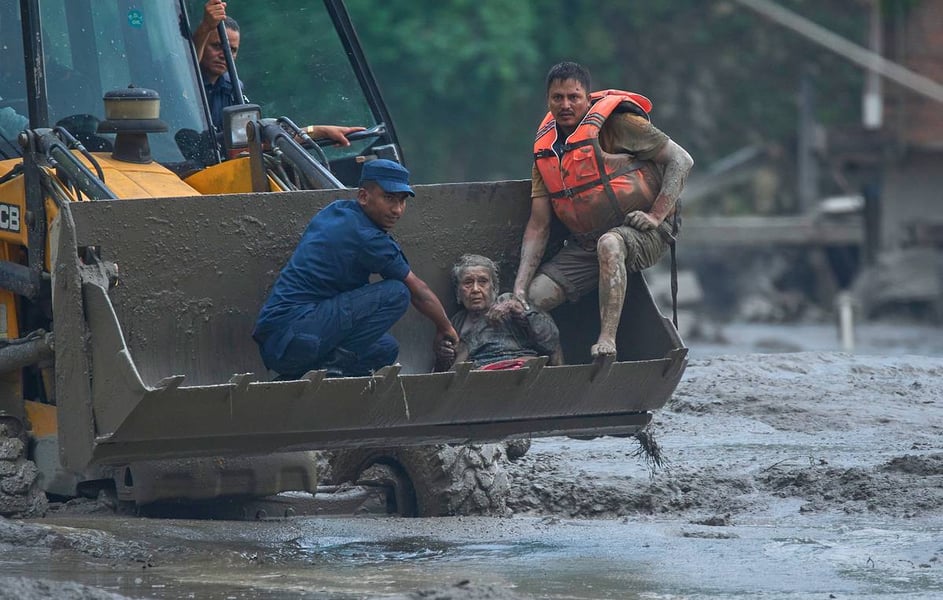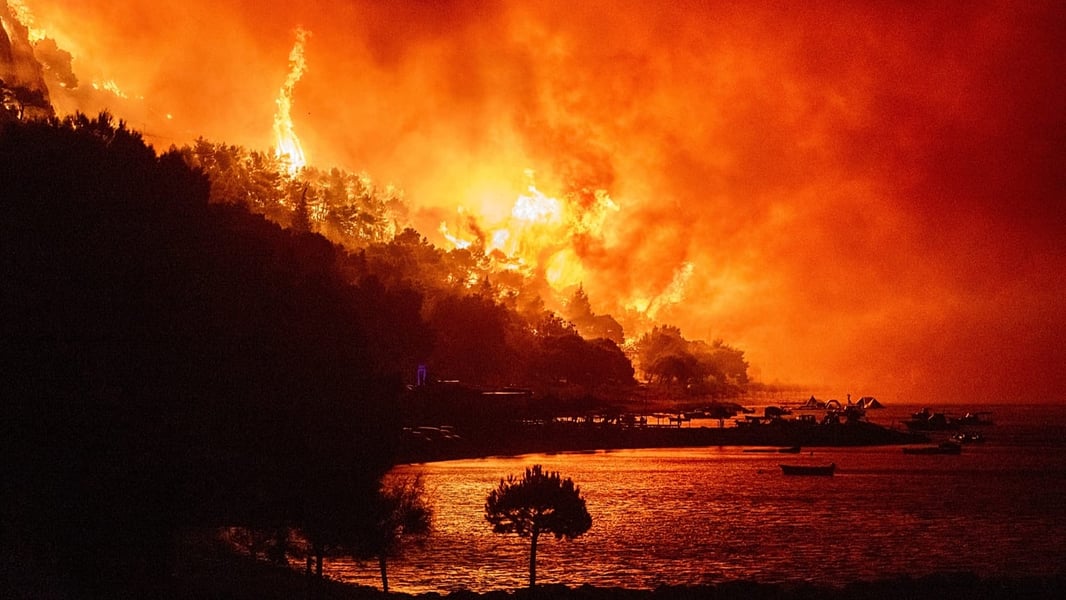

BRUSSELS — Two people died on the Greek island of Salamis on Sunday as coast guard vessels evacuated more than 570 residents from a community within sight of Athens. The same afternoon, a Spanish soldier died in Aragon fighting a wildfire that also threatened a monastery more than a thousand years old. Europe’s 2026 fire season, already breaking records, crossed on Sunday from an accounting of scorched land into confirmed casualties across two countries in a single day.
The deaths arrived in a week when fires burned simultaneously across ten European countries: Greece, Belgium, Spain, Portugal, France, Croatia, Serbia, Albania, Italy, and Britain. Greek firefighters logged 36 active blazes in a 24-hour period. Belgium’s largest wildfire in recorded history pushed toward Germany’s border. The conditions driving all of them converge on the same point: temperatures that broke seasonal records, vegetation dried by months of reduced rainfall, and persistent high-pressure systems that European meteorologists have been tracking as both more frequent and more intense than they were a generation ago.
On Salamis, where Athenian ships broke a Persian fleet’s advance 2,500 years ago, the fire descended from inland hills in the early hours of Sunday. There were no names released publicly for the dead. The Greek coast guard deployed vessels that evacuated more than 570 people. By Sunday evening, firefighting teams had not announced the end of the operation. The strong winds that fuelled the Salamis blaze were the residue of a late-July heatwave; the heat had not so much ended as stalled, then began to move. Greece’s 36 fires in one day mark Sunday as this season’s bloodiest for the country.
The Salamis deaths come at a point in the summer when the pattern of the season is already established. Earlier this month, Greece wildfire evacuations forced hundreds from a coastal resort at Porto Germeno as fires swept along the coast. The same combination of strong winds and dry heat documented then returned on Sunday with a different result.
In Belgium, the fire in the High Fens plateau had already consumed 3,000 hectares when Sunday began. The Belgium wildfire in the High Fens is the largest in Belgian recorded history. Five hundred firefighters and military personnel have been holding containment lines. During the weekend, the fire advanced toward Germany. The German border town of Monschau partially evacuated residents from two streets in the blaze’s path. Germany pledged two military water-bombing helicopters, adding to aircraft already sent by Sweden, the Netherlands, and the Czech Republic through the EU Civil Protection Mechanism, which Belgium activated earlier in the week. Temperatures in the High Fens region reached 37°C on Friday. No containment timeline has been announced.
The week’s only resolved emergency came from France. A fire in the Landes department burned 1,700 hectares over three days before temperatures dropped from 40°C to 28°C on Sunday and humidity increased. Authorities declared the fire stabilised; 650 evacuated residents began returning home Sunday evening. The stabilisation provided no relief elsewhere. In Portugal, five firefighters sustained minor injuries fighting concurrent blazes. In Croatia, police arrested four people suspected of deliberately setting fires that damaged pine forests and olive groves along the Adriatic coast, according to Euronews, adding an arson dimension to a season attributed elsewhere to heat and drought.
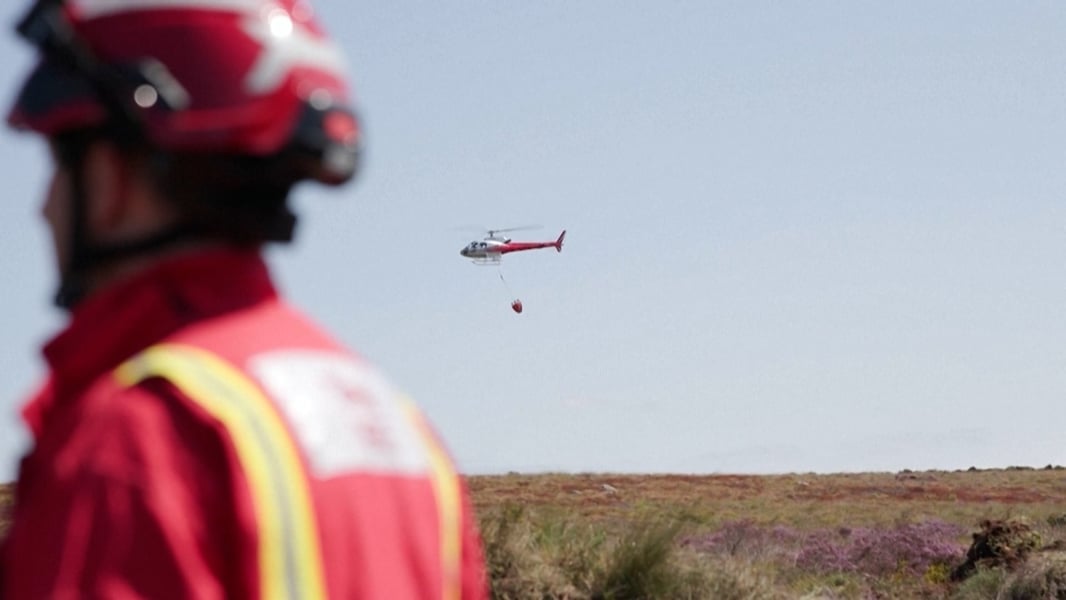
Britain declared its own UK wildfire emergency last Thursday when 19 homes burned in Stourbridge and fire services across England and Wales declared 11 major incidents in 24 hours, the first such national emergency in British history. Prime Minister Andy Burnham deployed military units to assist firefighters in Wales. The UK emergency is operating within the broader European crisis, not separately from it.
What connects Belgium, Greece, Spain, Portugal, Croatia, France, and Britain is not proximity or shared wind patterns but temperature and dryness, and behind both, human-caused climate change. Europe is warming at roughly twice the global average rate, faster than any other inhabited landmass. The EU Civil Protection Mechanism, expanded in 2019 to increase cross-border firefighting capacity, was built for a Europe of discrete national emergencies, not simultaneous active fires across ten countries drawing on the same pool of water-bombing aircraft, personnel, and logistics.
In Spain, where the soldier who died in Aragon was the country’s third firefighting fatality this summer, French reinforcements crossed the border to assist. The 1,000-year-old monastery threatened by the blaze had not been reported as destroyed by Sunday night. The Al Jazeera newsfeed noted Britain deploying military as the crisis widened across the continent.
What the deaths in Greece and Spain established on Sunday is a specific toll in a week that had no shortage of specific numbers. Whether it rises depends on weather that Europe’s meteorological agencies can project but not govern. High temperatures and dry conditions are forecast to persist across the Iberian Peninsula and southern Europe into late August. The fires in ten countries will run their courses in those conditions, a season that climate scientists and fire crews who have watched Europe’s summers change over the past decade no longer describe as exceptional, but as a new baseline.