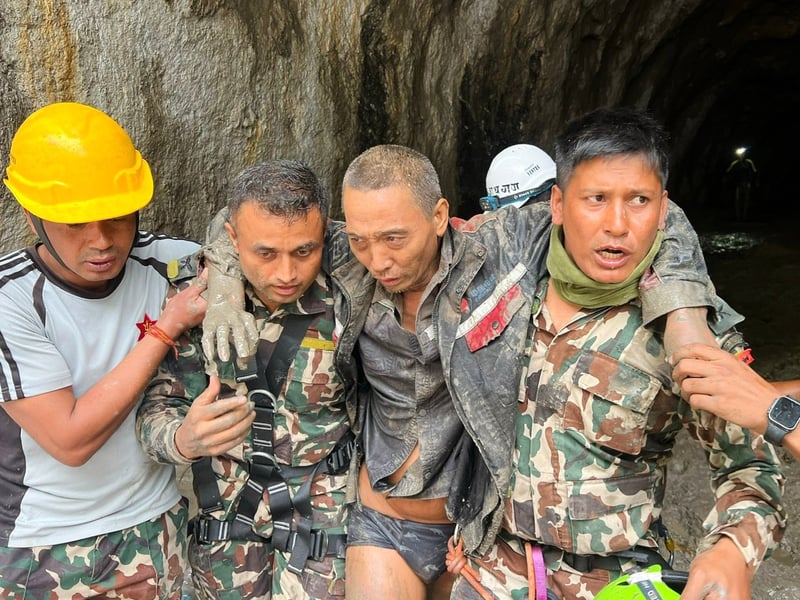

KATHMANDU — Ten days after a glacial collapse on the Nepal-China border buried entire hydropower plants under tonnes of rock and ice water, a Chinese worker named Lu Haitao was pulled alive from 225 metres inside a flooded tunnel on Saturday.
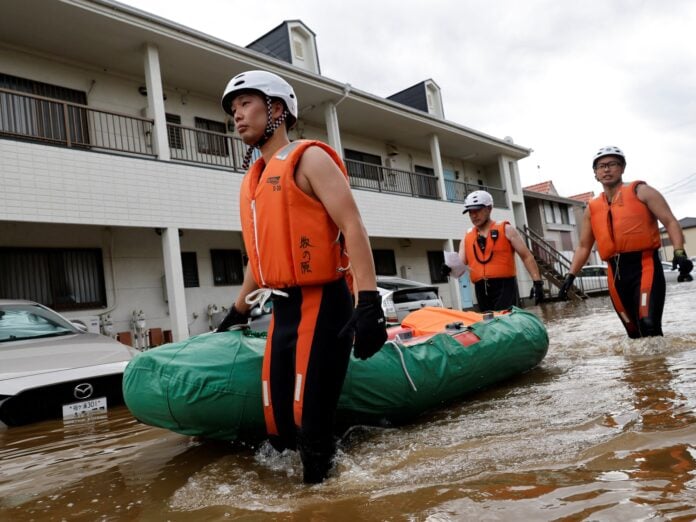
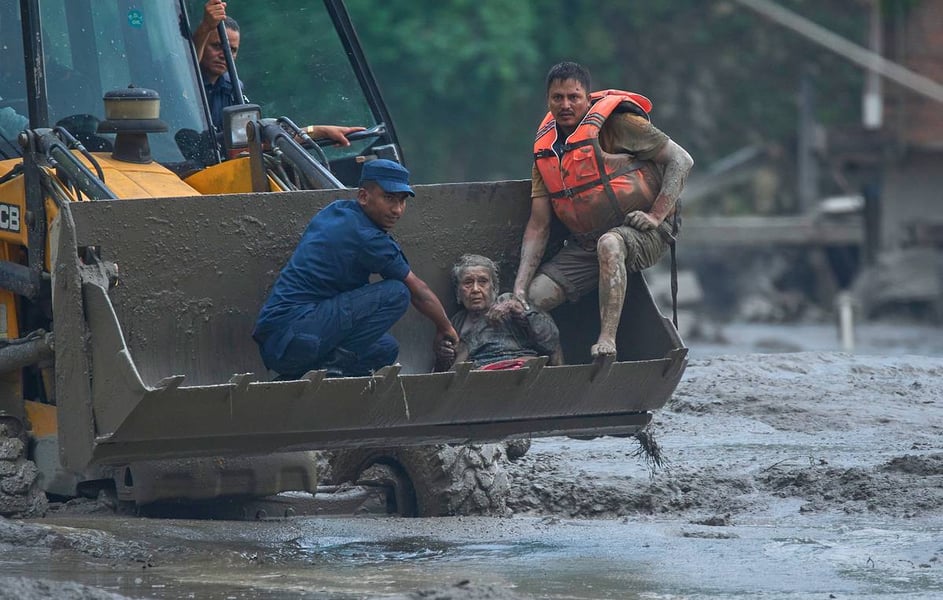
A joint team of Nepal Army personnel and international specialists extracted Lu from the Upper Trishuli-1 Hydropower Project in Rasuwa district, a Chinese-built facility north of the capital that was among the first sites submerged when the August 26 outburst swept through the mountain valleys. Hours later, a Nepali woman was also brought out of flood wreckage at a separate location, Al Jazeera reported. Neither person’s medical condition was immediately confirmed.
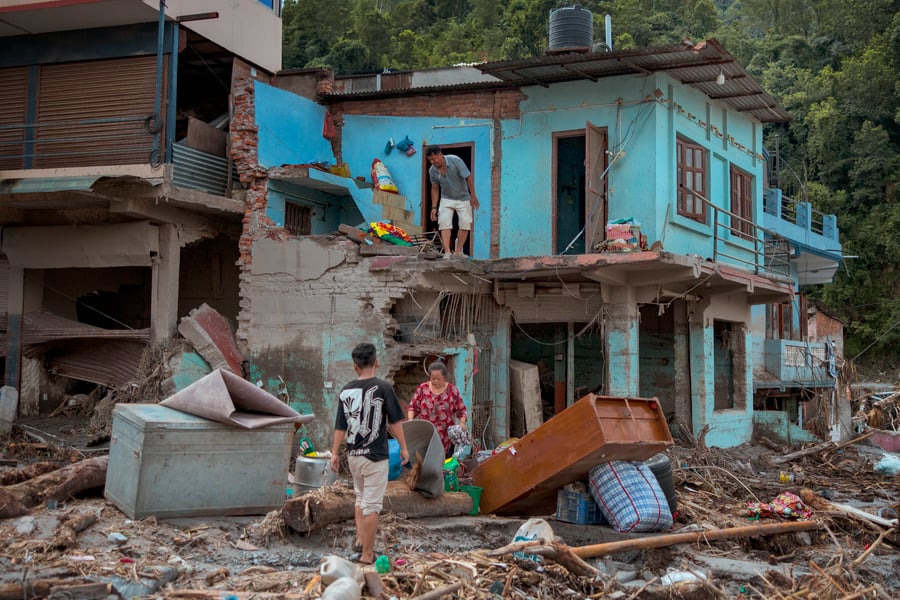
Their survival sat awkwardly against the rest of the numbers. The death toll from the August 26 flooding stands at more than 1,300, a figure that will almost certainly rise as recovery teams reach more remote corners of Rasuwa and Nuwakot. Almost 4,000 remain unaccounted for across Nepal and China’s Tibet region, among them 592 foreign nationals. More than 900 hydropower workers are still missing at project sites throughout the flood corridor. Mass burials have begun in Rasuwa district, where mortuaries were overwhelmed within the first week.
The previous day, September 4, rescuers freed two Nepali tunnel workers from the Trishuli 3A plant in Nuwakot district, nine days after the disaster struck. Sanjay Shah, 30, was reported in stable condition. Kabir Maharjan, 45, was transferred to intensive care. Nepal’s Energy Ministry released footage of the extraction: men pulled through a narrow muddy opening, then carried toward a waiting helicopter.
The scale of the response has been without precedent in Nepal’s recent disaster history. Flooding had damaged or destroyed access roads into Rasuwa and Nuwakot in the first days, delaying the arrival of heavy equipment. The Nepal Army deployed hundreds of soldiers across project sites, while Chinese and Indian rescue specialists also joined the effort. One week after August 26, an estimated 947 people remained unaccounted for at hydropower sites alone, many of them underground in passages that offered no secondary exit once their main shafts compressed with debris.
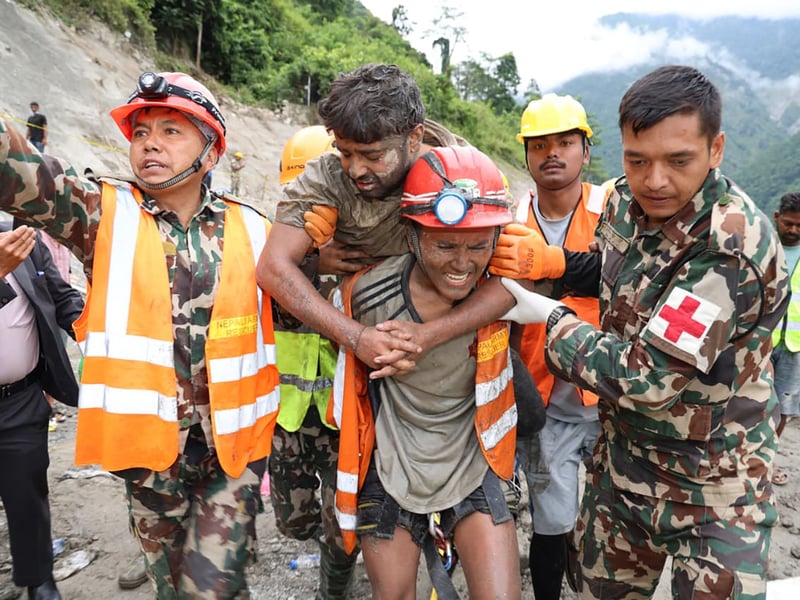
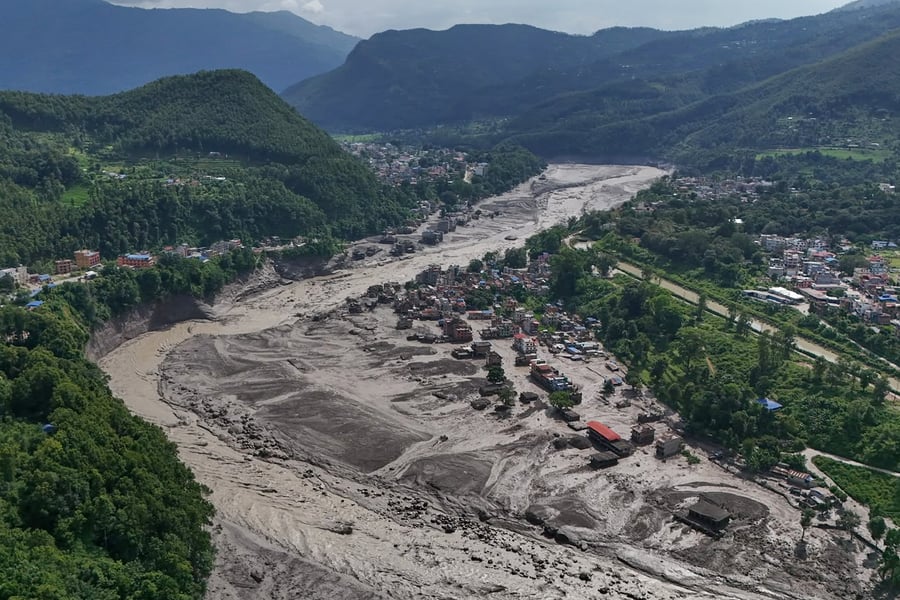
Getting anyone out has required breaking through the tunnels, not simply entering them. Teams used explosives, heavy machinery, and air pumps to force passage through the compressed mud that floodwaters packed into underground corridors. Each breakthrough was its own engineering operation. The Trishuli River valley links most of the affected projects, lined with hydropower sites of varying scale employing large workforces of Chinese and Nepali nationals. The geography that makes the valley ideal for power generation, narrow and steeply channeled, meant that when water and debris came through, they moved fast and left no path out.
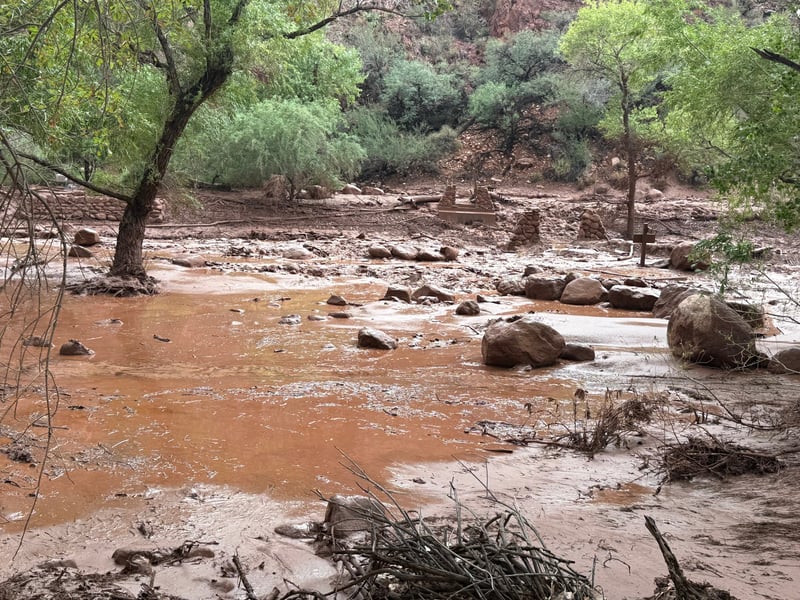
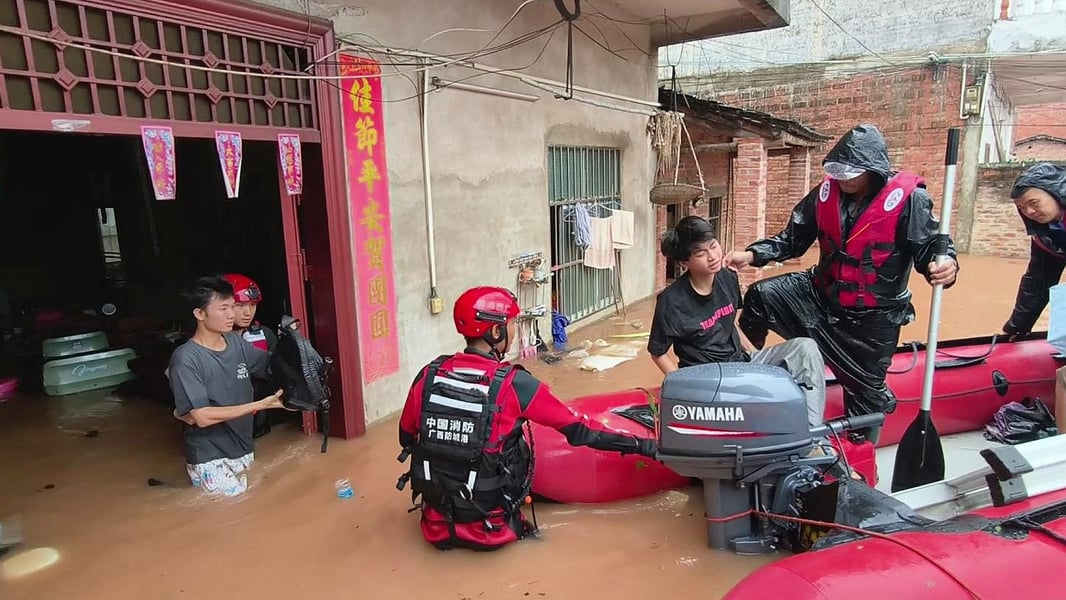
The August 26 disaster was triggered by a glacial lake outburst above Rasuwa district, where meltwater accumulated behind a natural ice dam gave way suddenly above normal monsoon levels. The volume and velocity of the resulting surge overwhelmed evacuation warning systems. Scientists have documented the proliferation of unstable proglacial lakes across the Hindu Kush Himalayan range as a direct consequence of accelerated warming, where temperatures are rising at roughly twice the global average. Nepal’s hydropower infrastructure sits among the most climate-exposed energy networks in the world, a pattern repeatedly flagged by the Intergovernmental Panel on Climate Change. A landslide in China’s Chongqing municipality killed eight in July and left 34 missing, one marker in a sequence of mountain-zone disasters across the region as monsoon seasons have grown more volatile.
The Upper Trishuli-1 project, where Lu Haitao was trapped, is operated by a Chinese company, part of an extensive pattern of Chinese infrastructure investment in Nepal’s hydropower sector. Dozens of projects are currently under construction or operational under Chinese financing or management across the country’s main river systems. The concentration of Chinese workers at the most flood-affected sites has meant Beijing has tracked the rescue effort closely, Dawn reported.
For the families waiting outside project gates, the news of Lu Haitao’s rescue is only legible alongside the toll it does not change. What rescuers cannot yet answer is whether those still unaccounted for inside the undrained tunnels are dead or, against the narrowing odds, still alive. After 10 days, survival without water or food becomes biologically improbable for most. The question that still hangs over Rasuwa is not whether there will be more survivors, but how many more there will not be.