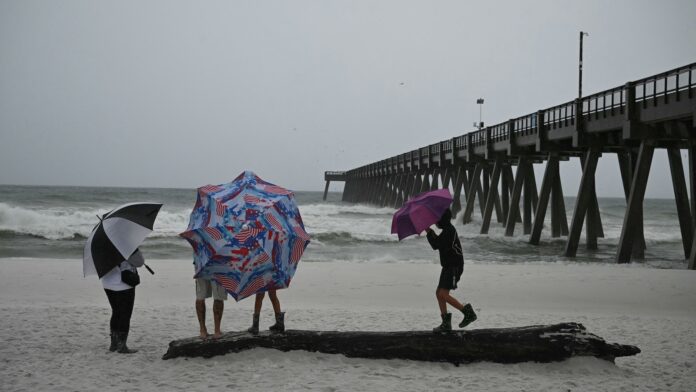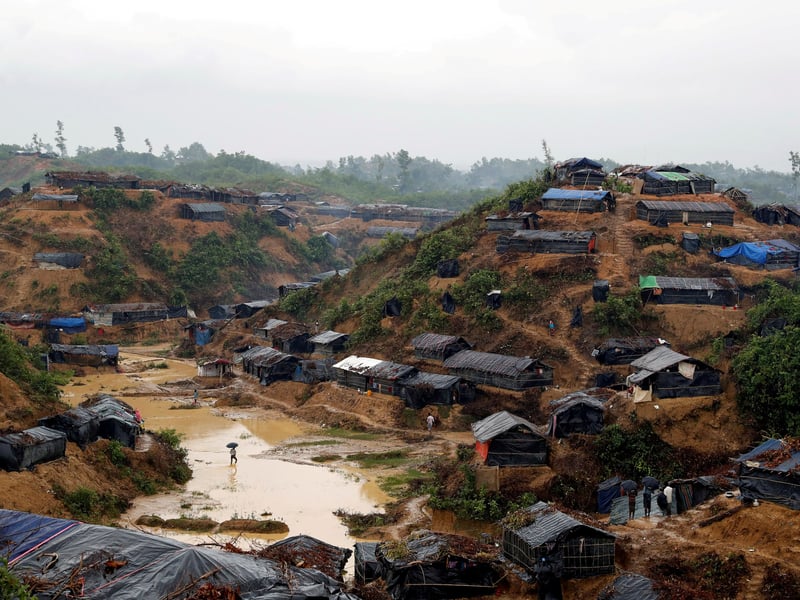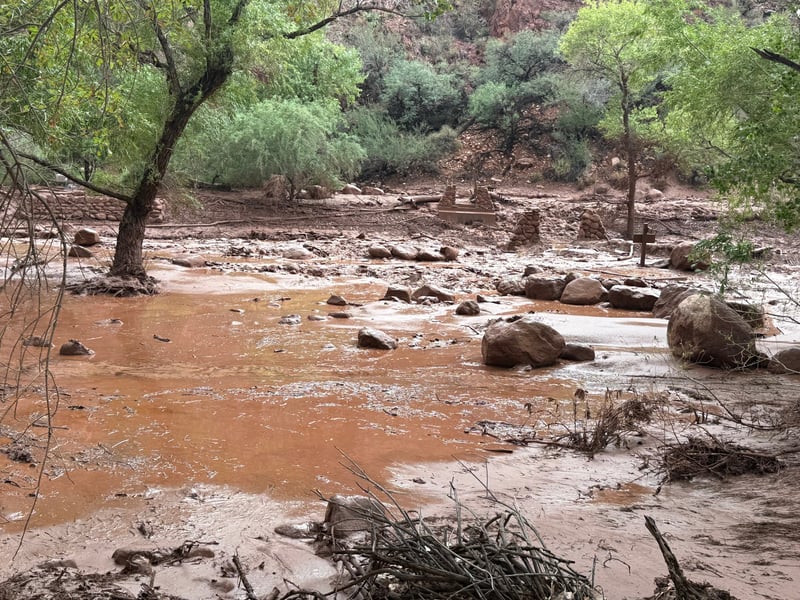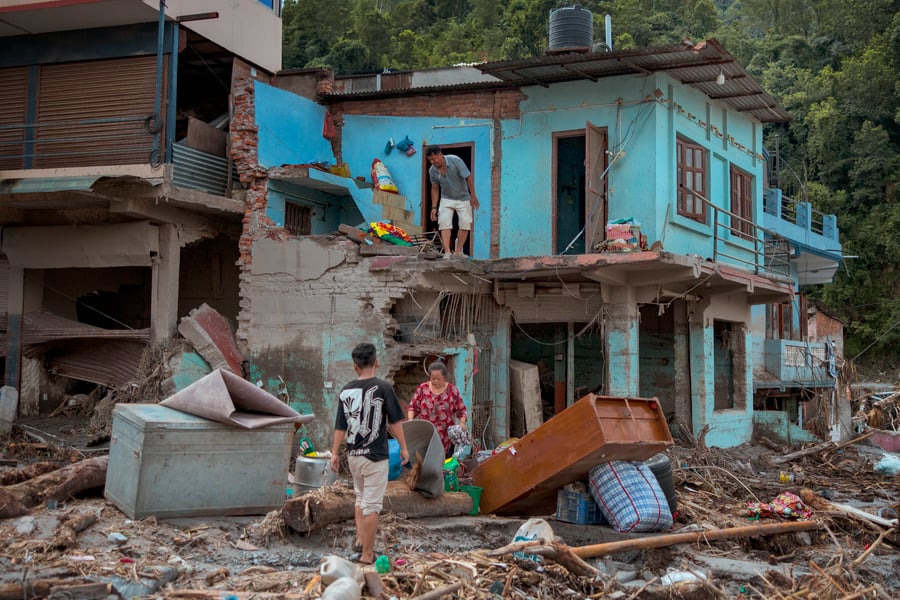

NANNING — The rice fields of Guangxi were already weeks away from harvest when Typhoon Narra arrived. By Monday, thousands of hectares lay submerged under floodwaters that had been climbing for four days, as the storm, stalled over the Beibu Gulf in a pattern forecasters had not fully anticipated, refused to move on.
China’s Ministry of Emergency Management said it had relocated about 54,000 people across Guangxi, Guangdong, and Hainan, with 8,087 placed in emergency shelters. The numbers continued to rise.
Narra, the 19th named storm of the 2026 Pacific typhoon season, has lingered over the Beibu Gulf, also known as the Gulf of Tonkin, since August 21. That stall extended the period of heaviest rainfall over southern China’s most agriculturally dense region at exactly the wrong moment in the growing calendar.
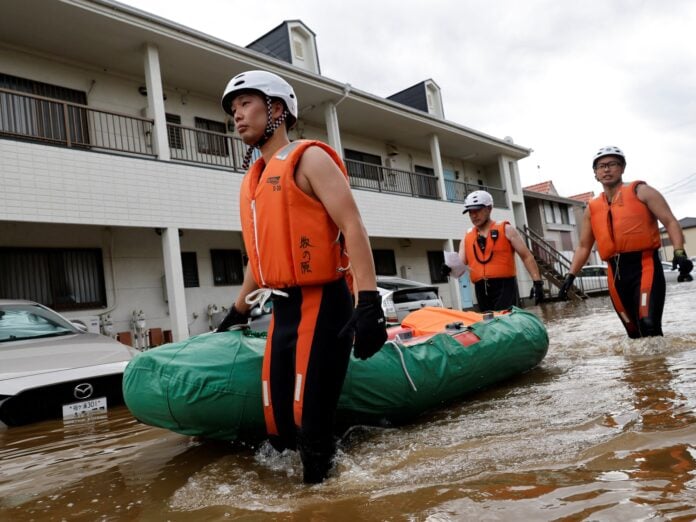
Fangchenggang, a coastal city in Guangxi near the Vietnamese border, recorded 404.9 millimetres of precipitation during the storm’s most intense passage, roughly equivalent to three months of average annual rainfall compressed into a few days. Shangsi County, within Fangchenggang’s administrative boundaries, saw nearly 4,000 residents evacuated after rescue teams deployed inflatable boats and, in one township, a powered pontoon bridge across streets that had become rivers.
Aerial footage broadcast by state television showed Chongzuo, a city northwest of the coast, with brown floodwaters engulfing blocks of low-rise buildings, roads invisible beneath the current. Workers waded through knee-deep water alongside rubber evacuation boats.
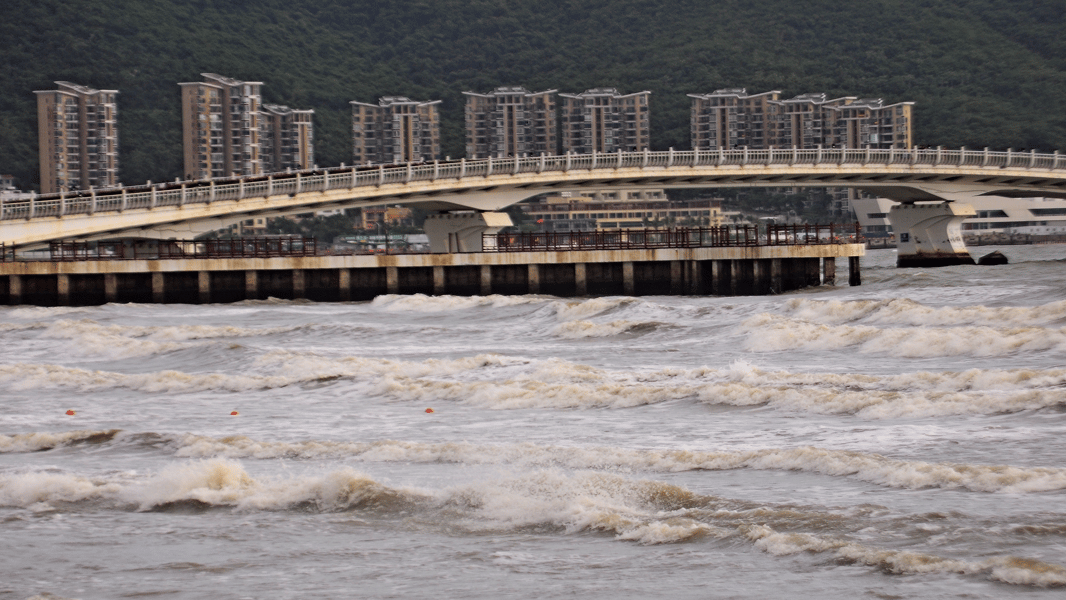
The China Meteorological Administration escalated its alert for Guangxi to Level II on Saturday night, reflecting a forecast of continued heavy rain through the week. China’s Ministry of Water Resources separately activated a Level IV national flood emergency response across Guangdong, Guangxi, and Hainan. By Tuesday morning, water levels at monitoring stations on 15 rivers in the region had exceeded warning thresholds, according to Xinhua.
Train services across multiple routes through Guangxi were suspended through Thursday, authorities said, over concerns about mudslides and waterlogged tracks.
The storm has also struck northern Vietnam, where Narra made its initial approach from the South China Sea, bringing floods and landslides to provinces near the Chinese border. Initial assessments from Vietnamese authorities were still preliminary as of Monday.
What distinguishes Narra’s impact is partly its unusual stall and partly the season that produced it. Chinese meteorologists noted the country had recorded 21 tropical systems so far in 2026, nine above the historical average at this point in the calendar year. An active monsoon circulation over the South China Sea has sustained three simultaneous systems in recent days: Narra, Typhoon Gaenari, and Typhoon Saudel. That three-storm configuration has appeared rarely in modern Pacific typhoon records. Scientists have attributed the above-average season to warming sea surface temperatures amplified by El Niño conditions, the same climate dynamic reshaping storm patterns across the globe, from the Pacific to Europe, where a France tornado tore through the village of Pomas this week, injuring 41 people.
“The monsoon over the South China Sea is highly active, with multiple tropical systems interacting,” CGTN reported, citing meteorological analysis of the concurrent storm cluster.
The relief mobilisation moved quickly. China’s Ministry of Emergency Management and the National Food and Strategic Reserves Administration jointly dispatched 20,000 items to Guangxi by Sunday, including folding beds, summer quilts, raincoats, and rain boots for shelter populations. A parallel effort through 10 private foundations, among them the Tencent Foundation, the Beijing Bytedance Foundation, and the Beijing Meituan Foundation, contributed 27,000 additional items: bottled water, instant noodles, bread, buckets, sleeping mats, and family emergency kits. Combined, some 47,000 items were in distribution across the region by Monday.
Power outages affected nearly 55,000 families across Guangxi, and school and office operations were disrupted in multiple municipalities throughout the storm’s active period.
The agricultural damage was still being tallied, but preliminary assessments reported more than 10,000 hectares of rice and other crops damaged or destroyed. Guangxi is also a major producer of sugarcane approaching its harvest season; specific damage figures for that crop were not yet available.
As of Tuesday, Typhoon Narra had not fully cleared the Beibu Gulf. Its trajectory toward coastal Guangxi and western Guangdong remained active, and the China Meteorological Administration had not downgraded its alert. What neither forecasters nor emergency managers could answer with confidence was how long the stall would persist, and how much more rainfall the region could absorb before the toll, still free of confirmed fatalities (authorities attributed that to early evacuations and pre-positioned rescue teams), began to look different.