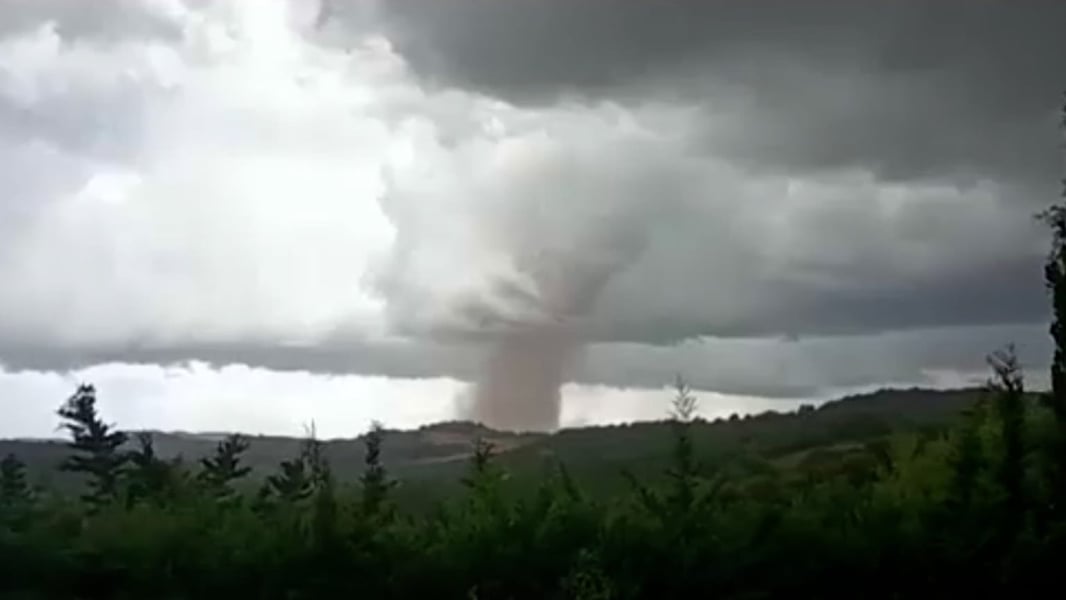

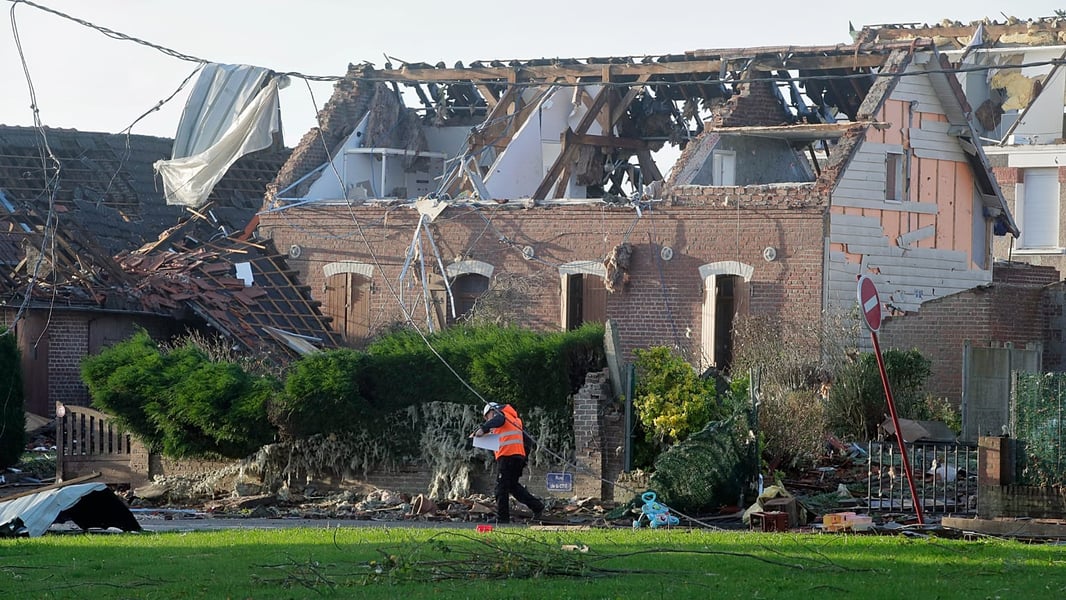
POMAS, France — A pregnant woman was carried from the wreckage of her partially collapsed house by emergency workers on Monday evening, the most acute moment in a chain of destruction the tornado had cut through this small commune near Carcassonne in less than an hour.
The storm struck the Aude department of southwestern France on August 24, injuring at least 41 people and damaging more than 300 homes in and around Pomas, a village of roughly a thousand residents sitting between Carcassonne and Limoux. Wind speeds in nearby Arquettes-en-Val reached 117 kilometres per hour, enough to strip roofs from their frames, tear trees from the ground, and leave the narrow streets of Pomas obstructed for hours.
More than 120 firefighters were deployed to the scene, with reinforcements requested from neighbouring departments, the Aude prefecture confirmed. By 7:30 in the evening, approximately 2,800 households across ten communes were without electricity, with engineers from the regional grid operator working to restore supply to the most affected areas. The scale of the emergency operation placed it among the most significant weather-related mobilisations in the department in recent years.
The broader transport network across southwestern France absorbed the impact over several hours. Train services were delayed, road closures multiplied around the affected communes, and airports in Bordeaux, Marseille, Nice, Toulouse, and Paris all reported disruption. Transport Minister Philippe Tabarot confirmed the damage extended well beyond the Aude valley, tracing the reach of a larger system of severe thunderstorms that placed swathes of southwestern France under orange alert by mid-afternoon.
The disruption spread into sport as well. The Vuelta a España, whose third stage had been scheduled to pass through the region, was cancelled entirely following a separate hailstorm, the first stage abandonment of the 2026 edition. Organisers cited safety conditions that the storm had made unmanageable.
The destruction in Pomas sits inside a summer in which Europe’s capacity to absorb extreme weather events has been tested repeatedly. The Europe 2026 wildfire crisis has killed people in Greece, Spain, and Belgium over the past two weeks, with multiple countries deploying civil protection assets simultaneously. The EU Civil Protection Mechanism was activated for the Belgium wildfire alone, drawing water bombers from Sweden, the Netherlands, and the Czech Republic. The same emergency structures that have been managing fire are now being asked to manage wind and water at the same time.
The tornado’s path through Pomas was brief and focused. Residents described the storm arriving and departing in minutes, leaving behind damage whose full extent was still being assessed as Monday gave way to Tuesday. Operations to secure exposed buildings, laying tarpaulins over open roofs and shoring up compromised walls, continued through the evening. According to Euronews, which documented the emergency response, firefighters from multiple departments were still active hours after the storm had moved through.
France experiences several dozen tornadoes in an average year, more than most European countries but far fewer than the United States or Canada. The Aude department, sitting at the base of the Pyrenees and open to Mediterranean air from the east and Atlantic pressure systems from the west, is one of the most exposed zones in the country. The region has seen tornado damage before, in the Carcassonne basin and the lower Aude valley in successive winters, but the scale of destruction in Pomas on Monday appeared to be unusually concentrated for a single commune.
Meteo-France, the national meteorological service, has been consistent in its caution about attributing French tornado patterns directly to global warming. The relationship, in the agency’s analysis, remains scientifically uncertain. Tornadoes in Europe are shaped by local topography, surface heating, and mid-level wind shear in combinations that do not translate cleanly into the warming projections that underpin other extreme weather forecasts. Whether Monday’s event will shift that analysis is not yet known.
France’s four-tier weather alert system classifies orange as a level requiring significant protective action. A late August orange storm warning in southwestern France is a routine occurrence in a typical year; a tornado of this destructive extent is not. The Aude prefecture’s characterisation of the event as among the most significant in recent departmental history is not bureaucratic phrasing, it is by any measure of physical damage accurate.
The pregnant woman treated after her house collapsed was described by emergency services as stable. The identities and specific conditions of the other 40 people injured in the storm had not been released as of Monday evening. A full picture of the damage, structural, personal, and financial, was still being assembled.